在c#中,如果对象为 null 时直接调用 trim() 方法,会抛出 nullreferenceexception。为了避免程序崩溃,必须在调用前使用条件判断、空合并运算符或模式匹配来确保对象不为空。

如何安全地处理可能为空的字符串?
最安全的做法是使用 C# 8.0 引入的模式匹配语法 is not null,或者使用三元运算符结合 string.IsNullOrEmpty。这样可以避免在 null 值上执行方法调用。
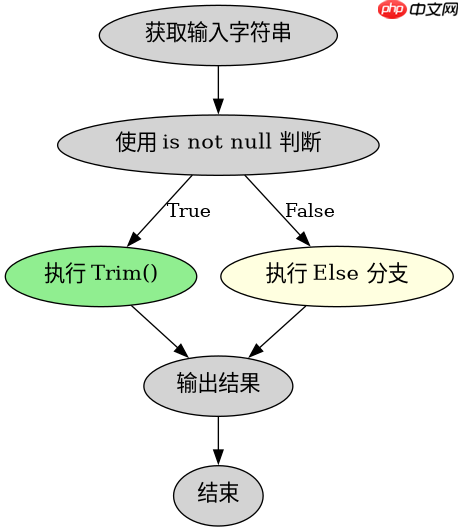

using System;

public class Program
{
    public static void Main()
    {
        string input = null;

        // 方式一:使用 is not null (C# 8.0+)
        if (input is not null)
        {
            Console.WriteLine(input.Trim());
        }
        else
        {
            Console.WriteLine("Input is null");
        }

        // 方式二:使用三元运算符
        string result = input != null ? input.Trim() : "";
        Console.WriteLine(result);
    }
}
Trim() 对不同类型的输入有何影响?
当输入是包含空白字符的字符串时,Trim() 会移除首尾的空白。如果输入是空字符串 "",Trim() 返回空字符串。只有当输入为 null 时才会引发异常。
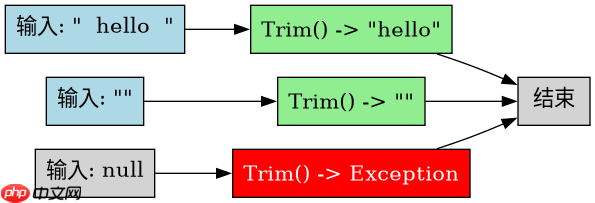
using System;

public class Program
{
    public static void Main()
    {
        string s1 = "  hello  ";
        string s2 = "";
        string s3 = null;

        Console.WriteLine(s1.Trim()); // 输出: hello
        Console.WriteLine(s2.Trim()); // 输出: (空行)

        try
        {
            Console.WriteLine(s3.Trim()); // 抛出 NullReferenceException
        }
        catch (NullReferenceException ex)
        {
            Console.WriteLine("Error: " + ex.Message);
        }
    }
}
使用 null-conditional 运算符是否足够?
使用 ?. 运算符可以防止 null 异常,但如果对象为 null,整个表达式将返回 null。这可能导致后续代码接收到意外的 null 值,因此建议结合 ?? 提供默认值。
using System;

public class Program
{
    public static void Main()
    {
        string input = null;

        // 使用 null-conditional 和 null-coalescing
        string safeTrim = input?.Trim() ?? "default";
        Console.WriteLine(safeTrim); // 输出: default
    }
}