





在 typescript 中,async/await 本身不直接参与类型收窄,但 await 表达式的结果类型取决于 promise 的泛型参数。通过为 async 函数指定明确的返回类型或约束 promise 泛型,可以确保 await 后的变量具有确定的类型,从而支持后续的条件判断和类型收窄。

如何定义带明确返回类型的 async 函数
定义 async 函数时,应显式声明其返回类型,例如 Promise<user></user>。这样在调用该函数并使用 await 时,TypeScript 能准确推断出变量的类型为 User,进而允许对该对象属性进行访问和类型检查。
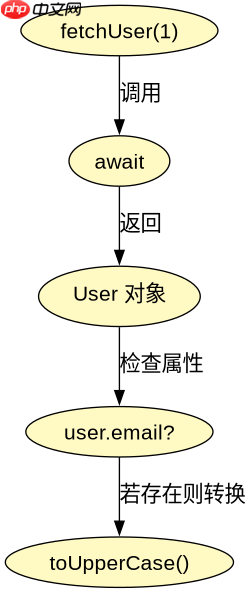
interface User {
  id: number;
  name: string;
  email?: string;
}

async function fetchUser(id: number): Promise<User> {
  // 模拟异步请求
  return { id, name: 'Alice', email: 'alice@example.com' };
}

async function main() {
  const user = await fetchUser(1);
  if (user.email) {
    console.log(user.email.toUpperCase());
  }
}
如何在条件分支中使用 await 结果进行类型守卫
当 await 的结果可能为 null 或 undefined 时,可以在 if 语句中直接使用逻辑与操作符进行类型收窄。TypeScript 会识别这种模式,并在分支内将变量视为非空类型,从而安全地访问其属性。

FilePond 灵活的 JavaScript 文件上传库
下载
FilePond 是一个 JavaScript 文件上传库,支持通过拖拽、粘贴和 API 方式处理文件、目录、URL 和 Data URI。它包含内置的图像优化功能、异步分块上传功能,并提供了适用于 React、Vue、Angular 和 Svelte 的适配器。
立即学习“Java免费学习笔记(深入)”;

interface Result {
  data: string | null;
}

async function getResult(): Promise<Result> {
  return { data: 'success' };
}

async function process() {
  const result = await getResult();
  if (result.data) {
    console.log(result.data.length); // 类型收窄为 string
  } else {
    console.log('No data');
  }
}
await 表达式在非布尔上下文中是否触发类型收窄
await 表达式仅在布尔上下文(如 if、while、三元运算符)中才会触发类型收窄。在其他上下文中,即使变量可能为 null 或 undefined,TypeScript 也不会自动收窄类型,需手动使用类型断言或额外检查。