java nio 使用异步文件通道提升吞吐的核心做法是调用 aiofilechannel 的 read() 和 write() 方法,并传入 completionhandler 回调对象。这样 i/o 操作会在后台线程池中执行,主线程无需阻塞等待,从而在并发处理大量小文件或高延迟存储时显著提升吞吐量。

AioFileChannel 如何发起非阻塞读写
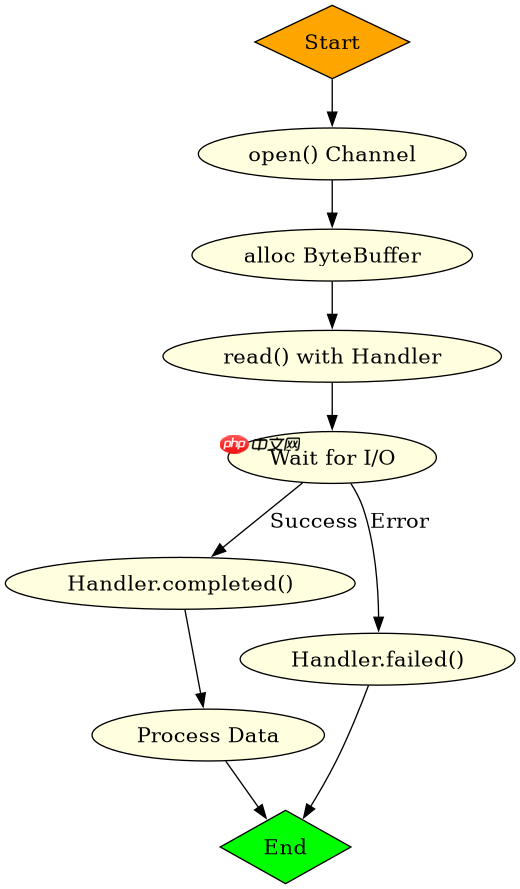
要发起一次异步读写,必须通过 AsynchronousFileChannel.open() 获取通道实例,然后调用 read() 或 write() 方法。这些方法接受一个缓冲区(ByteBuffer)和一个附件对象,以及一个实现了 CompletionHandler 接口的处理器。当 I/O 完成时,系统会自动调用处理器中的 completed 或 failed 方法,并将结果作为参数传递。这种机制允许程序在等待磁盘响应期间继续执行其他逻辑。
import java.nio.ByteBuffer; import java.nio.channels.AsynchronousFileChannel; import java.nio.file.Path; import java.nio.file.Paths; import java.nio.file.StandardOpenOption; import java.util.concurrent.Future; public class AsyncReadExample { public static void main(String[] args) throws Exception { Path path = Paths.get("test.txt"); AsynchronousFileChannel channel = AsynchronousFileChannel.open(path, StandardOpenOption.READ); ByteBuffer buffer = ByteBuffer.allocate(1024); // 发起异步读取,不阻塞当前线程 Future<Integer> result = channel.read(buffer, 0); // 可以在这里做其他事情 while (!result.isDone()) { System.out.println("Doing other work..."); } // 获取结果 buffer.flip(); byte[] data = new byte[buffer.remaining()]; buffer.get(data); System.out.println(new String(data)); channel.close(); }} 上述代码展示了最基础的异步读取流程。首先打开文件通道,然后分配一个 ByteBuffer。调用 channel.read() 后,方法立即返回一个 Future 对象,此时主线程并未被挂起。通过轮询 Future.isDone() 可以判断操作是否完成。虽然这种方式比同步阻塞好,但更推荐直接使用 CompletionHandler 来避免轮询开销。
立即学习“Java免费学习笔记(深入)”;

基于 CompletionHandler 的回调实现与性能优势
使用 CompletionHandler 是发挥异步通道潜力的关键。它避免了轮询带来的 CPU 浪费,并且允许在 I/O 完成后直接处理数据。在实际应用中,通常会将多个文件的读写请求同时发出,利用操作系统的底层异步能力(如 Windows 的 IOCP 或 Linux 的 AIO/epoll)来最大化并发度。对于高吞吐场景,关键在于合理设置缓冲区大小和并发请求数,以避免过多的上下文切换或内存拷贝。

import java.nio.ByteBuffer; import java.nio.channels.AsynchronousFileChannel; import java.nio.channels.CompletionHandler; import java.nio.file.Path; import java.nio.file.Paths; import java.nio.file.StandardOpenOption; public class AsyncHandlerExample { public static void main(String[] args) throws Exception { Path path = Paths.get("test.txt"); AsynchronousFileChannel channel = AsynchronousFileChannel.open(path, StandardOpenOption.READ); ByteBuffer buffer = ByteBuffer.allocate(1024); // 定义回调处理器 CompletionHandler<Integer, Object> handler = new CompletionHandler<>() { @Override public void completed(Integer result, Object attachment) { System.out.println("Read " + result + " bytes."); buffer.flip(); byte[] data = new byte[buffer.remaining()]; buffer.get(data); System.out.println(new String(data)); try { channel.close(); } catch (Exception e) { e.printStackTrace(); } } @Override public void failed(Throwable exc, Object attachment) { System.err.println("Read failed: " + exc.getMessage()); } }; // 发起带回调的异步读取 channel.read(buffer, 0, null, handler); // 保持主线程存活以等待回调 Thread.sleep(5000); }} 在这个示例中,channel.read() 的最后一个参数是自定义的 handler。一旦读取完成,completed 方法会被自动调用,其中 result 表示读取的字节数。这种模式使得代码结构更加清晰,且不需要手动管理线程状态。需要注意的是,CompletionHandler 的执行线程取决于底层操作系统和 JVM 的实现,通常由线程池管理,因此不要在回调中进行耗时操作以免阻塞其他 I/O 事件。
大文件连续读取时的缓冲区复用策略
在处理大文件时,如果每次读取都创建新的 ByteBuffer,会导致频繁的垃圾回收(GC),进而影响吞吐量和稳定性。正确的做法是复用同一个缓冲区,或者使用堆外内存(Direct Buffer)。在循环读取时,需要检查 result 是否为 -1(表示 EOF),并在每次读取前确保缓冲区已 flip 或 clear。此外,对于超大文件,可以考虑分块处理,将文件划分为多个逻辑段,分别启动异步任务,最后合并结果。
import java.nio.ByteBuffer; import java.nio.channels.AsynchronousFileChannel; import java.nio.file.Path; import java.nio.file.Paths; import java.nio.file.StandardOpenOption; import java.util.ArrayList; import java.util.List; import java.util.concurrent.CompletableFuture; import java.util.concurrent.ExecutionException; public class LargeFileAsyncReader { private static final int BUFFER_SIZE = 8 * 1024 * 1024; // 8MB public static void main(String[] args) throws Exception { Path path = Paths.get("large_file.bin"); AsynchronousFileChannel channel = AsynchronousFileChannel.open(path, StandardOpenOption.READ); List<byte[]> chunks = new ArrayList<>(); ByteBuffer buffer = ByteBuffer.allocateDirect(BUFFER_SIZE); long position = 0; while (true) { buffer.clear(); CompletableFuture<Integer> future = CompletableFuture.supplyAsync(() -> { try { return channel.read(buffer, position).get(); } catch (Exception e) { throw new RuntimeException(e); } }); Integer bytesRead = future.get(); if (bytesRead == -1) break; buffer.flip(); byte[] chunk = new byte[buffer.remaining()]; buffer.get(chunk); chunks.add(chunk); position += bytesRead; System.out.println("Read chunk at " + position); } System.out.println("Total chunks: " + chunks.size()); channel.close(); }} 该代码演示了如何通过循环和 CompletableFuture 包装异步读取操作,以实现顺序的大文件读取。使用 allocateDirect 创建堆外缓冲区可以减少 JVM 堆内存的压力,并在某些操作系统上提高 I/O 效率。每次读取后,通过 buffer.flip() 准备读取数据,并复制到新的数组中保存。这种方法确保了即使在高负载下,也能保持稳定的内存使用和较高的吞吐率。