








如何区分 Dictionary 中键不存在与值为空 List
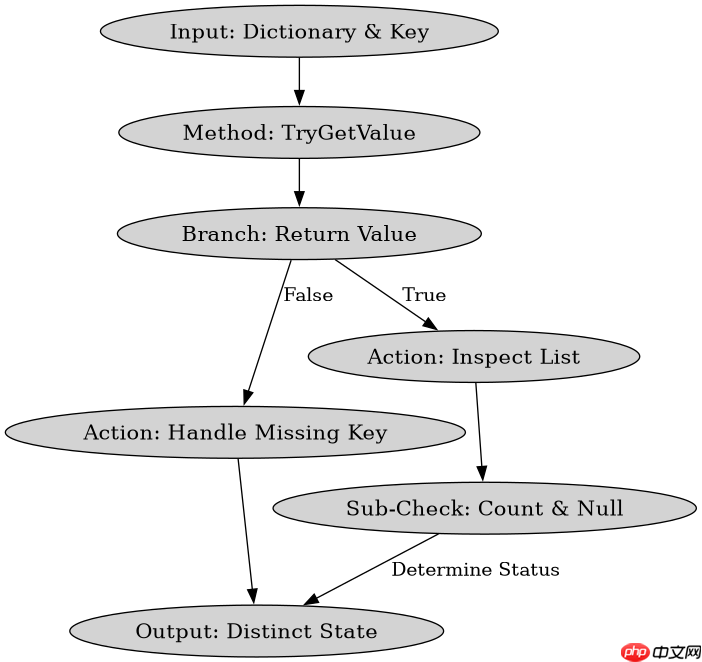
在 c# 的 dictionary<tkey tvalue></tkey> 中,区分键不存在和键存在但值为空列表的核心方法是使用 trygetvalue 方法。直接通过索引器 [] 访问不存在的键会抛出异常,而使用 containskey 结合取值只能保证键存在,无法直接判断值是否为空集合。最稳妥的做法是先调用 trygetvalue 获取布尔值和引用,若返回 true,再检查该列表的 count 属性或 any() 方法。这样可以将“键缺失”(keynotfound)与“键存在但集合为空”(empty collection)两种状态明确分离。

使用 TryGetValue 的标准实现模式
使用 TryGetValue 是处理字典查找的标准模式,它避免了异常处理的开销并提供了明确的分支逻辑。具体做法是声明一个输出变量,传入键进行查询,根据返回值进入不同的处理逻辑。如果返回 false,说明键不在字典中;如果返回 true,则对输出的列表实例进行检查。这种模式确保了代码不会因访问不存在的键而崩溃,同时能准确识别出空列表的情况。

using System;
using System.Collections.Generic;
using System.Linq;

public class Program
{
    public static void Main()
    {
        var dict = new Dictionary<string, List<int>>
        {
            { "found_empty", new List<int>() },
            { "found_non_empty", new List<int> { 1, 2 } }
        };

        string keyMissing = "missing";
        string keyEmpty = "found_empty";
        string keyNonEmpty = "found_non_empty";

        CheckKey(dict, keyMissing);
        CheckKey(dict, keyEmpty);
        CheckKey(dict, keyNonEmpty);
    }

    private static void CheckKey(Dictionary<string, List<int>> dict, string key)
    {
        if (dict.TryGetValue(key, out var list))
        {
            if (list == null)
            {
                Console.WriteLine($"Key '{key}' exists but value is null.");
            }
            else if (list.Count == 0)
            {
                Console.WriteLine($"Key '{key}' exists and list is empty.");
            }
            else
            {
                Console.WriteLine($"Key '{key}' exists with {list.Count} items.");
            }
        }
        else
        {
            Console.WriteLine($"Key '{key}' does not exist in dictionary.");
        }
    }
}
基于程序中某个输入、条件或结果的具体问题
当程序中使用 TryGetValue 且字典值为 List<t></t> 时,如果字典中存储的值本身为 null(即键存在,但对应的值是 null 引用),上述逻辑中的 list.Count 会抛出 NullReferenceException。因此,必须增加对 list == null 的判断。在实际开发中,建议初始化字典时确保所有值都是非空的空列表,或者在读取时严格遵循先判空再判长度的顺序,以避免运行时错误。
















