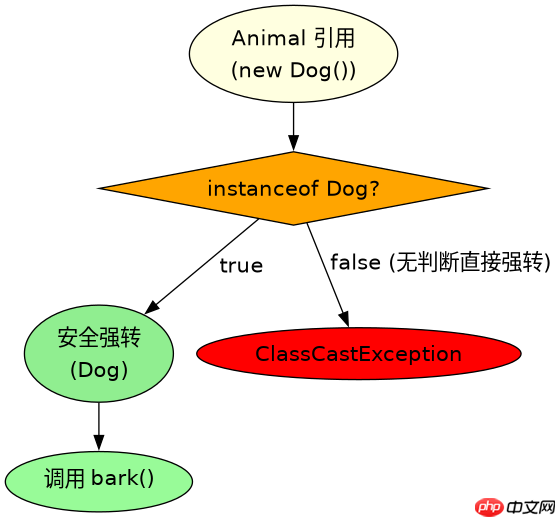
在 java 中,使用 instanceof 判断对象类型是实现向下转型(downcasting)前的安全校验手段。具体做法是在执行强制类型转换之前,先用 instanceof 检查引用指向的对象是否属于目标类或其子类,若返回 true 则进行强转,否则跳过或处理异常。这能有效避免 classcastexception,确保程序在多态环境下对特定子类的行为进行差异化处理。

instanceof 如何防止向下转型报错
当父类引用指向子类对象时,直接强转会抛出异常,而 instanceof 能提前拦截这种不安全操作。通过判断引用变量是否为特定类型的实例,代码可以安全地访问子类特有的方法。
public class Main {
    public static void main(String[] args) {
        Animal animal = new Dog();
        if (animal instanceof Dog) {
            Dog dog = (Dog) animal;
            dog.bark();
        } else {
            System.out.println("Not a Dog");
        }
    }
}
class Animal {
    void eat() { System.out.println("Eating..."); }
}
class Dog extends Animal {
    void bark() { System.out.println("Barking..."); }
}
运行结果:
Barking...
立即学习“Java免费学习笔记(深入)”;

FilePond 灵活的 JavaScript 文件上传库
下载
FilePond 是一个 JavaScript 文件上传库,支持通过拖拽、粘贴和 API 方式处理文件、目录、URL 和 Data URI。它包含内置的图像优化功能、异步分块上传功能,并提供了适用于 React、Vue、Angular 和 Svelte 的适配器。
instanceof 在处理继承链时的表现
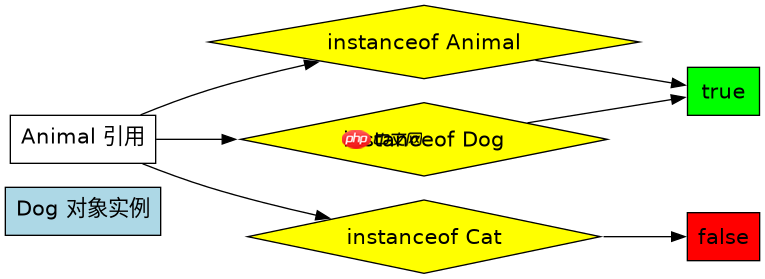
在多层继承结构中,instanceof 的判断不仅针对直接子类,还包括所有祖先类。如果对象是某个子类的实例,它也会被认为是其父类的实例。这种特性允许我们在不知道具体子类类型的情况下,统一处理具有共同父类的对象集合。
public class Main {
    public static void main(String[] args) {
        Animal animal = new Dog();
        System.out.println(animal instanceof Animal); // true
        System.out.println(animal instanceof Dog);    // true
        System.out.println(animal instanceof Cat);    // false
    }
}
class Animal {}
class Dog extends Animal {}
class Cat extends Animal {}
运行结果:
true
true
false
当 instanceof 遇到 null 引用时会返回什么
在使用 instanceof 进行类型检查时,如果左侧的引用变量为 null,表达式将直接返回 false,而不会抛出任何异常。这一行为使得在不确定对象是否为空的情况下,可以安全地进行类型判断,无需先单独检查 null。