





java 线程池实现任务编排的核心在于利用 completablefuture 将异步任务与线程池绑定,并通过组合式 api(如 thenapply、thencombine)串联依赖关系。具体做法是提交初始任务后,在回调中继续提交后续任务,从而构建出 dag(有向无环图)式的执行流。这种方式避免了手动管理 countdownlatch 或 future 集合的繁琐,且能自动处理异常传播和结果聚合。
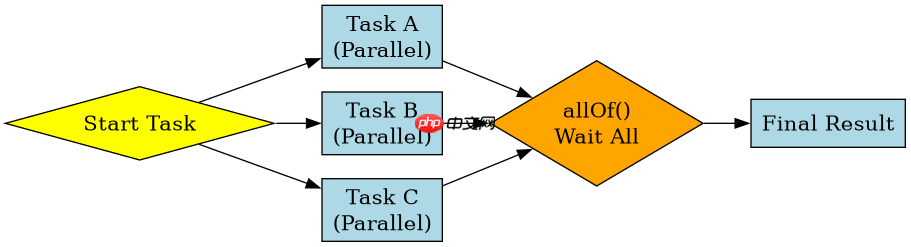
如何并行执行多个独立前置任务并等待所有完成?
要实现多个独立任务的并行执行,可以使用 CompletableFuture.allOf() 方法。该方法接收一组 CompletableFuture 对象作为参数,返回一个新的 CompletableFuture,当且仅当所有传入的任务都完成后,这个新的 Future 才会完成。通过这种方式,可以将原本串行的任务列表转化为并行执行,显著提升整体吞吐量。

import java.util.concurrent.*;

public class ParallelTaskExample {
    public static void main(String[] args) throws Exception {
        ExecutorService executor = Executors.newFixedThreadPool(3);

        CompletableFuture<String> task1 = CompletableFuture.supplyAsync(() -> {
            sleep(1000);
            return "Result 1";
        }, executor);

        CompletableFuture<String> task2 = CompletableFuture.supplyAsync(() -> {
            sleep(1500);
            return "Result 2";
        }, executor);

        CompletableFuture<String> task3 = CompletableFuture.supplyAsync(() -> {
            sleep(800);
            return "Result 3";
        }, executor);

        // 等待所有任务完成
        CompletableFuture.allOf(task1, task2, task3).join();

        System.out.println("All tasks completed.");
        System.out.println("Results: " + task1.join() + ", " + task2.join() + ", " + task3.join());

        executor.shutdown();
    }

    private static void sleep(long ms) {
        try { Thread.sleep(ms); } catch (InterruptedException e) {}
    }
}
预期输出:
All tasks completed.
Results: Result 1, Result 2, Result 3
立即学习“Java免费学习笔记(深入)”;

FilePond 是一个 JavaScript 文件上传库,支持通过拖拽、粘贴和 API 方式处理文件、目录、URL 和 Data URI。它包含内置的图像优化功能、异步分块上传功能,并提供了适用于 React、Vue、Angular 和 Svelte 的适配器。
如何将前一步的结果作为输入传递给下一步任务?
当任务之间存在数据依赖时,应使用 thenApply 或 thenCompose 进行链式调用。thenApply 适用于同步转换,它将上一个任务的结果直接传入当前函数;thenCompose 适用于异步转换,它接收上一个任务的结果,并返回一个新的 CompletableFuture。这种链式结构清晰地表达了任务的先后顺序和数据流向,无需显式等待即可实现串行编排。
import java.util.concurrent.*;

public class SequentialTaskExample {
    public static void main(String[] args) throws Exception {
        ExecutorService executor = Executors.newFixedThreadPool(2);

        CompletableFuture<Integer> future = CompletableFuture.supplyAsync(() -> {
            sleep(500);
            return 10;
        }, executor)
        .thenApply(result -> {
            // 上一步结果是 10,这里乘以 2
            sleep(200);
            return result * 2;
        })
        .thenCompose(finalResult -> {
            // 上一步结果是 20,这里再减去 5
            sleep(300);
            return CompletableFuture.completedFuture(finalResult - 5);
        });

        System.out.println("Final Result: " + future.join());
        executor.shutdown();
    }

    private static void sleep(long ms) {
        try { Thread.sleep(ms); } catch (InterruptedException e) {}
    }
}
预期输出:
Final Result: 15
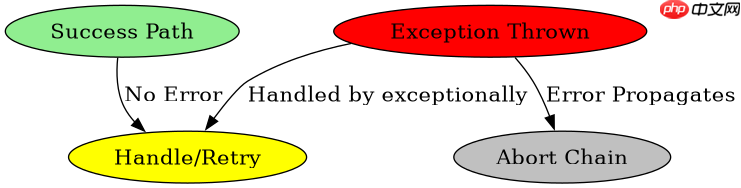
如果中间某个任务抛出异常,整个编排流程会怎样?
在 CompletableFuture 的任务编排中,如果任何一个环节抛出未捕获的异常,该节点及其后续的所有依赖节点都会立即进入异常状态(Exceptionally),后续的 thenApply 或 thenCompose 将不会被执行。这是为了确保数据一致性,防止基于错误数据进行进一步计算。开发者可以通过 exceptionally 或 handle 方法来捕获这些异常并提供默认值或重试逻辑,从而增强编排流程的健壮性。