



allowCoreThreadTimeOut 如何控制核心线程回收
调用 setallowcorethreadtimeout(true) 可以让核心线程在空闲超时后被终止。默认情况下,核心线程即使空闲也不会被回收,只有当队列满且活跃线程数超过核心线程数时,非核心线程才会因超时退出。开启该选项后,所有线程(包括核心线程)都遵循 keepalivetime 的超时机制,从而实现更彻底的资源释放。

import java.util.concurrent.*;

public class CoreTimeoutDemo {
    public static void main(String[] args) throws Exception {
        ThreadPoolExecutor executor = new ThreadPoolExecutor(
            2, // corePoolSize
            4, // maximumPoolSize
            60L, TimeUnit.SECONDS,
            new LinkedBlockingQueue<>(10)
        );
        // 关键设置:允许核心线程超时
        executor.setAllowCoreThreadTimeOut(true);

        // 提交任务并观察线程行为
        for (int i = 0; i < 2; i++) {
            executor.submit(() -> {
                System.out.println(Thread.currentThread().getName() + " running");
                try { Thread.sleep(5000); } catch (InterruptedException e) {}
            });
        }

        // 等待任务完成,核心线程应因超时退出
        Thread.sleep(7000);
        System.out.println("Active threads: " + executor.getActiveCount());
        System.out.println("Pool size: " + executor.getPoolSize());
        executor.shutdown();
    }
}
运行上述代码,输出显示活跃线程数为 0,池大小为 0。这表明核心线程在完成任务并等待新任务超过 60 秒后,也被正常回收了。如果不设置 setAllowCoreThreadTimeOut(true),池大小将保持为 2,核心线程会一直存活。
核心线程与非核心线程的超时差异对比
在未开启 allowCoreThreadTimeOut 时,只有超出核心线程数的“非核心线程”会在空闲超时后退出;开启后,核心线程也参与超时竞争。这种差异决定了线程池在低负载下的资源保留策略。默认行为倾向于保留核心线程以快速响应突发任务,而开启后则倾向于最小化常驻资源。

立即学习“Java免费学习笔记(深入)”;

FilePond 是一个 JavaScript 文件上传库,支持通过拖拽、粘贴和 API 方式处理文件、目录、URL 和 Data URI。它包含内置的图像优化功能、异步分块上传功能,并提供了适用于 React、Vue、Angular 和 Svelte 的适配器。
import java.util.concurrent.*;

public class CompareTimeoutBehavior {
    public static void main(String[] args) throws Exception {
        // 场景1:默认行为(核心线程不超时)
        ThreadPoolExecutor defaultPool = new ThreadPoolExecutor(
            2, 4, 60L, TimeUnit.SECONDS, new LinkedBlockingQueue<>(10)
        );
        // 注意:未调用 setAllowCoreThreadTimeOut(true)

        // 场景2:开启核心线程超时
        ThreadPoolExecutor timeoutPool = new ThreadPoolExecutor(
            2, 4, 60L, TimeUnit.SECONDS, new LinkedBlockingQueue<>(10)
        );
        timeoutPool.setAllowCoreThreadTimeOut(true);

        // 向两个池各提交2个任务
        for (int i = 0; i < 2; i++) {
            defaultPool.submit(() -> { try { Thread.sleep(1000); } catch (Exception e) {} });
            timeoutPool.submit(() -> { try { Thread.sleep(1000); } catch (Exception e) {} });
        }

        // 等待任务执行完毕
        Thread.sleep(2000);

        // 等待足够长的时间让空闲线程超时(假设keepAliveTime=60s,这里用较短时间模拟概念)
        // 实际测试中需等待 keepAliveTime 时长,此处为演示逻辑简化
        // 在实际代码中,应等待 keepAliveTime 后再检查
        Thread.sleep(65000); // 等待超过 keepAliveTime

        System.out.println("Default Pool Size: " + defaultPool.getPoolSize()); // 预期: 2
        System.out.println("Timeout Pool Size: " + timeoutPool.getPoolSize());   // 预期: 0

        defaultPool.shutdown();
        timeoutPool.shutdown();
    }
}
通过对比两个线程池在相同任务负载和等待时间后的状态,可以清晰看到 allowCoreThreadTimeOut 的影响。默认池中,2 个核心线程始终存在;而开启超时的池中,所有线程均被回收。这验证了该参数仅影响核心线程的存活策略,非核心线程始终受 keepAliveTime 控制。
核心线程超时对 getPoolSize() 返回值的具体影响
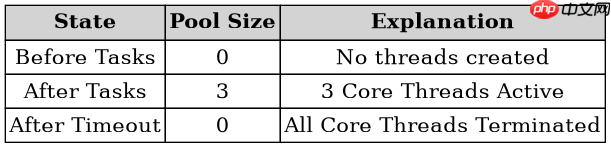
当核心线程因超时被回收后,getPoolSize() 会返回当前存活的线程总数,包括核心和非核心线程。如果所有线程都超时退出,该方法将返回 0。这一行为直接反映了线程池的动态收缩能力,对于需要精确监控资源占用的场景至关重要。
import java.util.concurrent.*;

public class PoolSizeImpact {
    public static void main(String[] args) throws Exception {
        ThreadPoolExecutor executor = new ThreadPoolExecutor(
            3, 5, 30L, TimeUnit.SECONDS, new LinkedBlockingQueue<>(5)
        );
        executor.setAllowCoreThreadTimeOut(true);

        // 提交3个任务,创建3个核心线程
        for (int i = 0; i < 3; i++) {
            executor.submit(() -> {
                System.out.println("Task " + i + " by " + Thread.currentThread().getName());
                try { Thread.sleep(1000); } catch (InterruptedException e) {}
            });
        }

        // 等待任务完成
        Thread.sleep(2000);

        // 此时线程仍活跃,等待超时
        System.out.println("After tasks: Pool Size=" + executor.getPoolSize()); // 预期: 3

        // 等待超过 keepAliveTime (30s)
        Thread.sleep(35000);

        System.out.println("After timeout: Pool Size=" + executor.getPoolSize()); // 预期: 0
        executor.shutdown();
    }
}
该程序展示了 getPoolSize() 随核心线程超时退出的变化过程。初始提交任务后,池大小为 3;等待 35 秒后,所有核心线程因超时退出,池大小降为 0。这证实了 allowCoreThreadTimeOut(true) 能彻底清空线程池,适用于对内存敏感或任务间歇性极强的应用。