




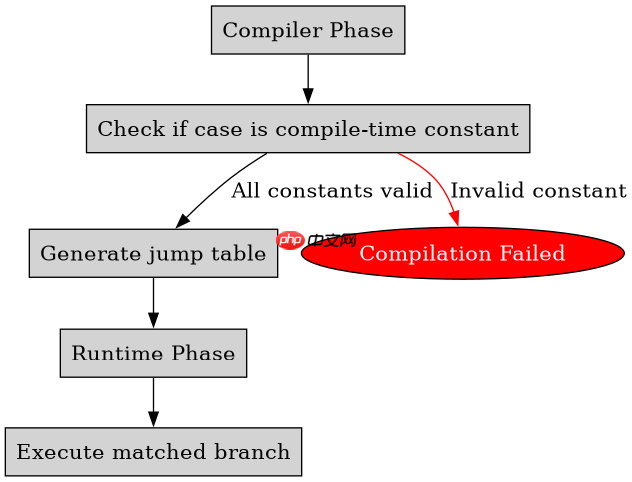
在 java 中,switch 的 case 标签后面不能直接写普通的变量名。java 要求 case 标签必须是编译期常量(compile-time constant),这意味着它必须是一个字面量、final 修饰的基本类型常量或字符串常量。如果尝试使用非 final 的变量,编译器会报错。

为什么普通变量不能作为 case 标签
因为 switch 语句在编译时需要确定所有分支的目标地址,以便生成高效的跳转表(tableswitch)或查找表(lookupswitch)。如果使用运行时才能确定值的变量,编译器无法在编译阶段构建这些结构,因此禁止这种用法。
public class SwitchExample {
    public static void main(String[] args) {
        int value = 5;
        // 错误示例:case 后不能跟非 final 变量
        // switch (value) {
        //     case value: // 编译错误
        //         System.out.println("Match");
        //         break;
        // }

        // 正确示例:使用 final 变量
        final int constantValue = 5;
        switch (value) {
            case constantValue:
                System.out.println("Match with final variable");
                break;
            default:
                System.out.println("No match");
        }
    }
}
上述代码展示了两种情况。第一种直接使用变量 value 作为 case 标签会导致编译错误。第二种将变量声明为 final,此时它在编译期被视为常量,可以合法地用作 case 标签。运行结果为输出 "Match with final variable"。
立即学习“Java免费学习笔记(深入)”;

Java 7 之后字符串和枚举的支持
从 Java 7 开始,switch 支持 String 类型。String 的字面量可以作为 case 标签,因为它们也是编译期常量。同样,枚举类型(enum)的值也可以作为 case 标签,因为它们在编译期是确定的。

public class StringSwitchExample {
    public static void main(String[] args) {
        String day = "MONDAY";
        switch (day) {
            case "MONDAY":
                System.out.println("Monday");
                break;
            case "TUESDAY":
                System.out.println("Tuesday");
                break;
            default:
                System.out.println("Other day");
        }
    }
}
该程序演示了使用 String 作为 switch 表达式的情况。每个 case 标签都是字符串字面量,符合编译期常量的要求。运行结果为输出 "Monday"。注意,即使 day 变量本身不是 final,只要 case 标签是字面量,就是合法的。
使用 if-else 替代非常量条件
当需要基于运行时变量进行多路分支时,应使用 if-else 语句。if-else 在运行时评估条件,灵活性更高,但性能通常略低于 switch(对于大量分支的情况)。
public class IfElseExample {
    public static void main(String[] args) {
        int value = 5;
        int threshold = 5;

        if (value == threshold) {
            System.out.println("Value equals threshold");
        } else if (value > threshold) {
            System.out.println("Value greater than threshold");
        } else {
            System.out.println("Value less than threshold");
        }
    }
}
此代码展示了如何使用 if-else 处理基于变量的比较。运行结果为输出 "Value equals threshold"。这种方式不受编译期常量的限制,适用于更复杂的条件逻辑。