ThreadPoolExecutor 核心线程会超时回收吗
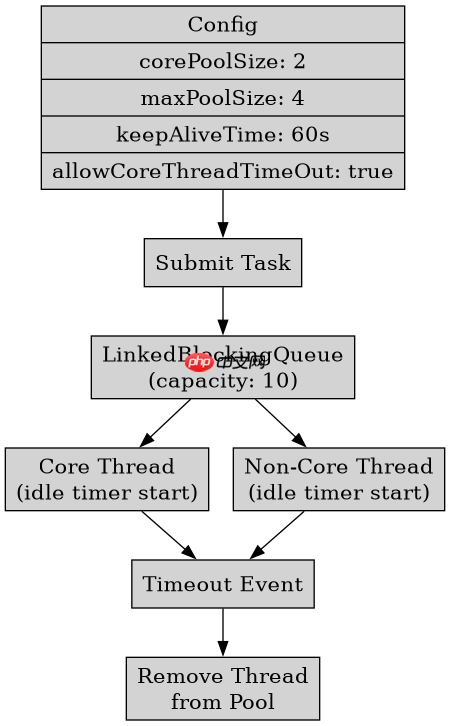
默认情况下,java threadpoolexecutor 的核心线程不会超时回收。要开启这个功能,必须调用 allowcorethreadtimeout(true) 方法。一旦启用,核心线程在空闲时间超过 keepalivetime 后也会被终止并移除,直到线程池大小降至零。如果不设置该参数,核心线程将永久驻留,只有超出核心线程数的非核心线程才会因空闲而超时回收。

如何配置核心线程超时回收
通过继承或包装 ThreadPoolExecutor 并重写 allowCoreThreadTimeOut 方法即可实现。在创建线程池实例后,显式调用该方法传入 true,后续所有核心线程的空闲超时逻辑将与非核心线程一致。这样可以在低负载时自动释放资源,避免内存泄漏或占用过多系统资源。

使用 Husky 在 JavaScript 仓库中强制执行本地 Git 钩子检查
下载
使用 Husky 将 pre-commit、pre-push 和 commit-msg 检查集成到仓库中,以便代理和开发人员在更改离开工作站之前运行相同的本地防护措施。
import java.util.concurrent.*;

public class CoreTimeoutExample {
    public static void main(String[] args) throws InterruptedException {
        ThreadPoolExecutor executor = new ThreadPoolExecutor(
            2, // corePoolSize
            4, // maximumPoolSize
            60L, TimeUnit.SECONDS,
            new LinkedBlockingQueue<>(10)
        );

        // 关键步骤:允许核心线程超时
        executor.allowCoreThreadTimeOut(true);

        System.out.println("Core threads will timeout after keepAliveTime.");

        // 模拟任务执行
        executor.submit(() -> {
            try { Thread.sleep(1000); } catch (InterruptedException e) {}
        });

        // 观察线程数变化
        Thread.sleep(2000);
        System.out.println("Active count: " + executor.getActiveCount());
        System.out.println("Pool size: " + executor.getPoolSize());

        executor.shutdown();
    }
}
运行上述代码,当任务执行完毕后,由于设置了 allowCoreThreadTimeOut(true),核心线程会在 60 秒空闲后被回收,getPoolSize() 会逐渐降为 0(若无新任务提交)。若未调用该方法,getPoolSize() 将保持在 2。
立即学习“Java免费学习笔记(深入)”;
核心线程超时对任务队列的影响
当核心线程因超时而全部被回收后,新提交的任务会直接进入阻塞队列等待。如果队列已满且达到最大线程数限制,则会触发拒绝策略。这意味着核心线程的超时回收可能导致线程池在突发流量下更频繁地创建非核心线程或直接拒绝任务,需根据业务场景权衡队列容量与超时时间。