使用资源泄漏检测工具时,核心做法是将代码中的 try-with-resources 语句作为标准合规模式,并配置工具忽略此类结构。因为 try-with-resources 在编译期会自动生成 finally 块来调用 close(),所以它本身不会导致资源泄漏。你需要确保工具规则中排除了对这种语法糖的误报,同时重点排查未使用该语法的传统 try-catch-finally 或完全遗漏关闭逻辑的代码。

如何配置 SonarQube 识别 try-with-resources 为安全代码
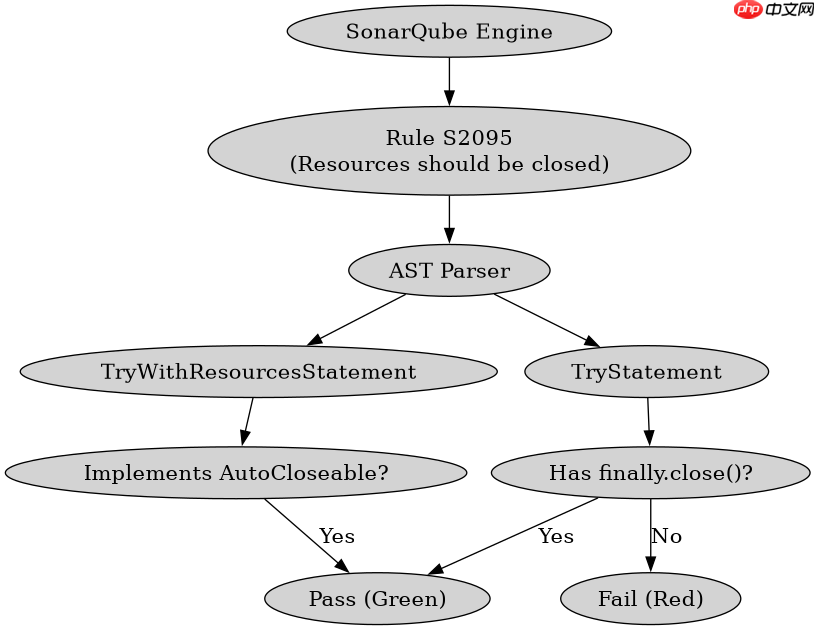
SonarQube 默认开启了 S2095 规则("Resources should be closed"),该规则能够正确识别 try-with-resources 并标记其为安全,而将传统的 try-catch 且未手动关闭资源的代码标记为漏洞。开发者只需在项目中引入 SonarScanner 并进行常规扫描即可,无需额外配置排除项,因为工具内置了对 Java 7+ 语法的理解。
import java.io.BufferedReader;
import java.io.FileReader;
import java.io.IOException;

public class ResourceExample {
    public void safeRead() throws IOException {
        // try-with-resources 自动关闭,SonarQube S2095 不会报错
        try (BufferedReader reader = new BufferedReader(new FileReader("data.txt"))) {
            String line = reader.readLine();
            System.out.println(line);
        }
    }

    public void unsafeRead() throws IOException {
        // 传统写法未关闭,SonarQube S2095 会报错
        BufferedReader reader = new BufferedReader(new FileReader("data.txt"));
        String line = reader.readLine();
        System.out.println(line);
        // 缺少 reader.close()
    }
}
SpotBugs 如何处理 try-with-resources 的资源管理
SpotBugs 通过其 FindCloseResource 插件来检测资源泄漏。对于 try-with-resources 语句,SpotBugs 会识别出 AutoCloseable 接口的自动调用机制,从而不将其视为缺陷。如果开发者使用了较旧版本的 SpotBugs 或者自定义了规则,可能需要确认规则版本是否支持 Java 7+ 语法。通常情况下,只要资源实现了 AutoCloseable 或 Closeable 接口,并在 try 括号内声明,SpotBugs 就会判定为安全。

使用 Husky 将 pre-commit、pre-push 和 commit-msg 检查集成到仓库中,以便代理和开发人员在更改离开工作站之前运行相同的本地防护措施。
立即学习“Java免费学习笔记(深入)”;

import java.sql.Connection;
import java.sql.DriverManager;
import java.sql.SQLException;

public class DBExample {
    public void safeDBAccess() throws SQLException {
        // SpotBugs 识别 try-with-resources 为安全
        try (Connection conn = DriverManager.getConnection("jdbc:h2:mem:test")) {
            System.out.println("Connected safely");
        }
    }

    public void unsafeDBAccess() throws SQLException {
        // SpotBugs 会在此处报告 "RCN: Resource not closed"
        Connection conn = DriverManager.getConnection("jdbc:h2:mem:test");
        System.out.println("Connected but not closed");
    }
}
当 try-with-resources 内部抛出异常时工具如何判断
当 try-with-resources 块内部业务逻辑抛出异常,而 close() 方法也抛出异常时,Java 会将 close() 抛出的异常作为抑制异常(Suppressed Exception)附加到主异常上。资源泄漏检测工具如 SonarQube 和 SpotBugs 能够解析这种异常链,依然认定资源已被尝试关闭,因此不会标记为资源泄漏。开发者应关注的是异常处理逻辑,而非资源关闭状态,因为工具已确认关闭动作已执行。