





处理 indexoutofboundsexception 的核心做法是:在访问数组或集合前,先通过 .length 属性或 .size() 方法检查边界,确保索引值严格小于当前长度且大于等于零。如果无法预先确定范围,则使用 try-catch 块包裹可能越界的代码,捕获异常后执行回退逻辑或记录日志。对于列表操作,优先使用增强型 for 循环或 stream api 来规避手动索引管理带来的风险。

如何安全地遍历并访问 List 中的元素
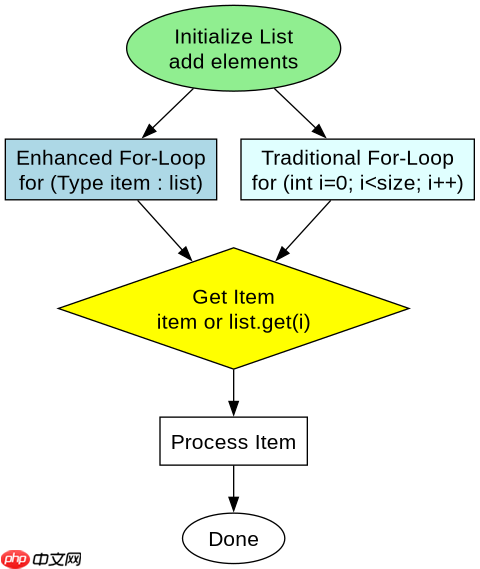
要安全地遍历 List 并访问元素,最推荐的方式是使用增强型 for 循环(For-Each),因为它由编译器自动处理迭代器,完全消除了索引越界的可能性。如果必须使用传统 for 循环,务必将循环条件写为 i ,并在访问 <code>list.get(i) 前确认 list 不为 null。以下代码展示了两种安全访问方式及对应的预期输出。
import java.util.ArrayList;
import java.util.List;

public class SafeListAccess {
    public static void main(String[] args) {
        List<String> names = new ArrayList<>();
        names.add("Alice");
        names.add("Bob");
        names.add("Charlie");

        // 方式一:增强型 for 循环(推荐)
        System.out.println("--- For-Each Loop ---");
        for (String name : names) {
            System.out.println(name);
        }

        // 方式二:传统 for 循环(需严格检查边界)
        System.out.println("--- Traditional For Loop ---");
        for (int i = 0; i < names.size(); i++) {
            System.out.println(names.get(i));
        }
    }
}
运行上述代码的预期结果如下:首先打印 "--- For-Each Loop ---",随后依次打印 "Alice"、"Bob"、"Charlie";接着打印 "--- Traditional For Loop ---",再次依次打印相同的内容。程序正常结束,未抛出任何异常。
立即学习“Java免费学习笔记(深入)”;

FilePond 是一个 JavaScript 文件上传库,支持通过拖拽、粘贴和 API 方式处理文件、目录、URL 和 Data URI。它包含内置的图像优化功能、异步分块上传功能,并提供了适用于 React、Vue、Angular 和 Svelte 的适配器。
如何处理 Map 中不存在的 Key 导致的潜在越界或空指针
虽然 Map 本身不直接抛出 IndexOutOfBoundsException,但在某些实现或自定义逻辑中,若错误地将 Map 当作数组使用索引访问,或在使用 getOrDefault 时未处理 null 值,可能导致后续逻辑崩溃。更常见的情况是,在处理基于索引的集合转换时,若 Map 的 size 与预期数组长度不一致,强行按索引填充数组会引发越界。正确的做法是使用 containsKey() 检查键的存在性,或使用 getOrDefault() 提供默认值。以下代码演示了如何安全地从 Map 获取数据并避免潜在的索引错误场景。

import java.util.HashMap;
import java.util.Map;

public class SafeMapAccess {
    public static void main(String[] args) {
        Map<String, Integer> scores = new HashMap<>();
        scores.put("Alice", 95);
        scores.put("Bob", 87);

        // 安全获取:使用 getOrDefault 避免 null 检查
        int aliceScore = scores.getOrDefault("Alice", 0);
        int charlieScore = scores.getOrDefault("Charlie", 0); // Charlie 不存在,返回 0

        System.out.println("Alice: " + aliceScore);
        System.out.println("Charlie: " + charlieScore);

        // 模拟错误做法:假设我们有一个固定大小的数组,试图从 Map 填充
        String[] names = new String[2];
        int index = 0;
        for (Map.Entry<String, Integer> entry : scores.entrySet()) {
            if (index < names.length) { // 关键:检查数组边界
                names[index] = entry.getKey();
                index++;
            } else {
                System.out.println("Array full, skipping: " + entry.getKey());
            }
        }
    }
}
运行上述代码的预期结果如下:首先打印 "Alice: 95",然后打印 "Charlie: 0";接着由于 Map 中有两个条目,而数组长度为 2,所有条目均被成功填入数组,不会触发 "Array full" 的提示。程序正常结束。此示例强调了在混合使用不同数据结构时,显式检查目标容器(如数组)边界的重要性。
当输入列表为空时,访问索引 0 会发生什么
当输入列表为空时,尝试访问索引 0 会立即抛出 IndexOutOfBoundsException(具体子类通常为 ArrayList`IndexOutOfBoundsException` 或直接是 IndexOutOfBoundsException)。这是因为空列表的 size() 为 0,而任何非负索引都大于等于 size,违反了有效索引的条件(0 list.isEmpty() 或 list.size() > 0。以下代码验证了这一行为。
import java.util.ArrayList;
import java.util.List;

public class EmptyListAccess {
    public static void main(String[] args) {
        List<String> emptyList = new ArrayList<>();

        try {
            // 尝试访问空列表的第一个元素
            String firstElement = emptyList.get(0);
            System.out.println(firstElement);
        } catch (IndexOutOfBoundsException e) {
            System.out.println("Caught exception: " + e.getClass().getSimpleName());
            System.out.println("Message: " + e.getMessage());
        }

        // 安全做法
        if (!emptyList.isEmpty()) {
            System.out.println("First element: " + emptyList.get(0));
        } else {
            System.out.println("List is empty, cannot access index 0.");
        }
    }
}
运行上述代码的预期结果如下:首先打印 "Caught exception: IndexOutOfBoundsException",然后打印 "Message: Index 0 out of bounds for length 0";接着打印 "List is empty, cannot access index 0."。这证实了空列表访问索引 0 会抛出异常,且通过 isEmpty() 检查可以有效避免该异常。