



Java HashSet 怎么深拷贝
java 的 hashset 没有提供直接的深拷贝方法,因为集合本身只存储引用。要实现真正的深拷贝,必须遍历集合中的元素,对每个对象进行独立克隆或重新构造,并将新对象放入新的 hashset 中。如果集合中的元素是不可变类型(如 string、integer),直接放入新集合即可;如果是可变对象,则需要调用其 clone() 方法或使用构造函数创建副本。

使用 clone() 方法实现深拷贝
当集合中的元素实现了 Cloneable 接口时,可以通过调用元素的 clone() 方法来创建深拷贝。这种方法要求元素类必须正确重写 clone() 方法,确保内部的可变字段也被复制。
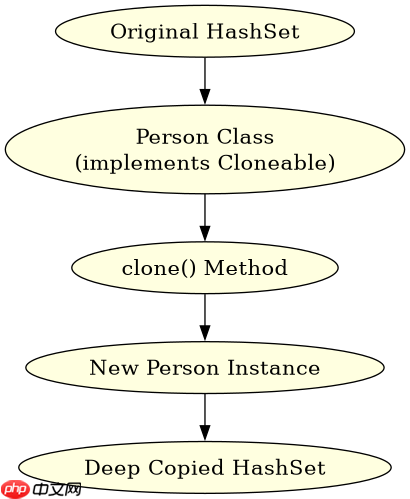
import java.util.HashSet;
import java.util.Set;

public class Person implements Cloneable {
    private String name;
    private int age;

    public Person(String name, int age) {
        this.name = name;
        this.age = age;
    }

    @Override
    protected Object clone() throws CloneNotSupportedException {
        return super.clone();
    }

    public static void main(String[] args) throws Exception {
        Set<Person> originalSet = new HashSet<>();
        originalSet.add(new Person("Alice", 30));
        originalSet.add(new Person("Bob", 25));

        Set<Person> deepCopiedSet = new HashSet<>();
        for (Person p : originalSet) {
            deepCopiedSet.add((Person) p.clone());
        }

        // 验证:修改原集合中的对象不会影响新集合
        Person originalPerson = originalSet.iterator().next();
        originalPerson.setName("Charlie");
        System.out.println(deepCopiedSet.iterator().next().getName()); // 输出: Alice
    }

    public void setName(String name) { this.name = name; }
    public String getName() { return name; }
}
使用构造函数或工厂方法实现深拷贝
如果元素类没有实现 Cloneable,或者你希望更明确地控制克隆过程,可以使用构造函数或静态工厂方法来创建新对象。这种方式通常更安全,因为它不依赖于 clone() 方法的语义。

FilePond 灵活的 JavaScript 文件上传库
下载
FilePond 是一个 JavaScript 文件上传库,支持通过拖拽、粘贴和 API 方式处理文件、目录、URL 和 Data URI。它包含内置的图像优化功能、异步分块上传功能,并提供了适用于 React、Vue、Angular 和 Svelte 的适配器。
立即学习“Java免费学习笔记(深入)”;
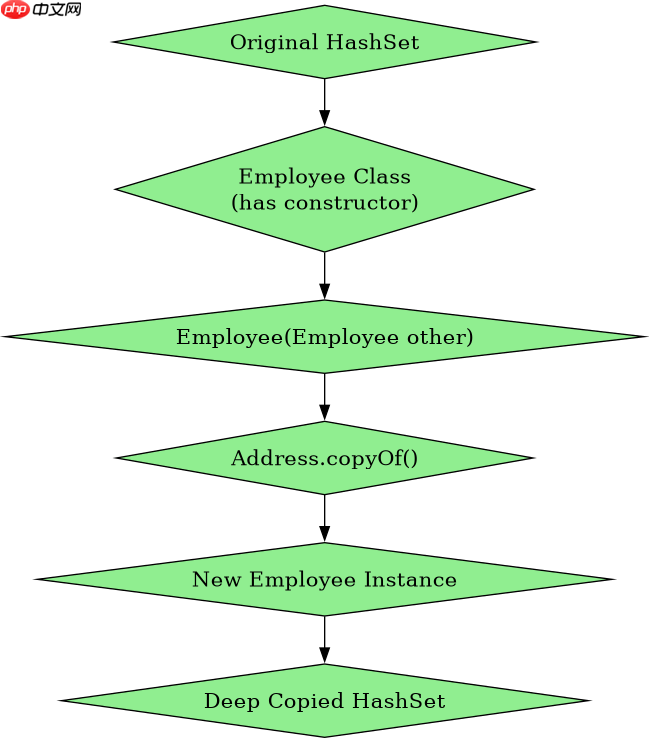
import java.util.HashSet;
import java.util.Set;

public class Address {
    private String city;

    public Address(String city) {
        this.city = city;
    }

    // 工厂方法用于创建副本
    public static Address copyOf(Address original) {
        if (original == null) return null;
        return new Address(original.city);
    }

    public String getCity() { return city; }
}

public class Employee {
    private String id;
    private Address address;

    public Employee(String id, Address address) {
        this.id = id;
        this.address = address;
    }

    // 构造函数用于创建副本
    public Employee(Employee other) {
        this.id = other.id;
        this.address = Address.copyOf(other.address); // 深拷贝地址
    }

    public static void main(String[] args) {
        Set<Employee> originalSet = new HashSet<>();
        originalSet.add(new Employee("E001", new Address("New York")));

        Set<Employee> deepCopiedSet = new HashSet<>();
        for (Employee e : originalSet) {
            deepCopiedSet.add(new Employee(e)); // 使用拷贝构造函数
        }

        // 验证:修改原集合中的地址不会影响新集合
        Employee originalEmp = originalSet.iterator().next();
        originalEmp.getAddress().setCity("Boston");
        System.out.println(deepCopiedSet.iterator().next().getAddress().getCity()); // 输出: New York
    }

    public Address getAddress() { return address; }
}

// 辅助类
class Address {
    private String city;
    public Address(String city) { this.city = city; }
    public String getCity() { return city; }
    public void setCity(String city) { this.city = city; }
}
基于程序中某个输入、条件或结果的具体问题
在上述代码中,我们使用了具体的输入:Person 和 Employee 对象。关键条件是这些对象必须是可变的,并且它们的内部状态(如 name、address)需要被独立复制。如果这些对象是不可变的(如 String),则不需要深拷贝,直接放入新集合即可。例如,如果 Person 类中的 name 是 final 且不可变,那么即使不显式克隆,新集合中的引用指向的对象内容也不会改变,但为了保持一致性,通常仍建议克隆整个对象。