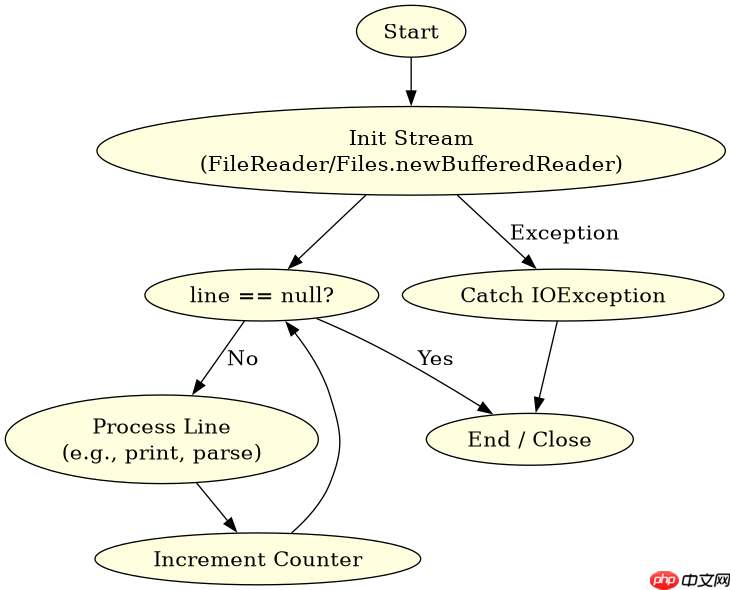
使用 bufferedreader 按行读取大文件的核心做法是将其包装在 inputstreamreader 中,并指定 utf-8 编码,通过循环调用 readline() 直到返回 null。这种方法利用内部缓冲区减少 i/o 次数,能有效避免内存溢出。处理时需注意关闭资源以释放文件句柄,并在遇到异常时进行适当捕获。

如何正确初始化 BufferedReader 并处理编码问题?
初始化 BufferedReader 时必须指定字符集,否则在不同操作系统上可能产生乱码。推荐直接使用 Files.newBufferedReader() 简化代码,或者手动构建 FileInputStream 到 InputStreamReader 再到 BufferedReader 的链式结构。指定 StandardCharsets.UTF_8 能确保跨平台一致性。
import java.io.BufferedReader;
import java.io.FileReader;
import java.io.IOException;

public class LargeFileReader {
    public static void main(String[] args) {
        String filePath = "large_file.txt";
        // 使用 try-with-resources 自动关闭流
        try (BufferedReader reader = new BufferedReader(new FileReader(filePath))) {
            String line;
            int lineNumber = 0;
            while ((line = reader.readLine()) != null) {
                lineNumber++;
                // 处理每一行数据
                System.out.println("Line " + lineNumber + ": " + line);
            }
        } catch (IOException e) {
            System.err.println("Error reading file: " + e.getMessage());
        }
    }
}
如何处理读取过程中的异常和空值情况?
在读取大文件时,网络中断或磁盘错误可能导致 IOException。此外,如果文件为空,readLine() 会立即返回 null,循环不会执行。对于包含特殊字符的行,readLine() 会正常返回字符串,但需确保后续逻辑能处理可能的 null 值(尽管在标准循环中已排除)。建议在捕获异常后记录日志或重试机制。

立即学习“Java免费学习笔记(深入)”;

import java.io.BufferedReader;
import java.io.FileReader;
import java.io.IOException;

public class RobustFileReader {
    public static void main(String[] args) {
        String filePath = "empty_file.txt"; // 测试空文件
        try (BufferedReader reader = new BufferedReader(new FileReader(filePath))) {
            String line;
            boolean hasContent = false;
            while ((line = reader.readLine()) != null) {
                if (line.isEmpty()) {
                    continue; // 跳过空行
                }
                hasContent = true;
                // 处理非空行
                processLine(line);
            }
            if (!hasContent) {
                System.out.println("File is empty or contains only whitespace.");
            }
        } catch (IOException e) {
            System.err.println("Failed to read file: " + e.getMessage());
        }
    }

    private static void processLine(String line) {
        // 示例处理逻辑
        System.out.println("Processing: " + line);
    }
}
当文件包含特定分隔符时如何优化解析效率?
如果大文件是按逗号或制表符分隔的 CSV 格式,直接在 readLine() 后使用 String.split() 可能会因正则表达式开销影响性能。对于简单分隔符,可使用 String.indexOf() 和 String.substring() 手动解析,或使用专门的轻量级库如 OpenCSV。若坚持用原生方法,可预分配缓冲区并复用字符串对象以减少 GC 压力。