





在 java nio 中,op_accept 用于配置 serversocketchannel 以监听新连接请求。使用方法是将其注册到 selector 上,当有客户端尝试建立连接时,select() 会返回该键,此时调用 accept() 方法获取新的 socketchannel 并继续处理。

如何正确注册 ServerSocketChannel 的 OP_ACCEPT?
必须将 ServerSocketChannel 设置为非阻塞模式,然后调用 register(selector, SelectionKey.OP_ACCEPT)。如果未设置非阻塞模式或注册了错误的操作类型,程序将无法正常工作或抛出异常。
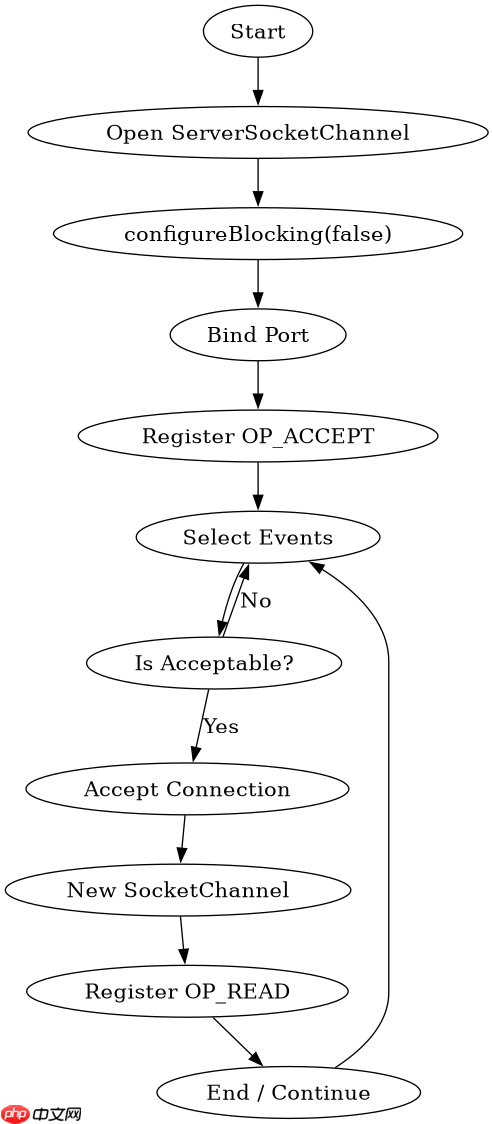
import java.io.IOException;
import java.net.InetSocketAddress;
import java.nio.channels.ServerSocketChannel;
import java.nio.channels.SocketChannel;
import java.nio.channels.SelectionKey;
import java.nio.channels.Selector;
import java.util.Iterator;

public class AcceptExample {
    public static void main(String[] args) throws IOException {
        // 1. 创建 Selector
        Selector selector = Selector.open();

        // 2. 打开 ServerSocketChannel 并设置为非阻塞
        ServerSocketChannel ssc = ServerSocketChannel.open();
        ssc.configureBlocking(false);
        ssc.bind(new InetSocketAddress(8080));

        // 3. 注册 OP_ACCEPT
        ssc.register(selector, SelectionKey.OP_ACCEPT);

        System.out.println("Server listening on port 8080...");

        while (true) {
            // 4. 等待事件
            int readyChannels = selector.select();
            if (readyChannels == 0) continue;

            Iterator<SelectionKey> keys = selector.selectedKeys().iterator();
            while (keys.hasNext()) {
                SelectionKey key = keys.next();
                keys.remove();

                if (key.isAcceptable()) {
                    // 5. 接受连接
                    SocketChannel sc = ssc.accept();
                    if (sc != null) {
                        sc.configureBlocking(false);
                        // 为新连接的 Channel 注册读事件
                        sc.register(selector, SelectionKey.OP_READ);
                        System.out.println("New connection accepted from " + sc.getRemoteAddress());
                    }
                }
            }
        }
    }
}
运行上述代码后,控制台会打印 "Server listening on port 8080..."。当有客户端连接时,会打印 "New connection accepted from ..."。这验证了 OP_ACCEPT 能正确触发 isAcceptable() 判断。
立即学习“Java免费学习笔记(深入)”;

使用Atmosphere构建通过WebSocket、SSE、gRPC、WebTransport、MCP、A2A和AG-UI流传输的JVM代理网关,并带有治理钩子。
为什么 OP_ACCEPT 只适用于 ServerSocketChannel?
OP_ACCEPT 是服务端专用的操作标志,仅对 ServerSocketChannel 有效。如果在 SocketChannel(客户端)上注册 OP_ACCEPT,会抛出 IllegalArgumentException。这是因为客户端不需要“接受”连接,而是发起连接。

import java.io.IOException;
import java.net.InetSocketAddress;
import java.nio.channels.SocketChannel;
import java.nio.channels.SelectionKey;
import java.nio.channels.Selector;

public class InvalidAcceptUsage {
    public static void main(String[] args) throws IOException {
        Selector selector = Selector.open();
        SocketChannel sc = SocketChannel.open();
        sc.configureBlocking(false);
        sc.connect(new InetSocketAddress("localhost", 8080));

        try {
            // 错误用法:在 SocketChannel 上注册 OP_ACCEPT
            sc.register(selector, SelectionKey.OP_ACCEPT);
        } catch (IllegalArgumentException e) {
            System.out.println("Caught expected exception: " + e.getMessage());
        }
    }
}
运行此代码,控制台会输出 "Caught expected exception: Unsupported operation type"。这证明了 OP_ACCEPT 不能用于客户端通道,确保了 API 使用的正确性。
当 accept() 返回 null 时如何处理?
在极少数情况下,ServerSocketChannel.accept() 可能返回 null,尽管在标准实现中很少见。如果发生这种情况,应跳过当前迭代,避免空指针异常。通常,只要 isAcceptable() 为真,accept() 就会返回一个有效的 SocketChannel。