




在 completionstage 的链式调用中,thencomposeasync 接收一个返回类型为 completionstage 的函数作为参数。你需要提供一个符合 function<t completionstage>></t> 签名的 lambda 表达式或方法引用,该函数将上游阶段的结果作为输入,并返回一个新的异步阶段,从而实现非阻塞的流水线处理。

如何定义并传递 Function 参数
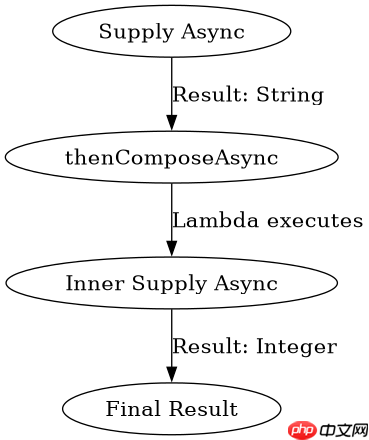
要使用 thenComposeAsync,必须传入一个实现了 java.util.function.Function 接口的对象。这个函数的泛型类型由上游阶段的完成值决定。例如,如果上游是 CompletableFuture<string></string>,那么传入的函数签名必须是 Function<string completionstage>></string>。在代码实现中,直接编写 Lambda 表达式即可,无需显式创建类实例。
import java.util.concurrent.CompletableFuture;
import java.util.concurrent.ExecutorService;
import java.util.concurrent.Executors;

public class Main {
    public static void main(String[] args) {
        ExecutorService executor = Executors.newFixedThreadPool(4);

        CompletableFuture<String> stage1 = CompletableFuture.supplyAsync(() -> "Hello", executor);

        // thenComposeAsync 接收 Function<String, CompletionStage<Integer>>
        CompletableFuture<Integer> result = stage1.thenComposeAsync(s -> {
            return CompletableFuture.supplyAsync(() -> s.length(), executor);
        }, executor);

        System.out.println(result.join());
        executor.shutdown();
    }
}
与 thenApplyAsync 的区别是什么
thenComposeAsync 用于“扁平化”嵌套的异步操作,而 thenApplyAsync 用于同步转换结果。当你的转换逻辑本身也是异步的(即返回 Future 或 CompletableFuture)时,必须使用 thenComposeAsync。如果使用 thenApplyAsync 处理异步逻辑,你会得到一个 CompletableFuture<completablefuture>></completablefuture> 的双层嵌套结构,这通常不是期望的结果。thenComposeAsync 会自动解包内层阶段,使最终结果保持单层 CompletableFuture<t></t>。

使用Atmosphere构建通过WebSocket、SSE、gRPC、WebTransport、MCP、A2A和AG-UI流传输的JVM代理网关,并带有治理钩子。
立即学习“Java免费学习笔记(深入)”;

import java.util.concurrent.CompletableFuture;
import java.util.concurrent.ExecutorService;
import java.util.concurrent.Executors;

public class Main {
    public static void main(String[] args) {
        ExecutorService executor = Executors.newFixedThreadPool(4);

        CompletableFuture<String> stage1 = CompletableFuture.supplyAsync(() -> "Data", executor);

        // 错误用法:导致双层嵌套
        CompletableFuture<CompletableFuture<Integer>> wrong = stage1.thenApplyAsync(
            s -> CompletableFuture.supplyAsync(() -> s.length(), executor), executor
        );

        // 正确用法:扁平化处理
        CompletableFuture<Integer> correct = stage1.thenComposeAsync(
            s -> CompletableFuture.supplyAsync(() -> s.length(), executor), executor
        );

        System.out.println(correct.join());
        executor.shutdown();
    }
}
线程池未指定时会发生什么
当调用 thenComposeAsync 且只传入函数参数、不显式指定 Executor 时,任务会提交到 ForkJoinPool.commonPool()。这是 Java 默认的公共 Fork/Join 线程池。如果你的异步任务包含阻塞 I/O 操作,可能会耗尽公共池中的线程,进而影响其他依赖公共池的异步任务。因此,在生产环境中,建议始终显式传入自定义的 Executor 以隔离资源。