




spring boot 全局异常处理捕获 graalvm 原生异常,核心在于配置 @controlleradvice 并注册针对 graalvm 特有运行时异常的处理器。graalvm native image 在编译期会剥离部分反射和动态特性,导致 java.lang.inaccessibleobjectexception、java.lang.classnotfoundexception 或 org.graalvm.nativeimage.imagecode.reflectionconfigurationitem 相关错误在运行时抛出。通过在全局异常处理器中显式声明对这些特定异常类型的 @exceptionhandler 方法,可以拦截这些崩溃并返回标准化的 json 响应。

如何识别 GraalVM 特有的运行时异常类型
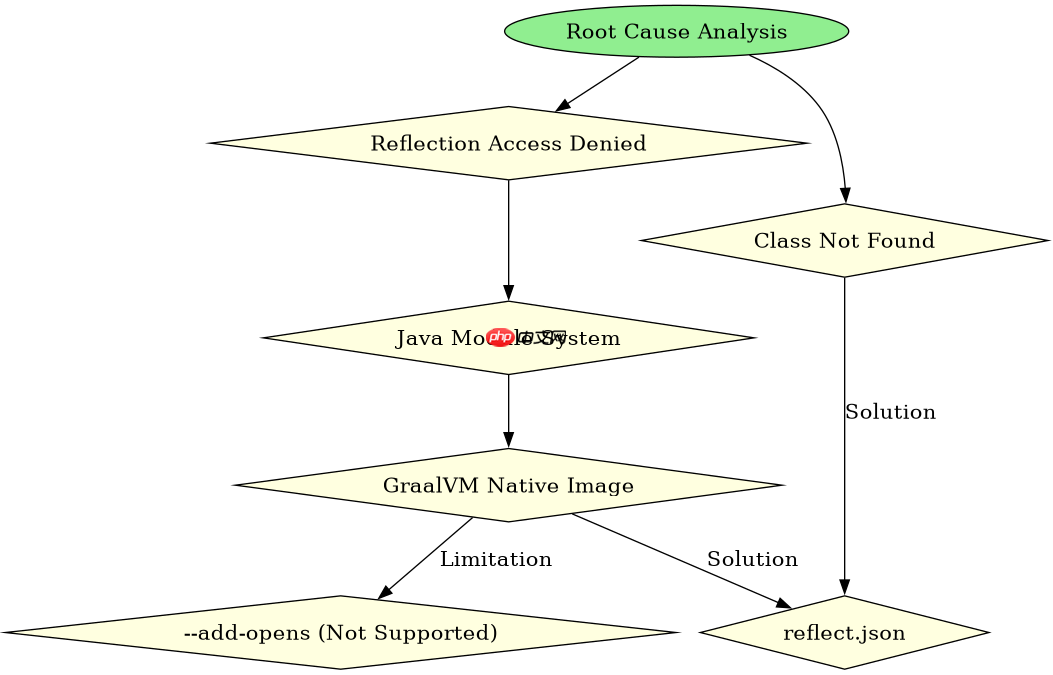
GraalVM 原生镜像的异常主要源于编译时未注册的反射访问或动态代理缺失。最常见的两类是 InaccessibleObjectException(模块访问限制)和 NoClassDefFoundError(类路径缺失)。开发者需要关注启动阶段抛出的 InitializationError 以及业务逻辑中因反射失败引发的 InvocationTargetException。识别这些异常的关键是查看堆栈跟踪中是否包含 org.graalvm.nativeimage 包名或 native-image-agent 生成的提示。
import org.springframework.web.bind.annotation.ControllerAdvice;
import org.springframework.web.bind.annotation.ExceptionHandler;
import org.springframework.http.ResponseEntity;
import org.springframework.http.HttpStatus;
import java.util.HashMap;
import java.util.Map;

@ControllerAdvice
public class GlobalExceptionHandler {

    @ExceptionHandler(InaccessibleObjectException.class)
    public ResponseEntity<Map<String, Object>> handleInaccessibleObjectException(InaccessibleObjectException ex) {
        Map<String, Object> body = new HashMap<>();
        body.put("error", "Native Image Reflection Error");
        body.put("message", "Please add reflection configuration: " + ex.getMessage());
        return ResponseEntity.status(HttpStatus.INTERNAL_SERVER_ERROR).body(body);
    }

    @ExceptionHandler(NoClassDefFoundError.class)
    public ResponseEntity<Map<String, Object>> handleNoClassDefFoundError(NoClassDefFoundError ex) {
        Map<String, Object> body = new HashMap<>();
        body.put("error", "Missing Class in Native Image");
        body.put("message", "Class not found at runtime: " + ex.getMessage());
        return ResponseEntity.status(HttpStatus.INTERNAL_SERVER_ERROR).body(body);
    }
}
上述代码展示了两个关键的异常处理方法。第一个方法捕获 InaccessibleObjectException,这通常发生在 GraalVM 尝试通过反射访问 JDK 内部模块或第三方库的非公开 API 时。第二个方法捕获 NoClassDefFoundError,这在原生镜像中比在 JVM 中更常见,因为某些类可能在编译期被优化掉但未在 reflect.json 中注册。这两个处理器确保了当底层原生执行环境抛出这些特定错误时,应用不会直接崩溃,而是返回结构化的错误信息。

如何处理 GraalVM 初始化阶段的配置错误
除了运行时的反射异常,GraalVM 原生镜像在启动初期可能会抛出 org.graalvm.nativeimage.hosted.Feature$InitializationError 或 UnsupportedFeatureError。这些异常通常在 @PostConstruct 方法或静态初始化块中触发。为了捕获这些异常,需要在 @ControllerAdvice 中添加对应的处理器,或者在 Spring 的 ApplicationListener 中监听 ApplicationFailedEvent。然而,对于 Web 请求上下文中的异常,@ExceptionHandler 是更直接的方式。

import org.springframework.web.bind.annotation.ControllerAdvice;
import org.springframework.web.bind.annotation.ExceptionHandler;
import org.springframework.http.ResponseEntity;
import org.springframework.http.HttpStatus;
import java.util.HashMap;
import java.util.Map;

@ControllerAdvice
public class GlobalExceptionHandler {

    @ExceptionHandler(Exception.class)
    public ResponseEntity<Map<String, Object>> handleGenericException(Exception ex) {
        Map<String, Object> body = new HashMap<>();
        if (ex instanceof InaccessibleObjectException ||
            ex instanceof NoClassDefFoundError ||
            ex instanceof InitializationError) {
            body.put("error", "GraalVM Native Configuration Issue");
            body.put("message", "Native image configuration error: " + ex.getMessage());
            return ResponseEntity.status(HttpStatus.BAD_GATEWAY).body(body);
        }
        body.put("error", "Internal Server Error");
        body.put("message", "An unexpected error occurred");
        return ResponseEntity.status(HttpStatus.INTERNAL_SERVER_ERROR).body(body);
    }
}
这段代码提供了一个通用的异常处理兜底方案。它首先检查异常是否为 GraalVM 特有的类型,如果是,则返回特定的错误码和信息。如果不是,则按常规内部服务器错误处理。这种分层处理方式确保了所有异常都能被捕获,同时为 GraalVM 特定问题提供了明确的诊断线索。开发者可以根据实际日志调整错误码和消息内容。
为什么 InaccessibleObjectException 在原生镜像中频繁出现
InaccessibleObjectException 在 GraalVM 原生镜像中频繁出现,是因为原生镜像在编译时会进行严格的模块边界检查。JDK 9 引入的模块化系统限制了非受限代码对内部模块的访问。在传统的 JVM 上,可以通过 --add-opens 参数绕过这些限制,但在 GraalVM 中,这种动态绕过机制不可用。因此,任何试图通过反射访问非公开 API 的代码都会在运行时抛出此异常。解决这个问题的最佳实践是在编译前使用 -H:ReflectionConfigurationFiles 参数提供反射配置文件,或者修改代码以避免使用内部 API。