




JavaScript 中 this 在回调函数中指向谁
在 javascript 中,this 在回调函数中的指向取决于回调函数的定义方式。如果回调是普通函数,this 默认指向全局对象(浏览器中为 window)或 undefined(严格模式下);如果是箭头函数,this 会继承定义时所在作用域的 this 值。因此,要控制回调中的 this,需根据场景选择普通函数绑定、箭头函数或显式绑定。
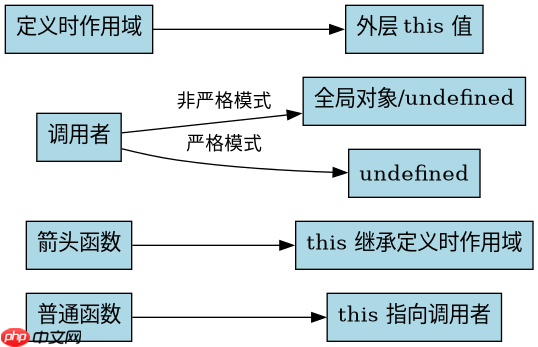
普通函数回调的 this 指向问题
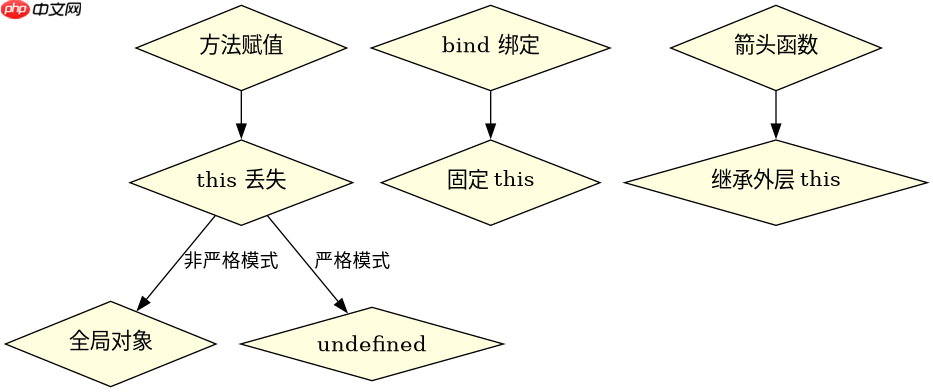
当使用普通函数作为回调时,this 的指向由调用方式决定。例如,将方法直接赋值给变量后调用,this 会丢失上下文,指向全局对象或 undefined。这是常见陷阱,可通过 bind 或箭头函数解决。

const obj = {
  name: 'Alice',
  greet: function() {
    console.log(this.name);
  }
};

// 错误用法:this 丢失
const fn = obj.greet;
fn(); // undefined (严格模式) 或 window.name

// 正确用法:bind 保留上下文
obj.greet.bind(obj)(); // 'Alice'

// 正确用法:箭头函数继承外层 this
const obj2 = {
  name: 'Bob',
  greet: () => {
    console.log(this.name); // 继承全局 this
  }
};
obj2.greet(); // undefined
箭头函数回调的 this 继承机制
箭头函数没有自己的 this,它总是捕获定义时所在词法作用域的 this 值。这在事件处理或定时器回调中非常有用,可避免手动绑定 this 的麻烦。
立即学习“Java免费学习笔记(深入)”;

class Counter {
  constructor() {
    this.count = 0;
  }

  increment() {
    setTimeout(() => {
      this.count++; // this 继承自 increment 方法的调用者
      console.log(this.count);
    }, 1000);
  }
}

const counter = new Counter();
counter.increment(); // 1秒后输出 1