在junit结合mockito进行单元测试时,匹配任意参数应使用 any() 系列方法。具体做法是在调用 when() 或 verify() 时,将期望的参数位置替换为 any(类型.class),这样框架就会忽略实际传入的值,只要类型匹配即视为成功。若需匹配非空任意值,可使用 anystring()、anyint() 等具体类型方法;若需匹配任意对象(包括null),则使用 any() 无参形式或 any(object.class)。

如何验证方法被调用且忽略参数差异?
要验证某个方法被调用但不在乎传入的具体参数值,应在 verify() 中使用 any() 占位符。这适用于测试逻辑分支,确保代码路径被执行,而不关心数据细节。例如,验证一个服务方法是否被调用,无论其ID是多少,只需将ID参数替换为 anyInt() 即可。
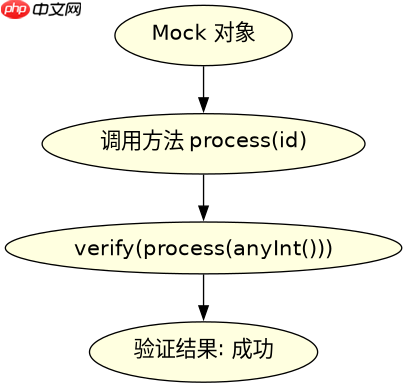
import static org.mockito.Mockito.*;
import org.junit.Test;

public class ServiceTest {
    @Test
    public void testVerifyWithAny() {
        // 1. 准备:创建mock对象
        MyService service = mock(MyService.class);

        // 2. 执行:调用方法,传入特定参数
        service.process(100);

        // 3. 验证:使用 anyInt() 忽略具体数值
        verify(service).process(anyInt());
    }
}

interface MyService {
    void process(int id);
}
如何处理多参数方法中的部分任意匹配?
当方法有多个参数时,可以混合使用具体值和 any() 系列方法。例如,第一个参数需要精确匹配,第二个参数可以是任意字符串,则写法为 verify(mock).method(1, anyString())。这种组合方式能更精细地控制验证条件,确保关键参数正确,同时放宽对辅助参数的要求。

import static org.mockito.Mockito.*;
import org.junit.Test;

public class MultiParamTest {
    @Test
    public void testVerifyMixedParams() {
        // 1. 准备
        Calculator calc = mock(Calculator.class);

        // 2. 执行
        calc.calculate(5, "add");

        // 3. 验证:第一个参数固定为5,第二个参数任意字符串
        verify(calc).calculate(eq(5), anyString());
    }
}

interface Calculator {
    int calculate(int a, String op);
}
使用any()时如果传入null会发生什么?
在使用 any(T.class) 时,它默认匹配非null的任意对象。如果实际调用传入了 null,而期望使用的是 any(String.class),验证会失败。若希望匹配包括null在内的任意值,应使用 any() 无参形式或 any(Object.class)。这是常见的陷阱,需注意区分。
import static org.mockito.Mockito.*;
import org.junit.Test;

public class NullHandlingTest {
    @Test
    public void testNullWithAny() {
        Printer printer = mock(Printer.class);

        // 执行:传入null
        printer.print(null);

        // 错误写法:anyString() 不匹配 null
        // verify(printer).print(anyString());

        // 正确写法:any() 匹配 null 和非null
        verify(printer).print(any());
    }
}

interface Printer {
    void print(String text);
}