javascript 函数柯里化后 this 指向会丢失,因为柯里化通常返回一个新函数,新函数的 this 取决于调用方式。处理方法是使用 bind 显式绑定 this,或在柯里化内部通过闭包捕获外部 this。

为什么柯里化会导致 this 丢失?
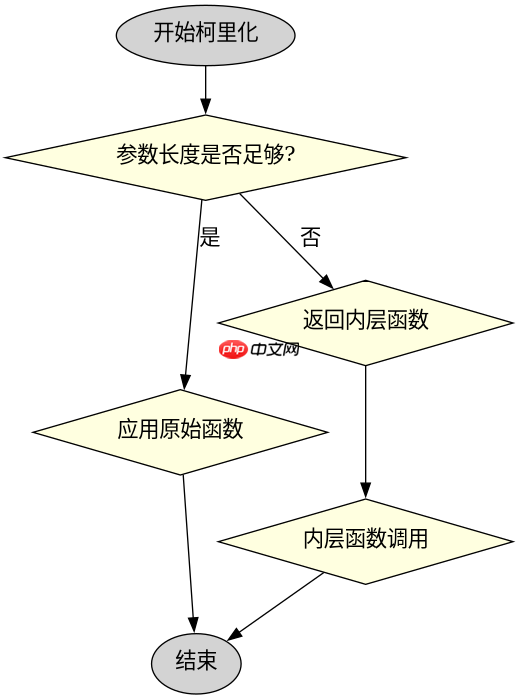
柯里化函数返回的是一个全新的函数对象,这个新函数在定义时没有绑定到任何特定的对象上。当它被作为普通函数调用时,在非严格模式下 this 指向全局对象(如 window),在严格模式下为 undefined。这与原函数的 this 指向无关。
function curry(fn) {
    return function curried(...args) {
        if (args.length >= fn.length) {
            return fn.apply(this, args);
        } else {
            return function(...moreArgs) {
                return curried.apply(this, args.concat(moreArgs));
            };
        }
    };
}

const obj = { name: 'Alice', greet: curry(function(greeting, punctuation) {
    console.log(this.name + ": " + greeting + punctuation);
}) };

obj.greet('Hello')(','); // this 是 obj,输出正确
var greetFn = obj.greet('Hi');
greetFn('.'); // this 是 window/undefined,输出错误
上述代码中,curry 函数返回的 curried 函数在第一次调用时,如果通过 obj.greet 调用,this 是 obj;但第二次调用返回的内层匿名函数,如果通过 greetFn() 调用,this 就丢失了。
立即学习“Java免费学习笔记(深入)”;

Mailgun 用于邮件投递和域名操作的 JavaScript SDK
下载
一个围绕官方 Mailgun JavaScript SDK 构建的 ASE 技能,用于从 Node.js 发送电子邮件和管理 Mailgun API 工作流。它适用于需要事务性消息传递、域名感知电子邮件操作、事件处理以及与 Mailgun 平台直接集成的代理任务。
如何使用 bind 解决 this 丢失问题?
在柯里化过程中,使用 bind 将外层函数的 this 传递给内层函数,确保 this 始终指向预期的对象。

function curryWithBind(fn) {
    const boundThis = this;
    return function curried(...args) {
        if (args.length >= fn.length) {
            return fn.apply(boundThis, args);
        } else {
            return function(...moreArgs) {
                return curried.apply(boundThis, args.concat(moreArgs));
            };
        }
    };
}

const obj = { name: 'Bob', greet: curryWithBind(function(greeting, punctuation) {
    console.log(this.name + ": " + greeting + punctuation);
}).bind(obj); };

obj.greet('Hello')(','); // 输出: Bob: Hello,
这里通过 bind 将 obj 的 this 绑定到柯里化函数上,确保无论怎么调用,this 都指向 obj。
基于具体输入条件验证柯里化后的 this 行为
当柯里化函数被多次嵌套调用时,每次调用都需要确保 this 的正确传递。例如,在上面的例子中,如果 curryWithBind 没有被正确绑定,或者在嵌套调用中丢失了 this,就会导致错误。