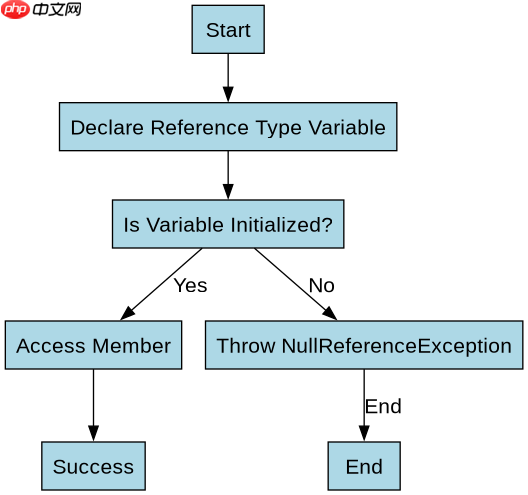
在c#中,引用类型变量未初始化时不能直接使用,因为此时变量的值为`null`,直接访问其成员会抛出`nullreferenceexception`异常。要解决这个问题,必须在访问前检查变量是否为`null`,或者确保在声明时进行初始化。
string变量未初始化时调用Length属性会发生什么?
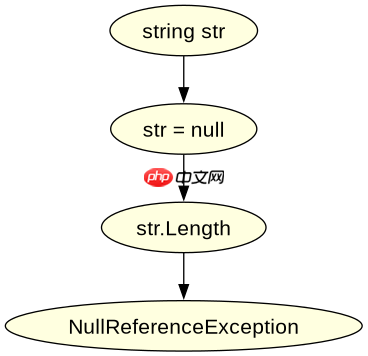
当string类型的变量未初始化(即值为null)时,直接调用其Length属性会引发NullReferenceException。这是因为string是引用类型,默认初始化为null,而null没有实际的内存对象来提供Length属性。
using System;

class Program
{
    static void Main()
    {
        string str; // 未初始化,默认为 null
        try
        {
            int length = str.Length; // 这里会抛出 NullReferenceException
            Console.WriteLine(length);
        }
        catch (NullReferenceException ex)
        {
            Console.WriteLine("Error: " + ex.Message);
        }
    }
}
预期输出:Error: Object reference not set to an instance of an object.

如何安全地处理未初始化的引用类型变量?
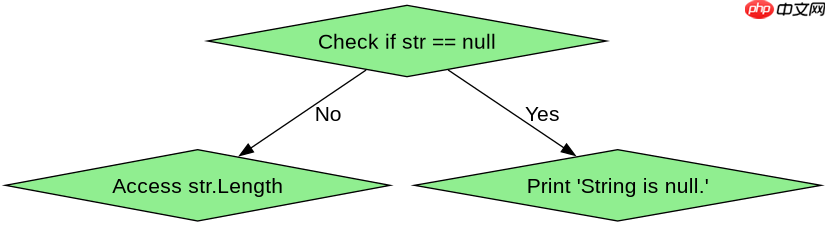
可以通过在访问变量前检查其是否为null来避免异常。例如,使用if语句判断变量是否为null,或者使用??运算符提供默认值。
using System;

class Program
{
    static void Main()
    {
        string str; // 未初始化,默认为 null
        if (str != null)
        {
            Console.WriteLine(str.Length);
        }
        else
        {
            Console.WriteLine("String is null.");
        }
    }
}
预期输出:String is null.
如果引用类型变量被显式赋值为null,其行为与未初始化有何不同?
无论是未初始化还是显式赋值为null,引用类型变量的行为是一致的:它们都指向null,无法直接访问其成员。区别仅在于代码的可读性和意图表达上,显式赋值更明确地表明开发者有意将变量设为null。