


java 单元测试验证熔断降级,核心在于使用 hystrix 或 resilience4j 等库提供的测试工具类(如 hystrixrequestcontext 或 testconfig),通过模拟上游依赖的异常或超时来触发熔断器状态切换,并断言降级逻辑(fallback)是否被正确执行。具体做法是:在测试方法中初始化上下文,调用目标服务方法,捕获预期的异常或直接检查返回值是否为降级后的默认值,同时验证熔断器的状态机变化(从 closed 到 open)。这样做能确保在真实故障发生时,系统能按预期进入安全模式。

如何模拟依赖服务超时以触发熔断?
要模拟依赖服务超时,最直接的方法是在单元测试中注入一个会抛出 TimeoutException 或故意休眠超过熔断阈值的 Mock 对象。例如,在使用 HystrixCommand 时,可以通过继承并重写 run() 方法,在其中强制休眠或使用 Mockito 模拟一个慢速响应。当测试调用该 Command 时,框架会检测到耗时超过设定的 execution.isolation.thread.timeoutInMilliseconds,从而抛出 RuntimeException 并触发 Fallback。关键在于配置正确的超时时间,并确保测试环境中的线程池隔离策略生效。
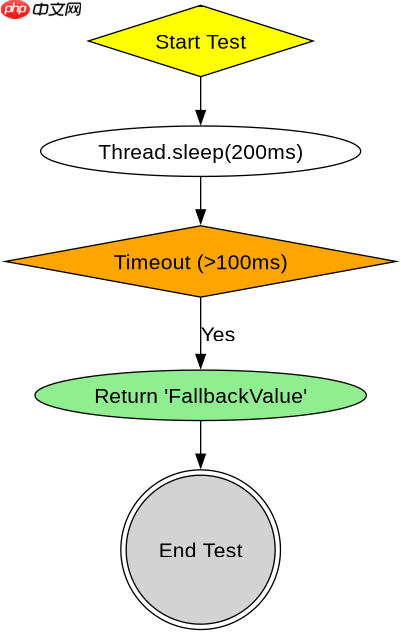
import com.netflix.hystrix.HystrixCommand;
import com.netflix.hystrix.HystrixCommandGroupKey;
import com.netflix.hystrix.HystrixCommandKey;
import com.netflix.hystrix.HystrixCommandProperties;
import com.netflix.hystrix.strategy.concurrency.HystrixRequestContext;

import org.junit.After;
import org.junit.Before;
import org.junit.Test;
import static org.junit.Assert.assertEquals;
import static org.mockito.Mockito.*;

public class FallbackTest {

    private HystrixRequestContext context;

    @Before
    public void setUp() {
        // 初始化 Hystrix 请求上下文,这是必须的
        context = HystrixRequestContext.initializeContext();
    }

    @After
    public void tearDown() {
        // 清理上下文,防止影响其他测试
        context.shutdown();
    }

    // 定义一个模拟超时的 Hystrix Command
    public static class TimeoutCommand extends HystrixCommand<String> {
        public TimeoutCommand() {
            super(Setter.withGroupKey(HystrixCommandGroupKey.Factory.asKey("TestGroup"))
                    .andCommandKey(HystrixCommandKey.Factory.asKey("TimeoutCmd"))
                    .andCommandPropertiesDefaults(
                            HystrixCommandProperties.Setter()
                                    .withExecutionTimeoutInMilliseconds(100) // 设置超时为 100ms
                                    .withCircuitBreakerEnabled(true)
                                    .withCircuitBreakerErrorThresholdPercentage(50)
                    ));
        }

        @Override
        protected String run() throws Exception {
            // 模拟一个耗时 200ms 的操作,超过 100ms 阈值
            Thread.sleep(200);
            return "Success";
        }

        @Override
        protected String getFallback() {
            return "FallbackValue";
        }
    }

    @Test
    public void testTimeoutTriggersFallback() {
        // 执行命令,由于 run() 休眠 200ms > 100ms,应触发超时
        TimeoutCommand command = new TimeoutCommand();
        String result = command.execute();

        // 断言返回了降级值
        assertEquals("FallbackValue", result);
    }
}
如何验证熔断器状态从关闭变为打开?
验证熔断器状态变化的关键在于连续发送失败请求,直到达到错误百分比阈值,然后检查熔断器实例的状态属性。在 Hystrix 中,可以通过 HystrixCommandMetrics.getDefaultInstance() 获取指标实例,进而调用 circuitOpen() 方法判断当前是否处于开路状态。测试流程通常是:先发送若干成功请求确认初始状态为 CLOSED,然后发送足够多的失败请求(如 20 个),最后再次检查状态是否为 OPEN。这证明了熔断机制在累积一定错误后确实切断了流量。

FilePond 是一个 JavaScript 文件上传库,支持通过拖拽、粘贴和 API 方式处理文件、目录、URL 和 Data URI。它包含内置的图像优化功能、异步分块上传功能,并提供了适用于 React、Vue、Angular 和 Svelte 的适配器。
立即学习“Java免费学习笔记(深入)”;

import com.netflix.hystrix.HystrixCommand;
import com.netflix.hystrix.HystrixCommandGroupKey;
import com.netflix.hystrix.HystrixCommandKey;
import com.netflix.hystrix.HystrixCommandMetrics;
import com.netflix.hystrix.HystrixCommandProperties;
import com.netflix.hystrix.strategy.concurrency.HystrixRequestContext;

import org.junit.After;
import org.junit.Before;
import org.junit.Test;
import static org.junit.Assert.assertTrue;
import static org.mockito.Mockito.*;

public class CircuitBreakerStateTest {

    private HystrixRequestContext context;

    @Before
    public void setUp() {
        context = HystrixRequestContext.initializeContext();
    }

    @After
    public void tearDown() {
        context.shutdown();
    }

    // 定义一个始终失败的 Command
    public static class FailingCommand extends HystrixCommand<String> {
        public FailingCommand() {
            super(Setter.withGroupKey(HystrixCommandGroupKey.Factory.asKey("TestGroup"))
                    .andCommandKey(HystrixCommandKey.Factory.asKey("FailingCmd"))
                    .andCommandPropertiesDefaults(
                            HystrixCommandProperties.Setter()
                                    .withCircuitBreakerEnabled(true)
                                    .withCircuitBreakerErrorThresholdPercentage(50) // 50% 错误率触发
                                    .withCircuitBreakerSleepWindowInMilliseconds(1000)
                    ));
        }

        @Override
        protected String run() throws Exception {
            throw new RuntimeException("Simulated Failure");
        }

        @Override
        protected String getFallback() {
            return "Fallback";
        }
    }

    @Test
    public void testCircuitOpensAfterFailures() {
        // 获取指标实例
        HystrixCommandMetrics metrics = HystrixCommandMetrics.getInstance(
                HystrixCommandKey.Factory.asKey("FailingCmd"),
                HystrixCommandGroupKey.Factory.asKey("TestGroup")
        );

        // 初始状态应为 CLOSED
        assertTrue("Initial state should be closed", !metrics.circuitOpen());

        // 发送 20 个失败请求
        for (int i = 0; i < 20; i++) {
            try {
                new FailingCommand().execute();
            } catch (Exception e) {
                // 忽略异常,我们只关心熔断器状态
            }
        }

        // 此时熔断器应该已经打开
        assertTrue("Circuit should be open after failures", metrics.circuitOpen());
    }
}
如果依赖服务返回特定业务错误码,降级逻辑会执行吗?
如果依赖服务返回的是特定的业务错误码(而非网络异常或超时),默认的熔断器通常不会将其视为“故障”而触发状态切换,除非你显式配置了 exceptionAllowedOnStream 或自定义了 onError 处理逻辑。在标准 Hystrix 实现中,只有抛出的异常被归类为 RuntimeException 且未被 fallbackIsSystemExceptionsOnly 排除时,才会计入错误率。因此,若你的业务层将错误码包装为普通异常抛出,降级逻辑会执行;若你选择吞掉异常或返回特定对象而不抛出异常,则熔断器不会感知,降级也不会触发。验证这一点需要构造一个抛出特定业务异常的 Command,并观察 Fallback 是否被调用。