




php中可以使用数组结合 array_push() 和 array_shift() 函数来实现队列数据结构,其中队尾入队、队头出队。这种方式操作简便,但在数据量大时因底层内存重分配会导致性能下降。

array_shift() 在大量数据下的性能表现如何
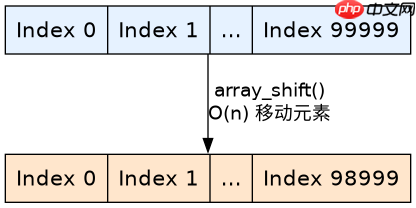
array_shift() 在处理大规模数组时性能较差,因为其时间复杂度为 O(n),每次移除头部元素都会导致后续所有元素向前移动并重新索引。
<?php
// 初始化一个包含 100,000 个元素的数组
$data = range(1, 100000);
$start_time = microtime(true);

// 执行 1000 次出队操作
for ($i = 0; $i < 1000; $i++) {
    array_shift($data);
}

$end_time = microtime(true);
echo "耗时: " . ($end_time - $start_time) . " 秒\n";
?>
上述代码展示了当数组规模达到十万级时,连续进行千次头部移除操作的耗时情况。由于每次 array_shift() 调用都需要遍历剩余数组以更新键值,累积的开销会显著增加运行时间。
立即学习“PHP免费学习笔记(深入)”;

Build MCP servers and clients for PHP applications with the official PHP SDK
下载
使用官方Model Context Protocol PHP SDK将PHP应用程序功能暴露为MCP工具、资源和提示,用于代理工作流。
使用双指针模拟队列能否避免内存重分配
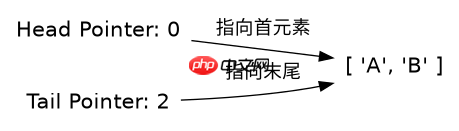
通过维护 $head 和 $tail 两个指针,可以在不移动物理内存的情况下实现逻辑上的队列,从而避免频繁的元素拷贝。
<?php
class ArrayQueue {
    private $queue = [];
    private $head = 0;
    private $tail = 0;

    public function enqueue($item) {
        $this->queue[$this->tail++] = $item;
    }

    public function dequeue() {
        if ($this->head === $this->tail) {
            return null;
        }
        return $this->queue[$this->head++];
    }

    public function size() {
        return $this->tail - $this->head;
    }
}

$q = new ArrayQueue();
$q->enqueue('A');
$q->enqueue('B');
echo $q->dequeue(); // 输出 A
?>
该实现通过递增指针来标记有效区间,虽然避免了内存拷贝,但长期运行后数组可能会变得稀疏,需要定期重置指针或重建数组以回收内存。
基于程序中某个输入、条件或结果的具体问题
在上述双指针实现中,如果持续入队而不出队,数组长度会无限增长,最终可能导致内存溢出。