



在java的try-with-resources语句中,如果资源关闭时抛出异常,该异常会被作为抑制异常(suppressed exception)附加到主流程抛出的异常上。要记录这些关闭异常,应在catch块中捕获主异常后,遍历其调用getsuppressed()返回的数组,逐个记录日志。这样做能确保即使业务逻辑失败,也能完整保留资源清理阶段的错误信息,便于排查问题。

如何获取并记录被抑制的异常
直接回答本节问题:通过调用主异常的getSuppressed()方法获取抑制异常列表,并使用日志框架(如SLF4J或Logback)逐条打印。以下是一个完整的示例程序,演示了如何在资源关闭失败时捕获并记录抑制异常。
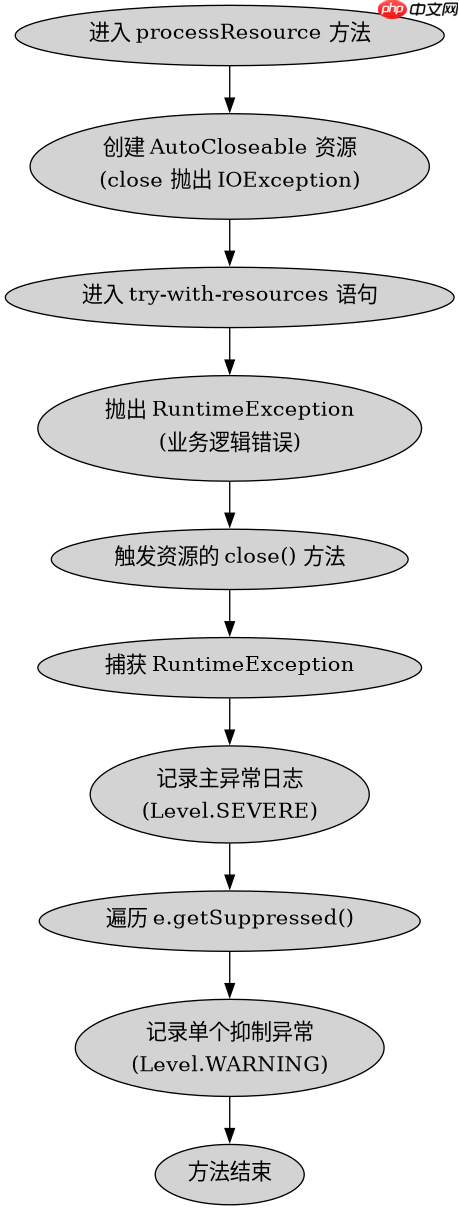
import java.io.*;
import java.util.logging.*;

public class TryWithResourcesExample {
    private static final Logger logger = Logger.getLogger(TryWithResourcesExample.class.getName());

    public static void main(String[] args) {
        try {
            processResource();
        } catch (Exception e) {
            // 记录主异常
            logger.log(Level.SEVERE, "Main processing failed", e);

            // 记录抑制异常
            for (Throwable suppressed : e.getSuppressed()) {
                logger.log(Level.WARNING, "Suppressed exception during resource cleanup", suppressed);
            }
        }
    }

    public static void processResource() throws IOException {
        // 模拟一个会在close()时抛出异常的资源
        AutoCloseable resource = new AutoCloseable() {
            @Override
            public void close() throws Exception {
                throw new IOException("Failed to close resource");
            }
        };

        try (resource) {
            // 模拟业务逻辑抛出异常
            throw new RuntimeException("Business logic error");
        }
    }
}
运行上述代码将输出:
立即学习“Java免费学习笔记(深入)”;
SEVERE: Main processing failed
java.lang.RuntimeException: Business logic error
WARNING: Suppressed exception during resource cleanup
java.io.IOException: Failed to close resource
为什么抑制异常不会自动替换主异常
直接回答本节问题:Java设计者选择保留主异常作为throw链的根异常,而将关闭异常作为抑制异常附加,是为了避免掩盖导致程序失败的根本原因。开发者必须显式处理这些抑制异常才能看到它们。以下代码展示了如果不手动记录抑制异常,日志中只会显示主异常的情况。

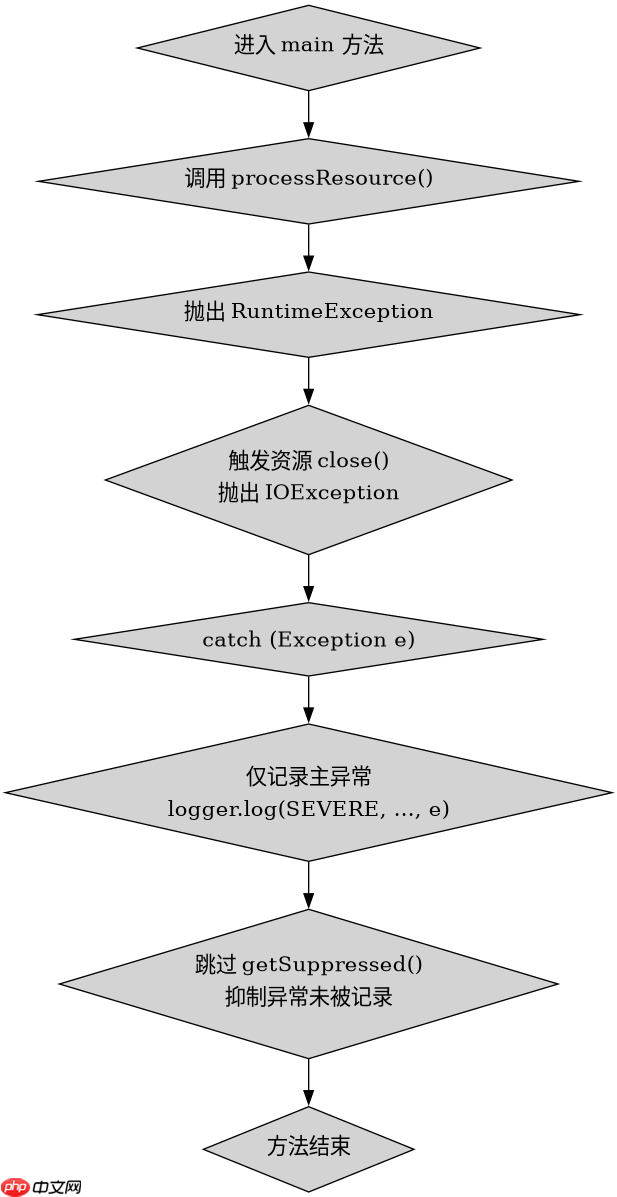
import java.io.*;
import java.util.logging.*;

public class IgnoringSuppressedExample {
    private static final Logger logger = Logger.getLogger(IgnoringSuppressedExample.class.getName());

    public static void main(String[] args) {
        try {
            processResource();
        } catch (Exception e) {
            // 仅记录主异常,忽略抑制异常
            logger.log(Level.SEVERE, "Processing failed", e);
        }
    }

    public static void processResource() throws IOException {
        AutoCloseable resource = new AutoCloseable() {
            @Override
            public void close() throws Exception {
                throw new IOException("Cleanup failed");
            }
        };

        try (resource) {
            throw new RuntimeException("Critical failure");
        }
    }
}
运行结果只显示:
SEVERE: Processing failed
java.lang.RuntimeException: Critical failure
可以看到,关闭时的IOException完全丢失。这强调了在catch块中主动检查getSuppressed()的重要性。
当多个资源关闭都失败时如何处理
直接回答该问题:当try-with-resources中有多个资源且它们的close()方法都抛出异常时,所有关闭异常都会作为抑制异常附加到主异常上。此时getSuppressed()返回的数组包含多个元素,应按顺序逐一记录。以下代码验证了这一行为。
import java.io.*;
import java.util.logging.*;

public class MultipleResourceFailureExample {
    private static final Logger logger = Logger.getLogger(MultipleResourceFailureExample.class.getName());

    public static void main(String[] args) {
        try {
            processMultipleResources();
        } catch (Exception e) {
            logger.log(Level.SEVERE, "Main operation failed", e);
            for (int i = 0; i < e.getSuppressed().length; i++) {
                logger.log(Level.WARNING, "Suppressed exception #" + (i + 1), e.getSuppressed()[i]);
            }
        }
    }

    public static void processMultipleResources() throws IOException {
        AutoCloseable res1 = () -> { throw new IOException("Res1 close fail"); };
        AutoCloseable res2 = () -> { throw new IOException("Res2 close fail"); };

        try (res1; res2) {
            throw new RuntimeException("Main error");
        }
    }
}输出将包含两个抑制异常,分别对应res2和res1的关闭失败(注意关闭顺序与声明顺序相反)。