





使用 completablefuture 替代共享内存的核心做法是:将可变状态封装在对象内部,通过 thenapply、thenaccept 等链式方法传递数据副本或新对象,利用不可变对象和纯函数实现无锁并发。具体而言,定义一个包含业务数据的类(如 user),在主线程中创建初始实例并启动第一个 completablefuture,后续步骤通过 thencompose 或 thenapplyasync 获取前一步的结果,计算后返回新的对象实例,从而避免多个线程同时读写同一块内存。

thenApply 如何传递处理后的数据
thenApply 接收上一个阶段的结果作为输入参数,并在当前线程或指定线程池中执行转换逻辑,最终返回一个新的值。这种方式天然隔离了内存,因为每个阶段都产生新的返回值,而不是修改传入的对象。例如,先获取用户 ID,再根据 ID 查询数据库获取完整信息,最后格式化输出,每一步都通过返回值传递数据,无需任何同步机制。
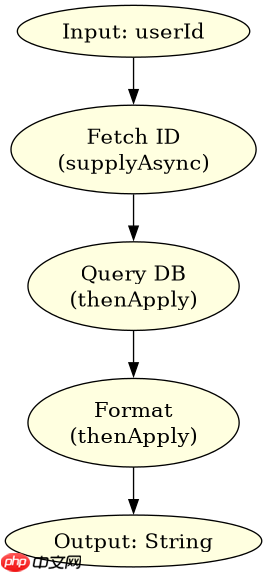
import java.util.concurrent.CompletableFuture;

public class DataFlowExample {
    public static void main(String[] args) {
        // 模拟初始数据
        String userId = "user-123";

        CompletableFuture<String> future = CompletableFuture.supplyAsync(() -> {
            System.out.println("Step 1: Fetching ID");
            return userId;
        })
        .thenApply(id -> {
            System.out.println("Step 2: Querying DB for " + id);
            return new User(id, "Alice", 30);
        })
        .thenApply(user -> {
            System.out.println("Step 3: Formatting output");
            return user.getName() + " (Age: " + user.getAge() + ")";
        });

        System.out.println(future.join());
    }

    static class User {
        String id, name;
        int age;
        User(String id, String name, int age) { this.id=id; this.name=name; this.age=age; }
        String getName() { return name; }
        int getAge() { return age; }
    }
}
thenCompose 如何处理异步依赖链
当后续步骤本身也是异步操作时,必须使用 thenCompose 而非 thenApply。thenCompose 接收上一个阶段的返回值,并返回一个新的 CompletableFuture,它会自动等待这个新 Future 完成后再继续。这适用于需要调用远程服务或进行复杂 I/O 操作的场景,确保数据流按顺序传递且不会提前结束。相比共享内存中的条件变量或信号量,这种基于回调的依赖管理更加简洁且不易出错。

立即学习“Java免费学习笔记(深入)”;
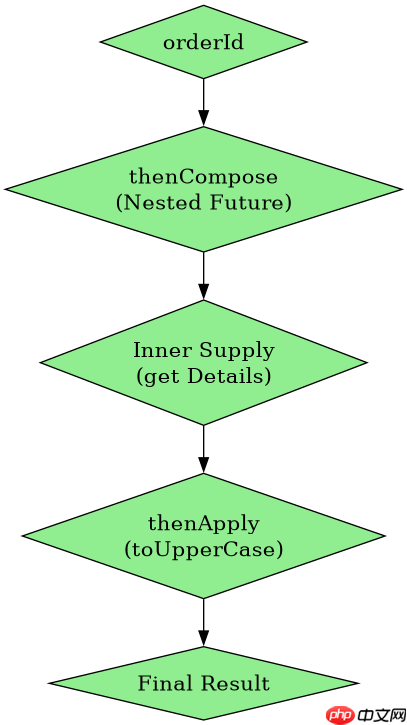
import java.util.concurrent.CompletableFuture;

public class AsyncChainExample {
    public static void main(String[] args) {
        CompletableFuture<String> step1 = CompletableFuture.supplyAsync(() -> {
            return "order-456";
        });

        CompletableFuture<String> result = step1.thenCompose(orderId -> {
            // 模拟另一个异步任务:根据订单ID获取详情
            return CompletableFuture.supplyAsync(() -> {
                return "Order Details for " + orderId;
            });
        }).thenApply(details -> {
            return details.toUpperCase();
        });

        System.out.println(result.join());
    }
}
如何验证不可变对象在链式调用中的安全性
为了确保完全替代共享内存,传递给 thenApply 或 thenCompose 的对象应当是不可变的,或者在每个阶段重新创建新实例。如果对象是可变的且在多个阶段被引用,仍可能引发竞态条件。在上述代码中,User 类虽然字段未声明为 final,但每次 thenApply 都返回一个新创建的 User 实例,因此不存在共享状态。若需进一步验证,可尝试在链中直接修改传入对象的字段,观察是否影响其他并行运行的 Future,结果会发现由于每个阶段持有的是独立引用,修改仅作用于当前局部作用域,不会影响上游或下游的数据一致性。