




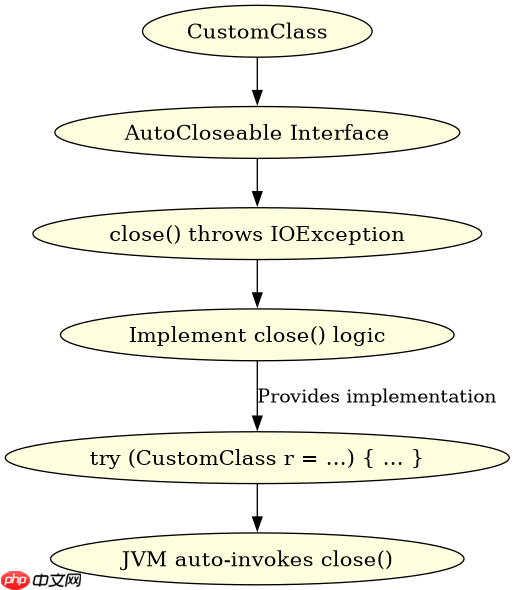
java 中通过实现 autocloseable 接口,可以将自定义资源纳入 try-with-resources 语句的管理范围,确保在代码块结束时自动调用 close() 方法释放资源。具体做法是定义一个类实现该接口并在 close() 中编写清理逻辑,随后在 try 括号内实例化该类即可。

如何定义支持自动关闭的自定义资源类
要实现这一功能,只需让自定义类实现 java.lang.AutoCloseable 接口并覆盖 close() 方法。该方法通常用于关闭文件句柄、网络连接或数据库连接等系统资源。当对象在 try-with-resources 中创建时,JVM 会在退出 try 块(无论是正常结束还是抛出异常)时自动调用此方法。
import java.io.IOException;

public class CustomResource implements AutoCloseable {
    private String name;

    public CustomResource(String name) {
        this.name = name;
        System.out.println("Opening resource: " + name);
    }

    public void doWork() {
        System.out.println("Working with " + name);
    }

    @Override
    public void close() throws IOException {
        System.out.println("Closing resource: " + name);
        // 在此处执行实际的资源释放逻辑
    }

    public static void main(String[] args) {
        try (CustomResource res = new CustomResource("DB-Connection")) {
            res.doWork();
        } catch (IOException e) {
            e.printStackTrace();
        }
    }
}
运行上述代码将输出: Opening resource: DB-Connection Working with DB-Connection Closing resource: DB-Connection
如何处理 close() 方法中抛出的异常
如果 close() 方法内部抛出异常,该异常会被捕获并抑制当前 try 块中可能存在的原始异常。Java 7 引入了 Suppressed Exceptions 机制来保留所有异常信息。开发者可以通过 getSuppressed() 方法获取被抑制的异常列表,从而进行完整的错误诊断。这确保了资源清理失败不会掩盖业务逻辑中的主要错误。

立即学习“Java免费学习笔记(深入)”;

import java.io.IOException;

public class ExceptionHandlingResource implements AutoCloseable {
    private boolean failOnClose;

    public ExceptionHandlingResource(boolean failOnClose) {
        this.failOnClose = failOnClose;
    }

    @Override
    public void close() throws IOException {
        if (failOnClose) {
            throw new IOException("Cleanup failed");
        }
    }

    public static void main(String[] args) {
        try (ExceptionHandlingResource res = new ExceptionHandlingResource(true)) {
            throw new RuntimeException("Business Logic Error");
        } catch (Exception e) {
            System.out.println("Primary Exception: " + e.getMessage());
            for (Throwable suppressed : e.getSuppressed()) {
                System.out.println("Suppressed Exception: " + suppressed.getMessage());
            }
        }
    }
}
运行结果将显示主异常为 "Business Logic Error",并被抑制的异常为 "Cleanup failed"。这种机制保证了即使资源关闭失败,主要的业务异常也能被正确传递和处理。
当 close() 抛出异常时程序的实际行为是什么
当 close() 抛出异常时,程序会进入异常处理流程,但原始的 try 块异常会被标记为“已抑制”。这意味着如果在 catch 块中只打印 e.getMessage(),只能看到原始异常,而看不到资源关闭的错误。必须显式遍历 getSuppressed() 数组才能看到完整的错误链。这是排查资源泄漏或清理失败问题的关键步骤。