





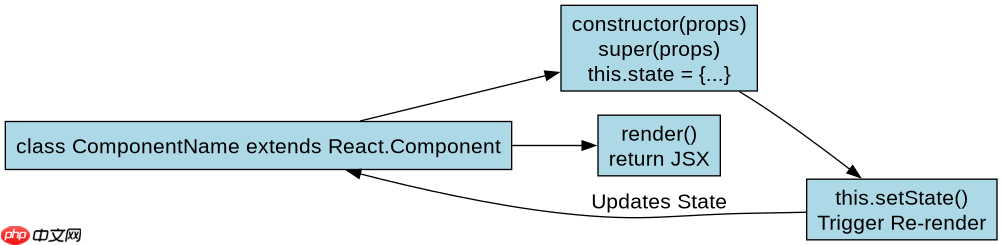
在 javascript 中,react 组件通过继承 react.component 类来定义。你需要创建一个 es6 类,实现一个返回 jsx 元素的 render 方法,并在构造函数中初始化状态或绑定事件处理函数。
如何正确初始化状态和绑定事件处理函数
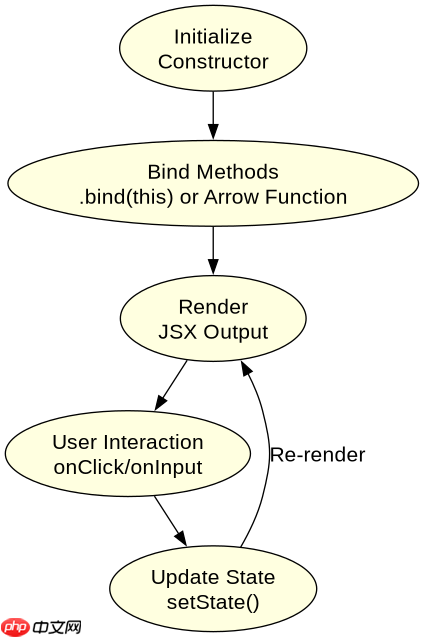
在类的构造函数中,必须调用 super(props) 以初始化父类组件,随后通过 this.state = { ... } 设置初始状态。对于事件处理函数,由于 JavaScript 中 this 的指向问题,需要在构造函数中使用 .bind(this) 进行绑定,或者使用箭头函数属性语法。
import React from 'react';

class Counter extends React.Component {
  constructor(props) {
    super(props);
    this.state = { count: 0 };
    // 方式一:在构造函数中绑定
    this.handleClick = this.handleClick.bind(this);
  }

  handleClick() {
    this.setState({ count: this.state.count + 1 });
  }

  render() {
    return (
      <div>
        <p>Count: {this.state.count}</p><p><span>立即学习</span>“<a href="https://pan.quark.cn/s/c1c2c2ed740f" style="text-decoration: underline !important; color: blue; font-weight: bolder;" rel="nofollow" target="_blank">Java免费学习笔记(深入)</a>”;</p>
        <button onClick={this.handleClick}>Increment</button>
      </div>
    );
  }
}

export default Counter;
上述代码展示了一个基础的计数器组件。构造函数中调用了 super(props) 并设置了 count 为 0 的初始状态。点击按钮时,handleClick 被触发,通过 setState 更新状态,导致组件重新渲染。

生命周期方法在类组件中如何使用
类组件提供了明确的生命周期钩子,如 componentDidMount、componentDidUpdate 和 componentWillUnmount。这些方法允许你在组件挂载后、更新后或卸载前执行副作用操作,例如数据获取或清理定时器。

import React from 'react';

class DataFetcher extends React.Component {
  constructor(props) {
    super(props);
    this.state = { data: null, loading: true };
  }

  componentDidMount() {
    // 模拟异步数据获取
    fetch('https://api.example.com/data')
      .then(res => res.json())
      .then(data => {
        this.setState({ data, loading: false });
      })
      .catch(err => console.error(err));
  }

  componentDidUpdate(prevProps) {
    if (prevProps.userId !== this.props.userId) {
      // 当 userId 变化时重新获取数据
      this.setState({ loading: true });
      fetch(`https://api.example.com/data/${this.props.userId}`)
        .then(res => res.json())
        .then(data => this.setState({ data, loading: false }));
    }
  }

  componentWillUnmount() {
    // 清理工作,如取消未完成的请求
    console.log('Component unmounted');
  }

  render() {
    if (this.state.loading) return <p>Loading...</p>;
    return <div>Data: {JSON.stringify(this.state.data)}</div>;
  }
}

export default DataFetcher;
该示例展示了如何在 componentDidMount 中发起首次请求,并在 componentDidUpdate 中根据 props 变化更新数据。这种模式确保了组件在不同阶段能正确处理外部数据流。
类组件中的状态更新是同步还是异步的
在类组件中,setState 的行为取决于调用上下文。在合成事件和生命周期方法中,它是异步批处理的;但在原生 DOM 事件或 setTimeout 中,它是同步执行的。理解这一点有助于避免在状态更新后立即读取 this.state 导致的陈旧值问题。
import React from 'react';

class AsyncDemo extends React.Component {
  constructor(props) {
    super(props);
    this.state = { value: 0 };
  }

  handleSyntheticEvent = () => {
    this.setState({ value: this.state.value + 1 });
    console.log(this.state.value); // 输出 0,因为 setState 是异步批处理的
  };

  handleNativeEvent = () => {
    document.getElementById('native-btn').addEventListener('click', () => {
      this.setState({ value: this.state.value + 1 });
      console.log(this.state.value); // 输出 1,因为在原生事件中是同步的
    });
  };

  render() {
    return (
      <div>
        <button onClick={this.handleSyntheticEvent}>Synthetic</button>
        <button id="native-btn">Native</button>
        <p>Current Value: {this.state.value}</p>
      </div>
    );
  }
}

export default AsyncDemo;