





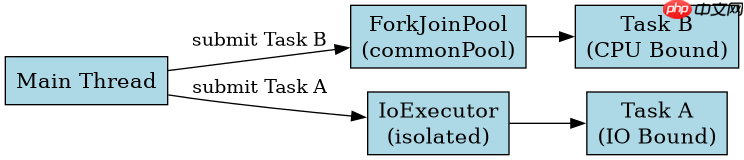
使用 completablefuture 进行线程池隔离的核心做法是,在创建异步任务时显式传入一个独立的 executor,而不是依赖默认的 forkjoinpool.commonpool()。通过为不同的业务逻辑(如 io 密集型操作)分配专属的线程池,可以防止某个耗时任务耗尽公共池资源,从而避免阻塞其他同样使用该池的任务。
如何为 IO 密集型任务配置专用线程池
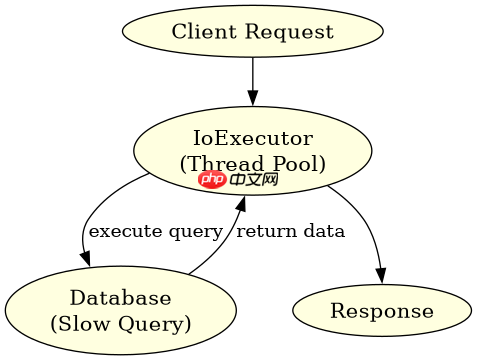
将网络请求或数据库查询等 IO 密集型任务提交到专用的固定大小线程池中,可以有效隔离它们对系统资源的占用。通常建议根据并发量设置线程数,例如设置为 CPU 核心数的两倍或根据预估的等待时间计算得出,这样既能充分利用 CPU,又能容纳足够的阻塞线程。
import java.util.concurrent.*;

public class IsolatedExample {
    public static void main(String[] args) throws Exception {
        // 定义一个专用的 IO 线程池,大小为 10
        ExecutorService ioExecutor = new ThreadPoolExecutor(
            10, 10, 60L, TimeUnit.SECONDS,
            new LinkedBlockingQueue<>(100),
            new ThreadFactoryBuilder().setNameFormat("io-pool-%d").build()
        );

        // 模拟一个耗时的 IO 操作
        CompletableFuture<String> future = CompletableFuture.supplyAsync(() -> {
            try { Thread.sleep(2000); } catch (InterruptedException e) {}
            return "IO Result";
        }, ioExecutor);

        System.out.println(future.get());
        ioExecutor.shutdown();
    }
}
如何处理多个独立任务的组合与异常
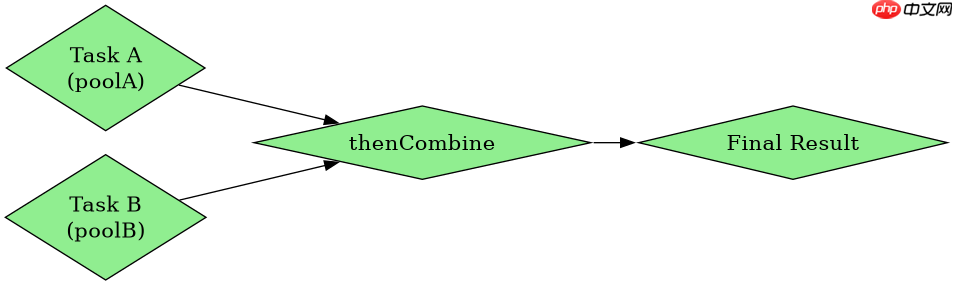
当需要组合多个由不同线程池执行的任务时,可以使用 allOf 或 thenCombine 方法。如果某个任务抛出异常,可以通过 exceptionally 或 handle 进行捕获,确保主流程不会因单个子任务的失败而中断,同时保持线程池的隔离性不被破坏。

立即学习“Java免费学习笔记(深入)”;
import java.util.concurrent.*;

public class CombinedExample {
    public static void main(String[] args) throws Exception {
        ExecutorService poolA = Executors.newFixedThreadPool(2);
        ExecutorService poolB = Executors.newFixedThreadPool(2);

        CompletableFuture<String> taskA = CompletableFuture.supplyAsync(() -> {
            if (true) throw new RuntimeException("Error in A");
            return "Result A";
        }, poolA).exceptionally(e -> "Fallback A");

        CompletableFuture<String> taskB = CompletableFuture.supplyAsync(() -> "Result B", poolB);

        // 组合两个任务的结果
        CompletableFuture<String> combined = taskA.thenCombine(taskB, (r1, r2) -> r1 + ", " + r2);
        System.out.println(combined.get());

        poolA.shutdown();
        poolB.shutdown();
    }
}
当线程池队列满时会发生什么
当专用线程池的工作队列达到容量上限,且所有核心线程都在忙碌时,新提交的任务会根据线程池的拒绝策略进行处理。如果使用默认的 AbortPolicy,将会直接抛出 RejectedExecutionException,导致任务失败;如果使用了 CallerRunsPolicy,则会在调用者线程中同步执行该任务,这可能会阻塞主业务流程。