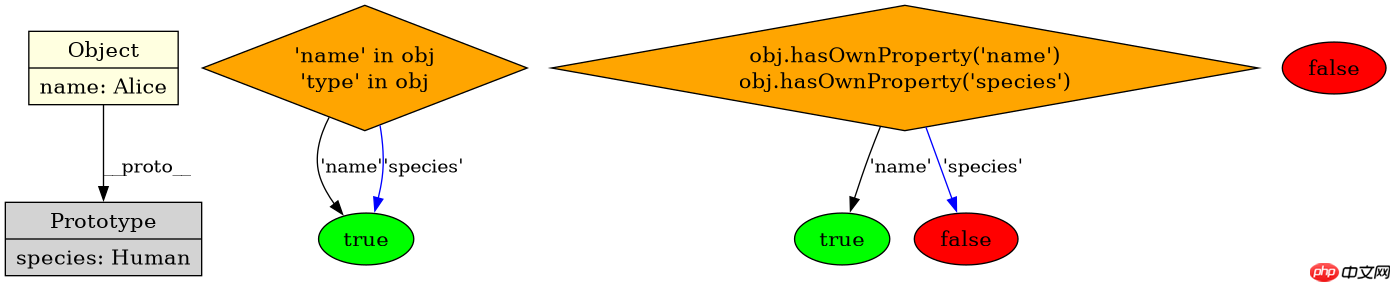
javascript 中的 in 运算符能够检测原型链上的属性。只要目标对象的原型链上存在指定名称的属性,无论该属性是定义在对象自身还是继承自原型,in 都会返回 true。

in 与 hasOwnProperty 的区别是什么
in 会遍历整个原型链查找属性,而 hasOwnProperty 仅检查对象自身的属性。使用 in 可以确认一个属性是否存在于对象及其祖先中,使用 hasOwnProperty 则可以排除原型链上的干扰,确保属性是对象独有的。

Build Java agent transport gateways with Atmosphere
下载
使用Atmosphere构建通过WebSocket、SSE、gRPC、WebTransport、MCP、A2A和AG-UI流传输的JVM代理网关,并带有治理钩子。
function Person(name) {
    this.name = name;
}
Person.prototype.species = "Human";

const p = new Person("Alice");
console.log("name" in p); // true, 自身属性
console.log("species" in p); // true, 原型链属性
console.log(p.hasOwnProperty("name")); // true
console.log(p.hasOwnProperty("species")); // false
如何判断属性是否属于对象自身
要判断属性是否属于对象自身,应使用 hasOwnProperty 方法。该方法不会检查原型链,只针对对象实例本身拥有的属性进行验证。结合 in 和 hasOwnProperty 可以精确区分自身属性和继承属性。
立即学习“Java免费学习笔记(深入)”;
function Animal(type) {
    this.type = type;
}
Animal.prototype.color = "white";

const a = new Animal("Dog");
console.log(a.hasOwnProperty("type")); // true
console.log(a.hasOwnProperty("color")); // false
console.log("color" in a); // true
当属性值为 false 或 null 时 in 的行为如何
即使属性值被显式赋值为 false、null、undefined 或 0,in 运算符依然返回 true。因为它只关心属性名是否存在于原型链中,而不关心属性的具体值。这与布尔上下文中的真值判断不同,in 的结果始终基于属性的存在性。