








在spring data ldap中处理空条目,核心做法是利用`optional`类型接收查询结果并配合`orelsethrow`或`orelseget`进行防御性编程。具体而言,当使用`ldaptemplate`执行查询时,若未找到匹配对象,回调方法会返回`null`而非抛出异常,因此必须显式检查返回值以避免`nullpointerexception`。通过将这些`null`值包装进`optional.ofnullable()`,可以统一处理存在与缺失两种状态,确保业务逻辑的健壮性。

如何安全地从LdapTemplate获取单个对象
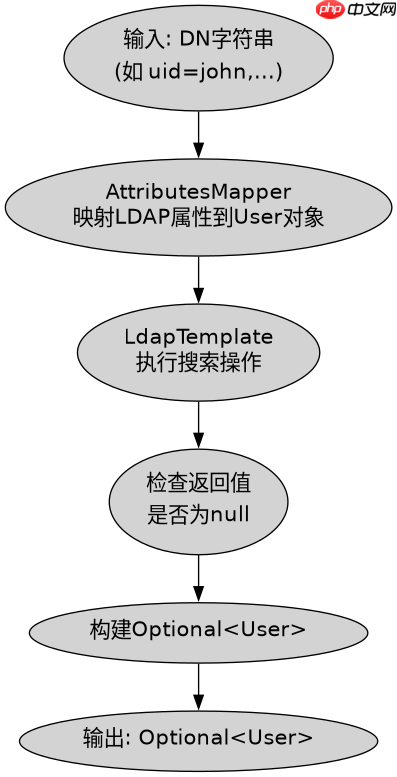
直接回答:使用`LdapTemplate.searchForObject`或自定义`SearchMapperCallback`时,需对返回结果进行`Optional`包装。具体做法是调用`ldapTemplate.searchForObject(dn, mapper)`,若结果为`null`则通过`Optional.empty()`表示不存在,否则用`Optional.of(result)`包裹。这样做能避免在后续代码中重复判空,且符合函数式编程风格。需要注意的是,如果希望找不到时直接报错,应使用`orElseThrow(() -> new EntityNotFoundException(...))`。
import org.springframework.ldap.core.LdapTemplate;
import org.springframework.ldap.core.DirContextAdapter;
import org.springframework.ldap.core.AttributesMapper;
import java.util.Optional;

public class LdapService {
    private final LdapTemplate ldapTemplate;

    public Optional<User> findUserByDn(String dn) {
        // 假设有一个AttributesMapper将LDAP属性映射为User对象
        AttributesMapper<User> mapper = ctx -> {
            User user = new User();
            user.setUid((String) ctx.getAttributes().get("uid").get());
            user.setName((String) ctx.getAttributes().get("cn").get());
            return user;
        };

        // searchForObject 在未找到时会返回 null
        User user = ldapTemplate.searchForObject(dn, mapper);

        // 使用 Optional 包装 null 检查结果
        return Optional.ofNullable(user);
    }
}
上述代码展示了最基础的用法。输入是一个完整的DN字符串,如`uid=john,ou=people,dc=example,dc=com`。预期结果是:如果该DN存在,返回包含用户信息的`Optional
立即学习“Java免费学习笔记(深入)”;

使用Atmosphere构建通过WebSocket、SSE、gRPC、WebTransport、MCP、A2A和AG-UI流传输的JVM代理网关,并带有治理钩子。
如何处理批量查询中的空条目过滤
直接回答:在处理`search`方法的列表结果时,应先收集所有非空对象,再利用`stream().filter(Optional::isPresent)`或直接过滤原始列表中的`null`项。具体做法是调用`ldapTemplate.search(base, filter, mapper)`获取`List

import org.springframework.ldap.core.LdapTemplate;
import org.springframework.ldap.core.AttributesMapper;
import java.util.List;
import java.util.stream.Collectors;

public class LdapBatchService {
    private final LdapTemplate ldapTemplate;

    public List<User> findUsersByFilter(String base, String filter) {
        AttributesMapper<User> mapper = ctx -> {
            // 模拟可能返回null的情况,例如某些属性缺失导致解析失败
            String uid = (String) ctx.getAttributes().get("uid").get();
            if (uid == null || uid.isEmpty()) {
                return null; // 标记为无效条目
            }
            User user = new User();
            user.setUid(uid);
            return user;
        };

        // 获取原始列表,可能包含null
        List<User> rawUsers = ldapTemplate.search(base, filter, mapper);

        // 过滤掉null条目,得到有效列表
        return rawUsers.stream()
                .filter(user -> user != null)
                .collect(Collectors.toList());
    }
}
此段代码针对批量查询场景。输入是基础DN和LDAP过滤器,如`(objectClass=person)`。预期结果是过滤后的非空用户列表。这里强调了在映射器内部处理数据完整性问题,以及在外部流处理中清理脏数据的双重策略。通过这种方式,确保了上层业务逻辑接收到的始终是有效的对象集合,避免了因个别LDAP条目损坏导致的整体流程中断。
基于Optional.isPresent()判断条目是否存在的具体问题
直接回答:当需要明确区分“条目存在但为空”与“条目完全不存在”时,应结合`Optional`的`isPresent()`方法与LDAP的`exists()`方法。具体做法是先调用`ldapTemplate.exists(dn)`快速检查DN是否存在,若存在再尝试获取对象并包装为`Optional`。这样做可以避免不必要的属性读取开销。若`exists()`返回false,则直接返回`Optional.empty()`;若返回true但获取对象为null(极少见),则根据业务需求决定是抛异常还是视为异常数据。这种分层判断提高了查询效率并明确了状态语义。

















