将 es5 构造函数迁移到 es6 类,核心做法是用 class 关键字替换函数声明,并将挂载在 this 上的属性初始化逻辑移至 constructor 方法中,同时将原型方法直接写在类体里。这样做能消除手动设置原型链的冗余代码,使继承关系通过 extends 和 super() 更加直观。需要注意的是,es5 构造函数作为普通函数调用时不会报错,而 es6 类必须使用 new 实例化,否则会抛出错误。
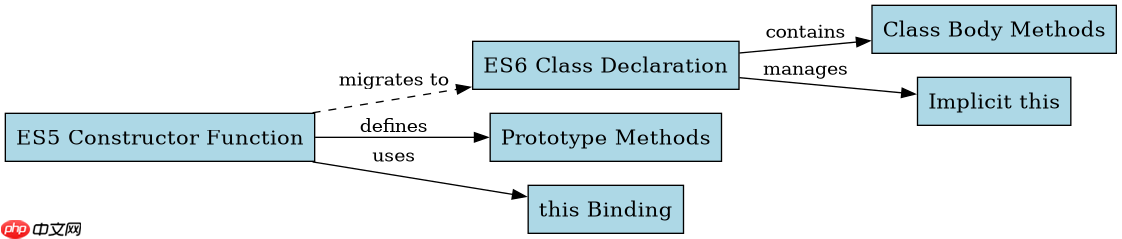
ES5 构造函数与 ES6 类的结构差异是什么
ES5 构造函数依赖函数作用域和 this 绑定来创建实例,而 ES6 类通过语法糖封装了这些细节。在 ES5 中,你需要显式定义构造函数并在外部修改 prototype;在 ES6 中,所有逻辑都包含在 class 块内。这种迁移不仅简化了代码结构,还引入了严格的 new 调用检查,避免了因忘记使用
new</n> 导致的意外行为。</p><p><img src="https://img.php.cn/upload/article/001/242/473/179480341273920.png" alt="JavaScript 中构造函数中 ES5 写法怎么迁移"></p>
<pre class="brush:php;toolbar:false;">function Person(name) {
  this.name = name;
}

Person.prototype.greet = function() {
  console.log('Hello, ' + this.name);
};

class PersonClass {
  constructor(name) {
    this.name = name;
  }

  greet() {
    console.log('Hello, ' + this.name);
  }
}
如何处理 ES5 中的原型继承与 ES6 的 extends
ES5 中的原型继承通常通过 Object.create 或构造函数借用实现,并需要手动修复原型链指向;ES6 则使用 <code>extends 关键字自动处理原型链,并通过 super() 调用父类构造函数。迁移时,需将子类的原型设置逻辑替换为 extends,并确保在子类 constructor 中先调用 super() 再访问 this。这简化了多态和继承的实现,减少了样板代码。

使用Atmosphere构建通过WebSocket、SSE、gRPC、WebTransport、MCP、A2A和AG-UI流传输的JVM代理网关,并带有治理钩子。
立即学习“Java免费学习笔记(深入)”;

// ES5 Inheritance
function Animal(type) {
  this.type = type;
}
Animal.prototype.sound = function() {};

function Dog(name) {
  Animal.call(this, 'Dog');
  this.name = name;
}
Dog.prototype = Object.create(Animal.prototype);
Dog.prototype.constructor = Dog;

// ES6 Inheritance
class AnimalClass {
  constructor(type) {
    this.type = type;
  }
  sound() {}
}

class DogClass extends AnimalClass {
  constructor(name) {
    super('Dog');
    this.name = name;
  }
}
ES6 类中 super() 调用的具体限制是什么
在 ES6 类的派生构造函数中,super() 必须在访问 this 之前被调用,这是硬性规定。如果子类定义了 constructor,它必须调用 super() 来初始化父类状态,否则在使用 this 时会抛出 ReferenceError。若子类未定义 constructor,则会自动插入默认的 super(...args)。这一限制确保了对象在完全初始化前不会被不当引用,保证了继承链的正确性。