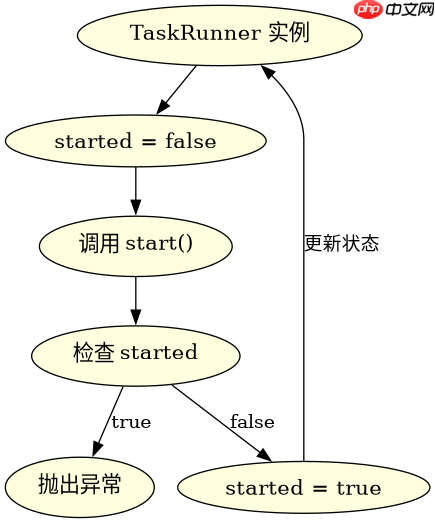
在 java 中,illegalstateexception 通常在对象处于不满足操作要求的状态时被抛出。具体做法是检查对象的内部状态(如是否已初始化、是否已关闭或是否已完成),如果当前状态不允许执行请求的操作,则手动抛出该异常。例如,在一个自定义的 taskrunner 类中,如果任务已经启动,再次调用 start() 方法就会抛出此异常。

如何判断对象状态并抛出 IllegalStateException
要判断对象状态并抛出 IllegalStateException,需要在关键方法入口处添加状态检查逻辑。通常使用一个布尔标志位或枚举来跟踪对象的生命周期。如果检查发现状态不符合预期,就实例化并抛出 IllegalStateException。这样做可以确保程序在非法状态下尽早失败,避免更严重的后果。
public class TaskRunner {
    private boolean started = false;

    public void start() {
        if (started) {
            throw new IllegalStateException("Task already started");
        }
        this.started = true;
        System.out.println("Task started");
    }

    public static void main(String[] args) {
        TaskRunner runner = new TaskRunner();
        runner.start(); // 正常输出
        try {
            runner.start(); // 抛出异常
        } catch (IllegalStateException e) {
            System.out.println(e.getMessage());
        }
    }
}
运行上述代码,第一次调用 start() 会打印 "Task started"。第二次调用时,由于 started 为 true,会抛出 IllegalStateException,捕获后打印 "Task already started"。
立即学习“Java免费学习笔记(深入)”;

常见场景:资源未正确初始化
另一个常见场景是资源未正确初始化。例如,在使用数据库连接池或文件流时,如果尝试在未打开的资源上执行操作,应抛出 IllegalStateException。这有助于开发者快速定位资源管理问题。

import java.io.*;

public class ResourceHandler {
    private BufferedReader reader;

    public void openFile(String path) throws IOException {
        this.reader = new BufferedReader(new FileReader(path));
    }

    public String readLine() {
        if (reader == null) {
            throw new IllegalStateException("Reader not initialized");
        }
        try {
            return reader.readLine();
        } catch (IOException e) {
            throw new RuntimeException(e);
        }
    }

    public static void main(String[] args) {
        ResourceHandler handler = new ResourceHandler();
        try {
            handler.readLine(); // 抛出异常
        } catch (IllegalStateException e) {
            System.out.println(e.getMessage());
        }
    }
}
运行上述代码,由于 openFile() 未被调用,reader 为 null,调用 readLine() 会抛出 IllegalStateException,捕获后打印 "Reader not initialized"。
基于程序中某个输入、条件或结果的具体问题
在上述第一个示例中,当 TaskRunner 的 start() 方法被连续调用两次时,第二次调用会抛出 IllegalStateException。这是因为内部状态 started 从 false 变为 true,而方法逻辑要求只有在 started 为 false 时才能继续执行。这个条件直接决定了异常是否抛出。