使用 valgrind 排查内存泄漏,核心是运行 valgrind --leak-check=full ./your_program。该工具会在程序退出时统计未释放的堆内存,并输出详细的泄漏路径和调用栈。通过解析这些日志,可以定位到具体的代码行和函数调用关系。

如何区分不同级别的内存泄漏?
Valgrind 将内存泄漏分为四种级别:Direct Leak、Definitely Lost、Indirectly Lost 和 Possibly Lost。理解这些定义有助于判断问题的严重性。Direct Leak 指直接分配后未释放;Definitely Lost 指指针丢失导致无法释放;Indirectly Lost 指因父节点丢失导致的子节点泄漏;Possibly Lost 指指针可能指向块中间,无法确定是否可释放。


Linux 系统管理
下载
Linux 系统管理技能。避免权限陷阱、静默失败和常见运维错误,覆盖用户权限、文件系统、进程管理、网络配置等日常运维场景。触发词:Linux 管理、系统运维、权限、Shell 命令。
#include <stdio.h>
#include <stdlib.h>

void definitely_lost_func() {
    int *ptr = (int *)malloc(sizeof(int));
    // 忘记 free(ptr),导致 Definitely Lost
}

void indirectly_lost_func() {
    struct Node {
        int data;
        struct Node *next;
    };
    struct Node *head = (struct Node *)malloc(sizeof(struct Node));
    head->data = 1;
    head->next = (struct Node *)malloc(sizeof(struct Node));
    head->next->data = 2;
    // 忘记 free(head) 及其 next,导致 Indirectly Lost
}

int main() {
    definitely_lost_func();
    indirectly_lost_func();
    return 0;
}
如何处理间接泄漏(Indirectly Lost)?
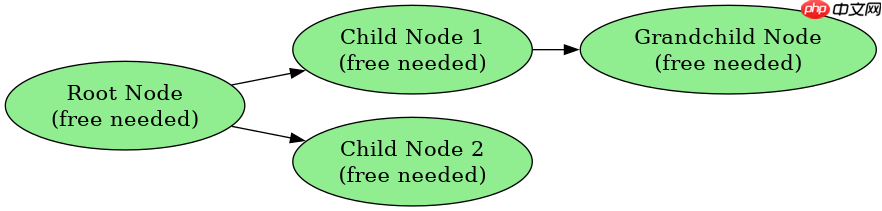
当处理链表或树等复杂数据结构时,如果根节点未释放,其所有子节点都会被视为间接泄漏。解决这类问题通常需要从根节点开始遍历并逐个释放,或者在析构函数中统一处理。Valgrind 会明确指出哪些块是间接泄漏的根源。
#include <stdio.h>
#include <stdlib.h>

struct Node {
    int data;
    struct Node *next;
};

void free_list(struct Node *head) {
    while (head != NULL) {
        struct Node *temp = head;
        head = head->next;
        free(temp);
    }
}

int main() {
    struct Node *head = (struct Node *)malloc(sizeof(struct Node));
    head->data = 1;
    head->next = (struct Node *)malloc(sizeof(struct Node));
    head->next->data = 2;
    head->next->next = NULL;

    // 正确释放链表
    free_list(head);
    return 0;
}
基于程序中某个输入、条件或结果的具体问题
在实际开发中,内存泄漏往往与特定的输入条件或执行路径相关。例如,当程序处理异常或特定错误码时,可能会跳过正常的资源释放逻辑。通过设置断点或使用 Valgrind 的 --track-origins=yes 选项,可以更精确地追踪泄漏发生的上下文。