在python中将pandas数据流无缝对接scikit-learn,核心做法是利用`sklearn.compose.columntransformer`配合`pipeline`构建处理链。通过定义特征选择、缺失值填充和数值转换的转换器,可以直接将dataframe作为输入传递给模型,无需手动提取numpy数组或进行繁琐的数据清洗步骤。

如何处理混合类型数据的预处理
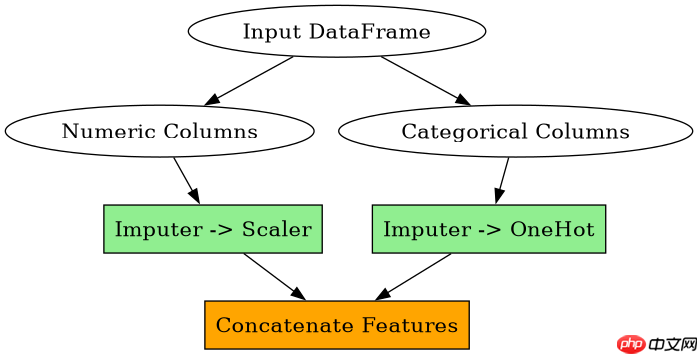
当数据包含数值型和类别型列时,必须分别应用不同的转换策略。使用`ColumnTransformer`可以指定哪些列走哪条处理路径,例如对数值列进行标准化,对类别列进行独热编码,最终自动合并为单一的特征矩阵供模型使用。
import pandas as pd
from sklearn.model_selection import train_test_split
from sklearn.preprocessing import StandardScaler, OneHotEncoder
from sklearn.impute import SimpleImputer
from sklearn.compose import ColumnTransformer
from sklearn.pipeline import Pipeline
from sklearn.linear_model import LogisticRegression

# 示例数据
data = {
    'age': [25, None, 40, 30],
    'income': [50000, 60000, None, 70000],
    'category': ['A', 'B', 'A', 'C'],
    'target': [0, 1, 0, 1]
}
df = pd.DataFrame(data)

X = df.drop('target', axis=1)
y = df['target']

numeric_features = ['age', 'income']
categorical_features = ['category']

numeric_transformer = Pipeline(steps=[
    ('imputer', SimpleImputer(strategy='median')),
    ('scaler', StandardScaler())
])

categorical_transformer = Pipeline(steps=[
    ('imputer', SimpleImputer(strategy='most_frequent')),
    ('onehot', OneHotEncoder(handle_unknown='ignore'))
])

preprocessor = ColumnTransformer(
    transformers=[
        ('num', numeric_transformer, numeric_features),
        ('cat', categorical_transformer, categorical_features)
    ])

clf = Pipeline(steps=[
    ('preprocessor', preprocessor),
    ('classifier', LogisticRegression())
])

clf.fit(X, y)
运行上述代码后,`clf.predict()`可直接接收原始DataFrame并返回预测结果。`ColumnTransformer`内部会自动处理缺失值填补和缩放/编码,输出形状为`(样本数, 特征维度)`的稠密矩阵。若某列全为空,`SimpleImputer`会按策略填充;若类别列出现训练集未见的标签,`handle_unknown='ignore'`会忽略该特征而非报错。
立即学习“Python免费学习笔记(深入)”;

Nodriver是Undetected-Chromedriver的官方继承者,提供异步浏览器自动化功能,可直接与Chrome DevTools Protocol通信,无需Selenium或WebDriver依赖。专为规避反机器人系统(包括Cloudflare和Imperva)的隐蔽网络自动化而构建。
如何避免数据泄露并确保流程可复用
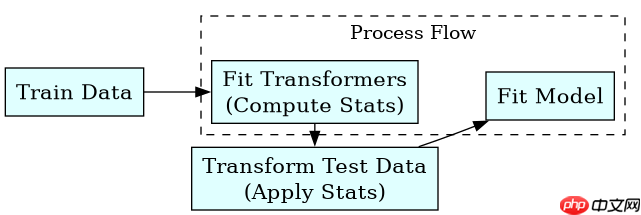
在机器学习流程中,必须在划分训练集和测试集之后,仅在训练集上拟合转换器(如计算均值、方差或词汇表),再转换测试集。`Pipeline`对象天然支持这一机制:调用`fit`时仅对训练数据执行变换器的拟合并存储参数,调用`transform`或`predict`时对后续数据应用已拟合的参数,从而杜绝数据泄露。
# 接上文 clf 已 fit
X_train, X_test, y_train, y_test = train_test_split(X, y, test_size=0.2, random_state=42)

# 重新构建 pipeline 以演示分离
numeric_transformer_fit = Pipeline(steps=[
    ('imputer', SimpleImputer(strategy='median').fit(X_train[numeric_features])),
    ('scaler', StandardScaler().fit(numeric_transformer_fit.named_steps['imputer'].transform(X_train[numeric_features])))
])

# 实际使用中直接调用 clf.fit(X_train, y_train) 即可
# 以下展示如何获取中间结果验证
X_train_processed = clf.named_steps['preprocessor'].transform(X_train)
print(X_train_processed.shape)
执行`clf.fit(X_train, y_train)`后,`clf.named_steps['preprocessor']`持有已拟合的转换器实例。调用`transform(X_test)`时,会使用训练阶段计算的统计量(如均值)对测试集进行转换,确保测试集信息不污染训练过程。若跳过`Pipeline`而手动调用`fit_transform`于全量数据,则会导致统计量包含测试集信息,造成评估指标虚高。
当输入DataFrame包含非数值字符串列时会发生什么
若输入DataFrame中包含未经过编码的纯文本字符串列(即未在`categorical_features`中声明或未配置对应转换器),`ColumnTransformer`会在尝试转换时抛出`ValueError`。因为Scikit-learn底层要求所有输入特征必须为数值型,任何非数值且未被映射为数值向量的列都会导致流水线中断。
# 假设 df 新增一列 raw_text
# df['raw_text'] = ['hello', 'world', 'test', 'data']
# 若未将其加入 categorical_features 或未添加 TextVectorizer
# clf.fit(df.drop('target', axis=1), df['target']) 将报错
错误信息通常提示“could not convert string to float”或类似内容。解决方式是必须将该列纳入`categorical_features`列表,并为其配置合适的转换器(如`OneHotEncoder`或`CountVectorizer`)。若该列语义为自由文本,需引入`FeatureUnion`结合`TfidfVectorizer`等NLP工具,否则无法直接接入标准监督学习模型。