在gradle项目中引入junit,应使用 testimplementation 依赖。它既在编译测试代码时可用,也在运行测试时可用,是标准做法。testruntimeonly 仅用于运行时,不提供给编译器,通常用于传递依赖或特定场景。

testImplementation 和 testRuntimeOnly 的编译期区别是什么
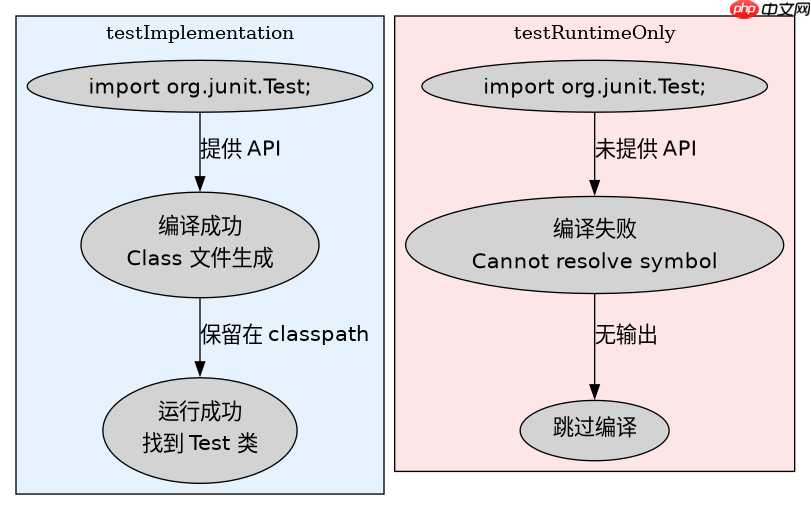
testImplementation 允许在测试源码中引用 JUnit 的类(如 @Test),而 testRuntimeOnly 会导致编译报错。这是因为前者将 JUnit 加入测试编译类路径,后者仅加入运行类路径。

plugins {
    id 'java'
}

repositories {
    mavenCentral()
}

dependencies {
    // 正确:编译和运行都需要
    testImplementation 'org.junit.jupiter:junit-jupiter:5.9.3'

    // 错误示例:如果只写这个,编译会失败
    // testRuntimeOnly 'org.junit.jupiter:junit-jupiter:5.9.3'
}
什么情况下应该使用 testRuntimeOnly
当依赖不需要在编译期可见,但需要在运行时存在时使用。例如,某些测试框架的实现类仅在运行时加载,或者处理传递依赖冲突。对于标准的 JUnit 5,通常不需要此配置。

dependencies {
    // 假设有一个库 A 依赖了旧版 JUnit 4
    implementation 'com.example:lib-a:1.0'

    // 我们只想在运行时用 JUnit 5,而不想影响 lib-a 的编译
    // 这种情况较少见,通常还是用 testImplementation
    testRuntimeOnly 'org.junit.jupiter:junit-jupiter:5.9.3'
}
使用 testRuntimeOnly 时测试代码能否直接调用 @Test
不能。如果使用 testRuntimeOnly,测试源码中直接使用 @Test 注解会导致编译错误,因为编译器找不到该符号。必须改用 testImplementation 才能正常编写测试用例。