在 c# 中,readonlydictionary<k v></k> 没有内置的 getoradd 或类似方法,查找不到键时返回备用值最直接的做法是结合 trygetvalue 方法与条件运算符(或 switch 表达式)。具体而言,调用 trygetvalue(key, out var value),若返回 true 则使用获取到的 value,否则使用预设的备用值。这种方式避免了抛出异常的性能开销,也无需处理 keynotfoundexception。

TryGetValue 配合三元运算符的具体实现
使用 TryGetValue 是最标准且高效的方案。它通过输出参数返回找到的值,并返回布尔值指示是否成功。开发者只需将这一逻辑封装在一个辅助方法或直接内联到业务代码中即可。对于简单的类型,可以直接使用三元运算符;对于复杂对象或需要延迟计算的备用值,建议使用 switch 表达式或局部函数以提高可读性。
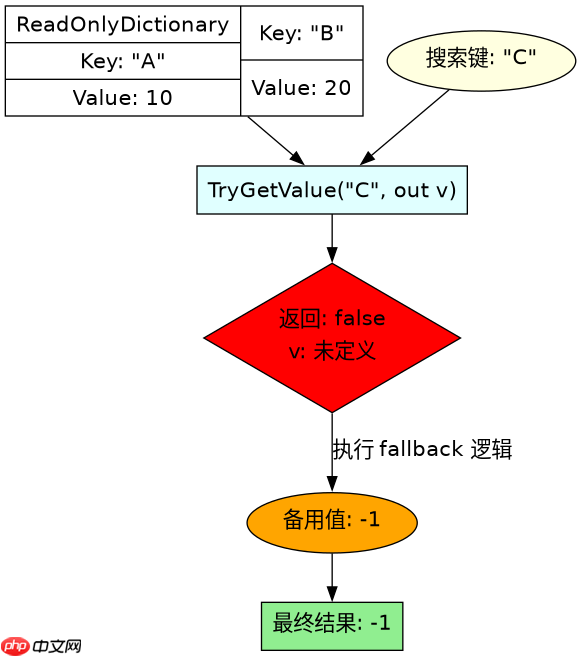
using System;
using System.Collections.Generic;

public class Program
{
    public static void Main()
    {
        // 初始化一个只读字典
        var data = new Dictionary<string, int>
        {
            { "A", 10 },
            { "B", 20 }
        };
        var readOnlyDict = new ReadOnlyDictionary<string, int>(data);

        string keyToFind = "C"; // 不存在的键
        int fallbackValue = -1; // 备用值

        // 核心逻辑:TryGetValue + 三元运算符
        bool found = readOnlyDict.TryGetValue(keyToFind, out int result);
        int finalValue = found ? result : fallbackValue;

        Console.WriteLine($"Found: {found}, Value: {finalValue}");

        // 验证存在的键
        string existingKey = "A";
        bool foundExisting = readOnlyDict.TryGetValue(existingKey, out int existingResult);
        int finalExistingValue = foundExisting ? existingResult : fallbackValue;

        Console.WriteLine($"Found: {foundExisting}, Value: {finalExistingValue}");
    }
}
预期结果:
Found: False, Value: -1
Found: True, Value: 10


扩展为通用辅助方法的封装方式
如果项目中多处需要此逻辑,可以将上述模式封装为一个静态泛型扩展方法。这样可以在任何 ReadOnlyDictionary 实例上直接调用,保持代码整洁。该方法接受字典、键和备用值作为参数,内部依然复用 TryGetValue 机制。
using System;
using System.Collections.Generic;

public static class ReadOnlyDictionaryExtensions
{
    public static V GetOrFallback<K, V>(this ReadOnlyDictionary<K, V> dict, K key, V fallback)
    {
        if (dict.TryGetValue(key, out V value))
        {
            return value;
        }
        return fallback;
    }
}

// 使用示例
var value = readOnlyDict.GetOrFallback("NonExistentKey", 0); // 返回 0
该扩展方法保持了与原生 API 一致的命名风格(参考 Dictionary<k>.TryGetValue</k> 和常见库中的 GetOrAdd 模式),同时确保了类型安全。由于 ReadOnlyDictionary 本身不支持修改操作,因此不需要考虑并发写入冲突问题,线程安全性仅取决于底层字典的实现(通常 Dictionary<k></k> 不是线程安全的,但只读视图在创建后若底层字典不再被修改,则是安全的)。
当备用值为默认值时的简化写法
如果备用值恰好是该类型的默认值(例如 int 的 0,string 的 null),可以进一步简化代码。此时甚至不需要显式传递备用值参数,只需在 TryGetValue 失败时返回默认值即可。这种场景下,可以使用 default(V) 作为后备。
using System;
using System.Collections.Generic;

public static class SimpleFallbackExample
{
    public static void Run()
    {
        var dict = new ReadOnlyDictionary<string, int>(new Dictionary<string, int>
        {
            { "X", 42 }
        });

        string key = "Y";
        int val;

        // 直接利用 TryGetValue 的输出参数特性
        if (!dict.TryGetValue(key, out val))
        {
            val = default(int); // 显式设为 0,也可省略,因为 out 变量未赋值前不能使用,但此处逻辑需明确
        }

        // 更简洁的写法:
        int simpleVal = dict.TryGetValue(key, out int temp) ? temp : default(int);
        Console.WriteLine(simpleVal); // 输出 0
    }
}
注意:在 if (!dict.TryGetValue(...)) 分支中,out 变量 val 未被赋值,因此不能直接使用。必须要么在 else 分支赋值,要么像上面那样使用三元运算符或局部变量临时存储。推荐使用三元运算符版本,因为它更紧凑且不易出错。此方法适用于所有引用类型和值类型,当备用行为是“取默认值”时尤为方便。