

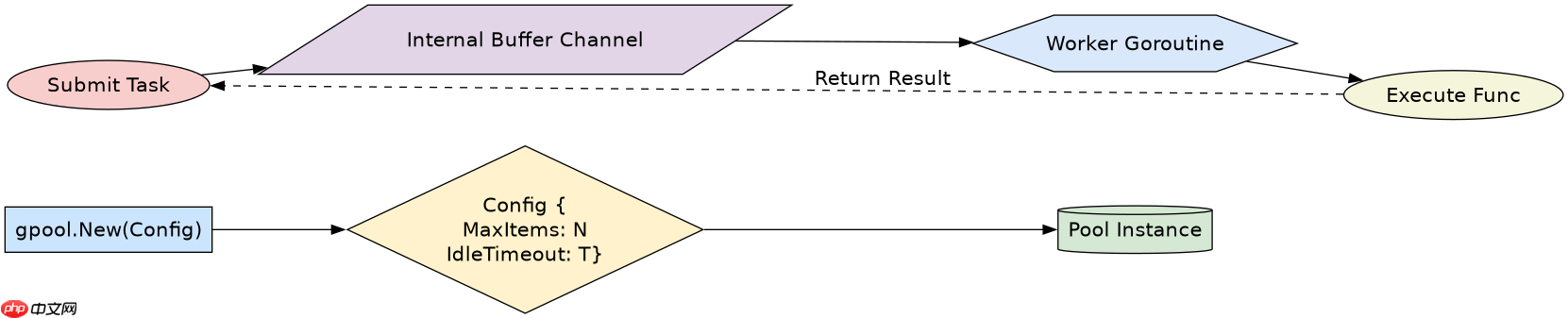
goframe框架处理高并发异步任务的核心做法是调用 gpool.new() 创建协程池实例,并通过其 do() 方法提交任务。该机制利用内置的缓冲通道限制并发度,防止系统资源耗尽,同时支持通过配置参数调整最大并发数和空闲超时策略。
gpool.New 的参数如何影响并发控制?
在初始化阶段,gpool.New 函数接受一个 gpool.Config 结构体作为参数,其中 MaxItems 决定了池中允许的最大活跃协程数量,而 IdleTimeout 则控制空闲协程被回收的时间阈值。当提交的任务数超过 MaxItems 时,后续任务会进入等待队列,直到有协程释放为止,从而实现背压效果。

package main

import (
    "context"
    "fmt"
    "time"

    "github.com/gogf/gf/v2/os/gpool"
)

func main() {
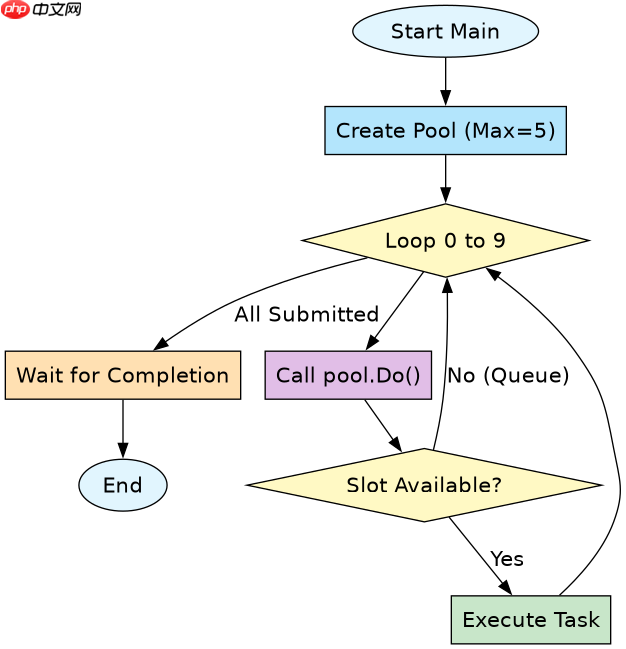
    // 创建协程池:最大5个并发,空闲超时3秒
    pool := gpool.New(&gpool.Config{
        MaxItems:     5,
        IdleTimeout:  3 * time.Second,
        Debug:        true,
    })

    ctx := context.Background()

    // 模拟10个高并发任务
    for i := 0; i < 10; i++ {
        idx := i
        // Do方法会自动从池中获取或创建协程执行任务
        err := pool.Do(ctx, func(ctx context.Context) error {
            fmt.Printf("Task %d started\n", idx)
            time.Sleep(1 * time.Second) // 模拟耗时操作
            fmt.Printf("Task %d finished\n", idx)
            return nil
        })
        if err != nil {
            fmt.Printf("Task %d failed: %v\n", idx, err)
        }
    }

    // 等待所有任务完成
    time.Sleep(2 * time.Second)
    fmt.Println("All tasks submitted")
}
如何确保异步任务执行完毕后再进行后续逻辑?
由于 Do() 方法是异步执行的,主程序不会阻塞等待任务结束。若需同步等待所有已提交任务完成,应使用 Wait() 方法。该方法会阻塞当前 goroutine,直到池中所有正在执行和排队中的任务都执行完毕,适用于需要汇总结果或关闭资源的场景。

package main

import (
    "context"
    "fmt"
    "time"

    "github.com/gogf/gf/v2/os/gpool"
)

func main() {
    pool := gpool.New(&gpool.Config{
        MaxItems: 3,
    })

    ctx := context.Background()

    // 提交多个任务
    for i := 0; i < 5; i++ {
        idx := i
        _ = pool.Do(ctx, func(ctx context.Context) error {
            fmt.Printf("Processing task %d\n", idx)
            time.Sleep(500 * time.Millisecond)
            return nil
        })
    }

    // 关键步骤:等待所有任务完成
    pool.Wait()
    fmt.Println("All tasks completed synchronously")
}
当 MaxItems 设置过小导致任务堆积时,Do 方法的行为是什么?
当并发任务量远超 MaxItems 且 IdleTimeout 较长时,未执行的任务会在内部缓冲通道中排队。此时 Do() 方法本身是非阻塞的,它会立即返回 nil(除非上下文被取消),但任务实际执行会被延迟。若需感知排队压力,可结合 gpool.Status() 查看当前活跃与等待数量,或在 Do 传入带超时的 Context 以避免无限期等待。