




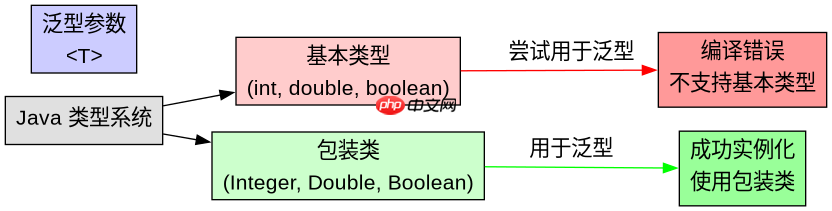
java 中无法直接使用基本数据类型(如 int、double)作为泛型参数,必须使用对应的包装类(如 integer、double)。这是因为 java 泛型在编译期通过类型擦除实现,底层依赖对象引用,而基本类型不是对象。要实现限制,只需在声明泛型时指定具体的包装类即可。
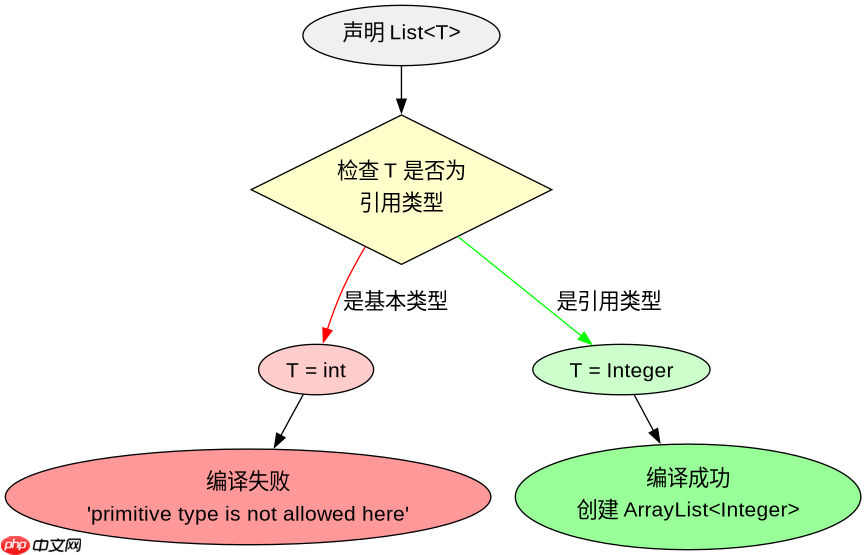
List<int></int> 编译报错的原因是什么
因为泛型机制要求类型参数必须是引用类型,int 是基本类型,不具备对象特性,无法参与泛型的类型检查。编译器会直接拒绝编译。ArrayList<int></int> 这种写法是错误的,必须改为 ArrayList<integer></integer>。
import java.util.ArrayList;
import java.util.List;

public class GenericTest {
    public static void main(String[] args) {
        // 错误写法:List<int> list = new ArrayList<>();

        // 正确写法:使用 Integer 包装类
        List<Integer> intList = new ArrayList<>();
        intList.add(10);
        intList.add(20);

        // 自动装箱:int -> Integer
        int val = intList.get(0); // 自动拆箱:Integer -> int
        System.out.println(val);
    }
}
运行结果:
10
如何为泛型方法限定只能接受特定基本类型的包装类
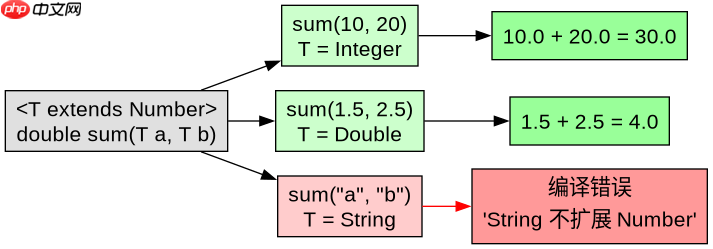
可以通过定义泛型方法并设置上界约束来实现。例如,若希望方法只接受 Number 的子类(即所有数值类型的包装类),可以声明泛型参数 <t extends number></t>。这样既限制了类型范围,又支持 Integer、Double 等具体类型。void process(Number n) 也可以直接接收这些包装类,无需泛型。

立即学习“Java免费学习笔记(深入)”;
public class NumericProcessor {
    public <T extends Number> double sum(T a, T b) {
        return a.doubleValue() + b.doubleValue();
    }

    public static void main(String[] args) {
        NumericProcessor processor = new NumericProcessor();

        // 传入 Integer
        double result1 = processor.sum(10, 20);
        System.out.println(result1); // 30.0

        // 传入 Double
        double result2 = processor.sum(1.5, 2.5);
        System.out.println(result2); // 4.0
    }
}
运行结果:
30.0
4.0
当泛型参数为 Number 时,能否直接进行算术运算
不能直接使用 +、- 等运算符,因为 Number 是抽象类,没有定义这些操作。必须调用其子类实现的转换方法,如 doubleValue()、intValue() 等,将值转换为具体数值后再计算。这是泛型擦除后类型信息丢失导致的限制。