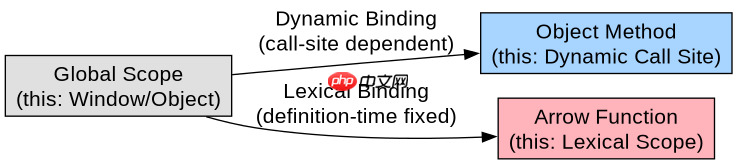
javascript 中箭头函数的 this 绑定由定义时的词法作用域决定,无法通过 call、apply 或 bind 修改。在函数创建时,它会捕获外层作用域的 this 值并固定下来,后续调用无论使用何种方式都不会改变其指向。
普通函数与箭头函数在对象方法中的 this 差异是什么
当在对象字面量中定义方法时,普通函数的 this 指向调用该方法的对象实例,而箭头函数则继承自定义位置的外层作用域(通常是全局或模块级)。如果将对象方法写成箭头函数,this 将不再指向该对象,而是指向外层上下文,这通常会导致属性访问失败。这种差异源于普通函数采用动态绑定,而箭头函数采用静态词法绑定。
const obj = {
  name: 'Alice',
  // 普通函数:this 动态绑定到 obj
  greetNormal() {
    console.log(this.name);
  },
  // 箭头函数:this 继承自外层(此处为全局/模块作用域)
  greetArrow: () => {
    console.log(this.name);
  }
};

obj.greetNormal(); // 输出: Alice
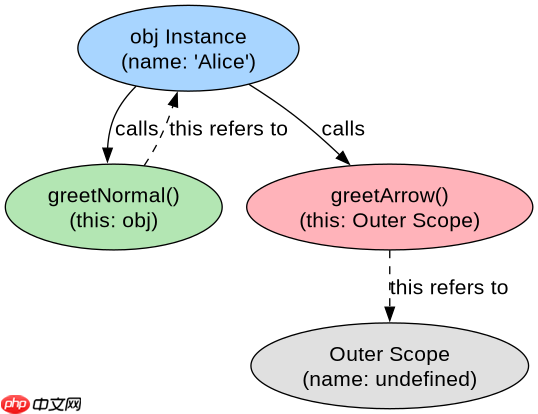
obj.greetArrow(); // 输出: undefined (假设全局无 name)运行上述代码,greetNormal 正确输出 'Alice',因为它是作为 obj 的方法被调用的。greetArrow 输出 undefined,因为其内部的 this 并未指向 obj,而是指向了定义时的外层作用域(在非严格模式的全局环境中,this 指向全局对象,但全局对象上没有 name 属性,故为 undefined)。
立即学习“Java免费学习笔记(深入)”;

定时器回调中 this 的绑定行为有何不同
在使用 setTimeout 等异步 API 时,普通函数作为回调传入会丢失原有的 this 绑定,默认指向全局对象或 undefined(严格模式下),而箭头函数能保留定义时的 this 值。这使得在类方法或对象方法中使用定时器时,箭头函数能更方便地访问实例数据,无需额外的变量保存 this 或使用 bind。
class Counter {
  constructor() {
    this.count = 0;
  }

  // 普通函数:this 在 setTimeout 执行时丢失
  incrementNormal() {
    setTimeout(function() {
      this.count++; // this 指向全局或 undefined
      console.log('Normal count:', this.count);
    }, 1000);
  }

  // 箭头函数:this 继承自 incrementNormal 的词法作用域
  incrementArrow() {
    setTimeout(() => {
      this.count++; // this 指向 Counter 实例
      console.log('Arrow count:', this.count);
    }, 1000);
  }
}

const counter = new Counter();
counter.incrementNormal(); // 1秒后输出: Normal count: NaN (或报错)
counter.incrementArrow();  // 1秒后输出: Arrow count: 1
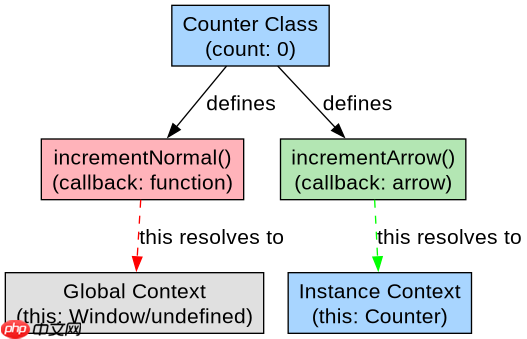
在 Counter 类中,incrementNormal 使用普通函数作为回调,由于 setTimeout 内部调用机制,函数内的 this 不指向 counter 实例,导致 this.count 为 undefined,递增后仍为 NaN。而 incrementArrow 使用箭头函数,其 this 在定义时就绑定了 Counter 实例,因此能正确访问并修改 count 属性。
构造函数中使用箭头函数作为方法会有什么结果
如果在构造函数中使用箭头函数定义实例方法,虽然语法上允许,但由于箭头函数没有自己的 this,它无法指向新创建的实例对象,导致该方法无法访问实例属性。此外,箭头函数也不能用作构造函数,尝试使用 new 调用会抛出错误。因此,在类或构造函数模式中,实例方法应始终使用普通函数定义。
function User(name) {
  this.name = name;
  // 错误用法:箭头函数不能正确绑定 this 到实例
  this.greet = () => {
    console.log(`Hello, I am ${this.name}`); // this 不指向 User 实例
  };
}

const user = new User('Bob');
console.log(user.name); // 输出: Bob
user.greet();           // 输出: Hello, I am undefined (this 指向全局/模块)
在 User 构造函数中,this.greet 被赋值为一个箭头函数。当 new User('Bob') 执行时,虽然 this.name 正确设置为 'Bob',但 greet 函数内部的 this 并没有指向新创建的 user 实例,而是继承了构造函数的外层作用域(通常是全局或模块作用域)。因此,this.name 在 greet 中是 undefined,导致输出不符合预期。这证明了在需要动态 this 绑定的场景下,箭头函数不适用。