



ascii 是 american standard code for information interchange(美国信息交换标准代码)的缩写,它是计算机中最早且最基础的字符编码标准。在 java 中,`char` 类型虽然基于 unicode,但前 127 个字符与 ascii 完全一致,因此处理英文文本时可以直接使用 `byte` 或 `string.getbytes("us-ascii")` 进行转换。

Java 中如何获取 ASCII 码值
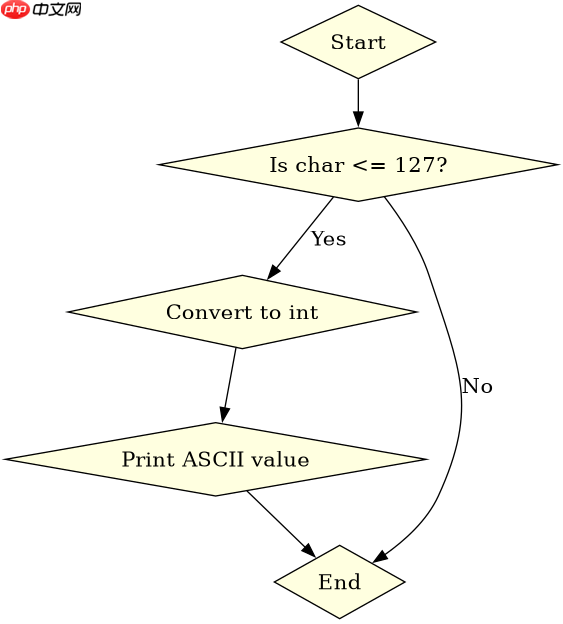
在 Java 中,可以通过将 `char` 或 `String` 强制转换为 `int` 来获取其对应的 ASCII 码值。由于 ASCII 仅包含 0 到 127 的整数,任何小于等于 127 的 `char` 值都直接对应其 ASCII 码。例如,字符 'A' 的 ASCII 码是 65,字符 'a' 是 97。这种转换利用了 Java 中字符类型的数值特性,无需额外库即可实现。
public class AsciiExample {
    public static void main(String[] args) {
        char c = 'A';
        int asciiValue = (int) c;
        System.out.println("Character: " + c);
        System.out.println("ASCII Value: " + asciiValue);

        String str = "Hello";
        for (int i = 0; i < str.length(); i++) {
            System.out.print((int) str.charAt(i) + " ");
        }
    }
}
Java 中如何将 ASCII 码转换为字符
将 ASCII 码值转换回字符非常简单,只需将整数强制转换为 `char` 类型即可。Java 会自动根据 Unicode 映射关系将整数值转换为对应的字符。例如,整数 65 会转换为字符 'A'。这种方法适用于所有 0 到 127 范围内的 ASCII 值,确保转换后的字符符合标准 ASCII 定义。

立即学习“Java免费学习笔记(深入)”;

public class AsciiToChar {
    public static void main(String[] args) {
        int asciiValue = 65;
        char c = (char) asciiValue;
        System.out.println("ASCII Value: " + asciiValue);
        System.out.println("Character: " + c);

        // 转换多个 ASCII 值
        int[] values = {72, 101, 108, 108, 111};
        StringBuilder sb = new StringBuilder();
        for (int val : values) {
            sb.append((char) val);
        }
        System.out.println("Converted String: " + sb.toString());
    }
}
Java 中 ASCII 与非 ASCII 字符的处理差异
在处理非 ASCII 字符(如中文、emoji 等)时,Java 的 `char` 类型仍能正确存储,因为其基于 UTF-16 编码。然而,当使用 `getBytes("US-ASCII")` 时,非 ASCII 字符会被替换为 '?' 或抛出异常,具体取决于 JVM 配置。这表明 ASCII 仅适用于纯英文文本,而多语言内容需使用 UTF-8 等更广泛的编码。