

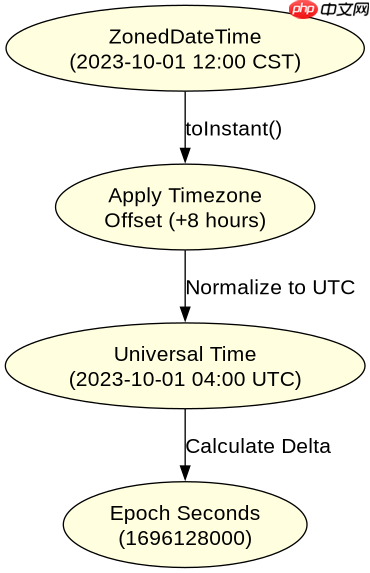
使用 java.time.instant 的 getepochsecond() 方法即可获取指定日期的纪元秒。具体做法是将目标日期时间转换为 instant 对象,然后调用该方法,结果是一个表示从1970年1月1日00:00:00 utc到该时刻的秒数的长整型值。

ZonedDateTime 转换时如何处理时区偏移?
在将 ZonedDateTime 转换为 Instant 时,API 会自动处理时区偏移,确保得到的纪元秒是绝对时间戳,与本地时区无关。例如,北京时间(UTC+8)和伦敦时间(UTC+0)在同一物理时刻的纪元秒是相同的。
import java.time.ZonedDateTime;
import java.time.Instant;
import java.time.ZoneId;

public class Main {
    public static void main(String[] args) {
        // 创建一个具体的日期时间:2023-10-01 12:00:00 北京时间
        ZonedDateTime zdt = ZonedDateTime.of(2023, 10, 1, 12, 0, 0, 0, ZoneId.of("Asia/Shanghai"));

        // 转换为 Instant
        Instant instant = zdt.toInstant();

        // 获取纪元秒
        long epochSeconds = instant.getEpochSecond();

        System.out.println("纪元秒: " + epochSeconds);
        // 输出示例: 纪元秒: 1696142400 (具体数值取决于系统时区和计算)
    }
}
LocalDateTime 直接转换会报错吗?
LocalDateTime 不包含时区信息,因此不能直接转换为 Instant。必须先将其与一个时区结合,变成 ZonedDateTime 或 OffsetDateTime,然后再转换为 Instant。如果尝试直接调用 toInstant() 会编译错误,因为 LocalDateTime 类中没有此方法。

立即学习“Java免费学习笔记(深入)”;

import java.time.LocalDateTime;
import java.time.ZoneId;
import java.time.ZonedDateTime;
import java.time.Instant;

public class Main {
    public static void main(String[] args) {
        LocalDateTime ldt = LocalDateTime.of(2023, 10, 1, 12, 0, 0);

        // 错误写法: Instant instant = ldt.toInstant(); // 编译错误

        // 正确做法:指定时区
        ZonedDateTime zdt = ldt.atZone(ZoneId.systemDefault());
        Instant instant = zdt.toInstant();
        long epochSeconds = instant.getEpochSecond();

        System.out.println("纪元秒: " + epochSeconds);
    }
}
基于程序输入 2023-10-01T12:00:00 的具体问题
当输入为 2023-10-01T12:00:00 且未指定时区时,若默认系统时区为 UTC,则纪元秒为 1696156800;若系统时区为 Asia/Shanghai (UTC+8),则纪元秒为 1696128000。这表明纪元秒的计算严格依赖于所关联的时区上下文。