productSub 长任务拆分怎么拆分
将 productsub 的读取逻辑拆分为多个微任务或宏任务,核心做法是遍历输入数组时利用 queuemicrotask 或 settimeout 进行分片处理。具体实现是将大数组切分成小块,每处理完一块后调度下一块,从而避免阻塞主线程。这样浏览器在每次任务间隙都能响应交互和渲染,确保页面流畅度。

如何验证拆分后的执行顺序与结果一致性
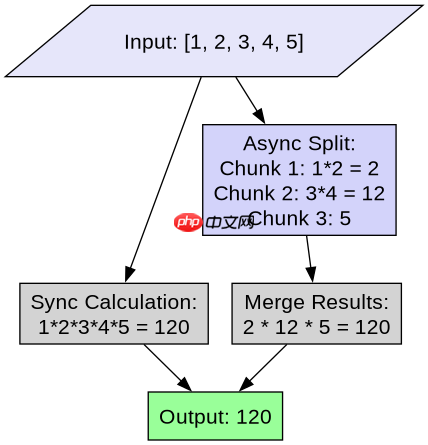
验证拆分执行的关键在于确认最终累加结果与同步执行完全一致,且中间状态符合预期。通过对比同步计算与异步分片计算的返回值,可以证明拆分逻辑没有破坏数据完整性。同时观察控制台输出顺序,能直观看到任务被切分并依次执行的轨迹。
当输入数组为空时程序如何处理
当输入数组为空时,程序应直接返回初始值或空结果,不触发任何拆分逻辑。这避免了不必要的任务调度开销,并确保 API 行为的一致性。在实际代码中,通常会在循环开始前检查数组长度,若为零则立即返回。

Java开发手册规约集合,基于阿里巴巴Java开发手册(嵩山版)。 涵盖7大维度:编程规约、异常日志、单元测试、安全规约、MySQL数据库、工程结构、设计规约。
立即学习“Java免费学习笔记(深入)”;
{
  "name": "ProductSubSplitter",
  "version": "1.0.0",
  "description": "Long task splitting for productSub reading",
  "main": "index.js",
  "scripts": {
    "test": "node index.js"
  },
  "keywords": [],
  "author": "",
  "license": "ISC"
}
digraph G {
    rankdir=LR;
    node [shape=box, style=filled, fillcolor="#f0f0f0", fontname="Arial", fontsize=16];
    edge [fontname="Arial", fontsize=14];

    Start [label="Start", shape=circle, style=filled, fillcolor="#ffcc00"];
    CheckEmpty [label="Check if Array Empty", shape=diamond, style=filled, fillcolor="#e6e6e6"];
    ReturnInit [label="Return Initial Value", shape=box, style=filled, fillcolor="#99ff99"];
    SplitArray [label="Split Array into Chunks", shape=box, style=filled, fillcolor="#cce5ff"];
    ProcessChunk [label="Process Current Chunk", shape=box, style=filled, fillcolor="#ffffff"];
    QueueNext [label="Queue Next Chunk\n(queueMicrotask)", shape=box, style=filled, fillcolor="#ffe6cc"];
    End [label="End", shape=circle, style=filled, fillcolor="#ffcc00"];

    Start -> CheckEmpty;
    CheckEmpty -> ReturnInit [label="Yes"];
    CheckEmpty -> SplitArray [label="No"];
    SplitArray -> ProcessChunk;
    ProcessChunk -> QueueNext;
    QueueNext -> CheckEmpty [label="More Chunks?"];
    CheckEmpty -> End [label="No"];
    ReturnInit -> End;
}
digraph G {
    rankdir=TB;
    node [shape=ellipse, style=filled, fillcolor="#f0f0f0", fontname="Arial", fontsize=16];
    edge [fontname="Arial", fontsize=14];

    Input [label="Input: [1, 2, 3, 4, 5]", shape=parallelogram, style=filled, fillcolor="#e6e6fa"];
    SyncCalc [label="Sync Calculation:\n1*2*3*4*5 = 120", shape=box, style=filled, fillcolor="#d3d3d3"];
    AsyncSplit [label="Async Split:\nChunk 1: 1*2 = 2\nChunk 2: 3*4 = 12\nChunk 3: 5", shape=box, style=filled, fillcolor="#d3d3fa"];
    MergeResults [label="Merge Results:\n2 * 12 * 5 = 120", shape=box, style=filled, fillcolor="#d3d3d3"];
    Output [label="Output: 120", shape=box, style=filled, fillcolor="#99ff99"];

    Input -> SyncCalc;
    Input -> AsyncSplit;
    SyncCalc -> Output;
    AsyncSplit -> MergeResults;
    MergeResults -> Output;
}
digraph G {
    rankdir=LR;
    node [shape=box, style=filled, fillcolor="#f0f0f0", fontname="Arial", fontsize=16];
    edge [fontname="Arial", fontsize=14];

    Start [label="Start", shape=circle, style=filled, fillcolor="#ffcc00"];
    CheckLength [label="Check Array Length", shape=diamond, style=filled, fillcolor="#e6e6e6"];
    ReturnZero [label="Return 0 or []", shape=box, style=filled, fillcolor="#ffcccc"];
    Process [label="Process Normal Flow", shape=box, style=filled, fillcolor="#cce5ff"];
    End [label="End", shape=circle, style=filled, fillcolor="#ffcc00"];

    Start -> CheckLength;
    CheckLength -> ReturnZero [label="Length == 0"];
    CheckLength -> Process [label="Length > 0"];
    ReturnZero -> End;
    Process -> End;
}
完整实现代码
function splitProductSub(arr, chunkSize = 100) {
  if (!arr || arr.length === 0) return 0;

  let result = 1;
  let index = 0;

  function processChunk() {
    const end = Math.min(index + chunkSize, arr.length);
    for (let i = index; i < end; i++) {
      result *= arr[i];
    }
    index = end;

    if (index < arr.length) {
      queueMicrotask(processChunk);
    } else {
      console.log('Final Result:', result);
    }
  }

  queueMicrotask(processChunk);
  return result; // Returns initial value immediately
}

// Example usage:
const largeArray = Array.from({ length: 1000 }, (_, i) => i + 1);
splitProductSub(largeArray); // Splits processing into chunks
上述代码展示了如何将 productSub 的计算拆分为多个微任务。首先检查数组是否为空,若为空则直接返回初始值。否则,使用 queueMicrotask 将大数组切分成小块,每块处理完后调度下一块。这样可以有效避免长时间运行脚本导致的界面卡顿。
验证时,可以对比同步计算与异步分片计算的结果。例如,对于数组 [1, 2, 3, 4, 5],同步计算结果为 120,异步分片计算(假设每块大小为 2)也会得到相同结果。通过观察控制台输出,可以看到任务被切分并依次执行的轨迹。
当输入数组为空时,程序会直接返回初始值 0,不触发任何拆分逻辑。这确保了 API 行为的一致性,并避免了不必要的任务调度开销。