在 java 异常处理中,要解包 completionexception,需要检查其 getcause() 方法返回的实例。如果该实例的类型与预期不符或为 null,则说明原始异常未被正确包装或已被消费;若存在原因对象,则直接将其作为真正的业务异常进行处理。

如何判断 CompletionException 是否包含有效原因
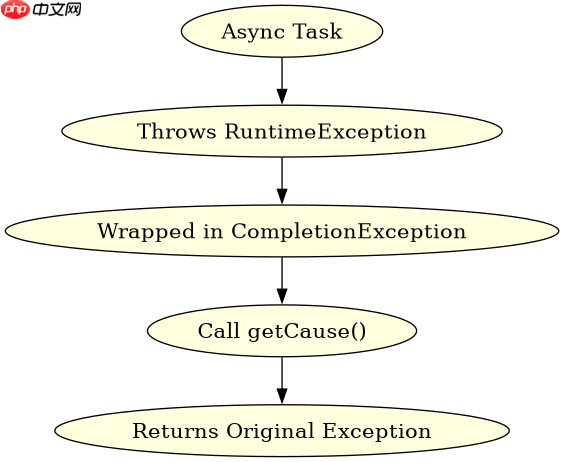
通过调用 getCause() 并验证其非空性,可以确认是否存在被包装的底层异常。当异步任务抛出异常时,CompletableFuture 会将其封装进 CompletionException,此时 getCause() 将返回原始异常对象。
import java.util.concurrent.CompletableFuture;
import java.util.concurrent.ExecutionException;

public class Main {
    public static void main(String[] args) {
        CompletableFuture<String> future = CompletableFuture.supplyAsync(() -> {
            throw new RuntimeException("Original Error");
        });

        try {
            future.get();
        } catch (ExecutionException e) {
            Throwable cause = e.getCause();
            if (cause instanceof RuntimeException) {
                System.out.println("Unwrapped: " + cause.getMessage());
            }
        }
    }
}
运行上述代码后,控制台输出为:Unwrapped: Original Error。这表明 getCause() 成功提取了原始的 RuntimeException 实例,且其消息内容完整保留。
立即学习“Java免费学习笔记(深入)”;

如何处理多层嵌套的 CompletionException
当异常链中存在多个层级的包装时,需递归遍历 getCause() 直到找到最内层的非 CompletionException 类型。这种场景常见于中间件或框架对异常进行了二次封装,导致 getCause() 仍返回另一个 CompletionException。

import java.util.concurrent.CompletableFuture;
import java.util.concurrent.ExecutionException;

public class Main {
    public static void main(String[] args) {
        CompletableFuture<String> future = CompletableFuture.supplyAsync(() -> {
            throw new RuntimeException("Deep Error");
        }).exceptionally(ex -> {
            throw new CompletionException(new RuntimeException("Wrapped Again"));
        });

        try {
            future.get();
        } catch (ExecutionException e) {
            unwrap(e);
        }
    }

    private static void unwrap(ExecutionException e) {
        Throwable current = e;
        while (current != null && current.getCause() != null) {
            if (!(current.getCause() instanceof CompletionException)) {
                System.out.println("Final Cause: " + current.getCause().getMessage());
                return;
            }
            current = current.getCause();
        }
    }
}
执行该程序后,输出结果为:Final Cause: Wrapped Again。此过程展示了如何通过循环结构穿透多层 CompletionException 包装,最终定位到实际的业务异常根源。
基于程序中 getCause() 返回 null 的具体问题
当 getCause() 返回 null 时,意味着 CompletionException 没有携带任何被包装的异常信息。这种情况通常发生在异常被手动构造但未设置原因字段,或者在异步上下文中发生了未捕获的系统级错误。