在 promise 中使用箭头函数时,核心做法是利用其词法作用域特性绑定 `this` 并简化语法。直接调用 .then() 或 .catch() 时传入箭头函数即可自动处理链式调用中的上下文问题,无需手动 .bind(this)。若需处理异步逻辑,直接在箭头函数体中编写代码或使用 async/await 配合箭头函数定义。注意避免在对象方法中误用箭头函数导致 this 指向全局对象而非实例。

箭头函数如何影响 Promise 链中的 this 指向
箭头函数没有自己的 this,它会捕获定义时所在上下文的 this 值。在 Promise 链中,这意味着 .then() 里的箭头函数会继承外层(通常是类实例或模块级别)的 this,而普通函数则会丢失上下文指向 undefined 或全局对象。这种特性使得在类方法中处理异步回调变得简单,避免了繁琐的 .bind(this) 操作。
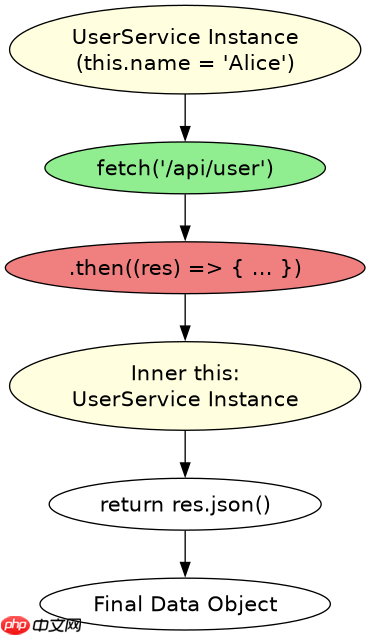
class UserService {
  constructor() {
    this.name = 'Alice';
  }

  // 使用普通函数,this 指向 undefined (严格模式)
  fetchUserNormal() {
    return fetch('/api/user')
      .then(function(response) {
        console.log(this); // undefined
        return response.json();
      });
  }

  // 使用箭头函数,this 指向 UserService 实例
  fetchUserArrow() {
    return fetch('/api/user')
      .then((response) => {
        console.log(this); // UserService instance
        return response.json();
      });
  }
}

const service = new UserService();
service.fetchUserArrow().then(data => console.log(data));
Promise.all 与并发请求中的箭头函数应用
当需要并行执行多个 Promise 时,Promise.all() 是常用选择。结合箭头函数,可以简洁地映射数据源并发起请求。箭头函数的简短语法非常适合在 .map() 等数组方法中内联使用,保持代码紧凑。每个箭头函数独立处理一个 Promise,最终由 Promise.all 统一收集结果或抛出首个错误。

立即学习“Java免费学习笔记(深入)”;

const ids = [1, 2, 3];

// 使用箭头函数映射为 Promise 数组
const promises = ids.map(id =>
  fetch(`/api/user/${id}`).then(res => res.json())
);

// 等待所有完成
Promise.all(promises)
  .then(users => console.log('All users:', users))
  .catch(err => console.error('Failed:', err));
async 箭头函数在 Promise 中的返回值处理
将箭头函数标记为 async 后,它会自动返回一个 Promise。这在处理需要内部同步逻辑的 Promise 链中非常有用。例如,在 .then() 中使用 async 箭头函数可以直接使用 await 暂停执行,直到内部 Promise 解决,从而避免深层嵌套。需要注意的是,async 箭头函数内部的异常会被自动包装为拒绝状态的 Promise,并通过链式的 .catch() 捕获。