在箭头函数中不能使用 arguments 对象,因为箭头函数没有自己的 arguments。如果需要在箭头函数中获取所有参数,应使用剩余参数语法(rest parameters),即通过 ...args 的形式将参数收集到一个数组中。
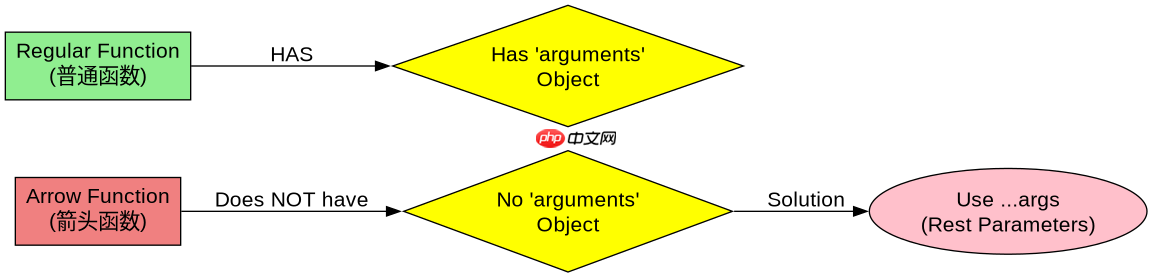
为什么箭头函数中没有 arguments?
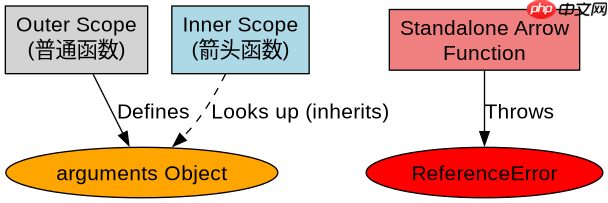
箭头函数是 ES6 引入的语法特性,它的设计初衷之一是简化函数定义并解决 this 指向问题。为了实现这一点,箭头函数被设计为不拥有自己的 this、arguments、super 或 new.target。这意味着在箭头函数内部访问 arguments 时,JavaScript 引擎不会在当前作用域查找,而是沿着作用域链向上查找外层非箭头函数的 arguments。如果外层也没有定义 arguments,则会抛出 ReferenceError。
function outer() {
  const inner = () => {
    console.log(arguments); // 输出: [1, 2, 3]
  };
  inner();
}
outer(1, 2, 3);

const standaloneArrow = () => {
  console.log(arguments); // ReferenceError: arguments is not defined
};
standaloneArrow(1, 2, 3);
上述代码展示了两种情况:第一种是在普通函数定义的箭头函数内部,可以访问外层的 arguments;第二种是独立的箭头函数,直接访问 arguments 会报错。这证明了箭头函数本身并不绑定 arguments。
立即学习“Java免费学习笔记(深入)”;

如何使用剩余参数替代 arguments?
ES6 提供的剩余参数语法(...args)是替代 arguments 的最佳实践。它将所有传入的参数收集到一个真实的数组中,从而可以使用数组的所有方法,如 map、filter、reduce 等。此外,剩余参数只包含显式声明的参数之后的值,更加直观和灵活。

function sum(...numbers) {
  return numbers.reduce((total, num) => total + num, 0);
}
console.log(sum(1, 2, 3)); // 输出: 6

const arrowSum = (...numbers) => {
  return numbers.reduce((total, num) => total + num, 0);
};
console.log(arrowSum(4, 5, 6)); // 输出: 15
在上面的示例中,sum 和 arrowSum 都使用了剩余参数 ...numbers。这使得我们可以直接对 numbers 数组进行操作,而无需像处理 arguments 那样先将其转换为数组(例如使用 Array.from(arguments) 或 [...arguments])。这种方法不仅代码更简洁,而且避免了类型转换的开销。
箭头函数中 this 的指向与 arguments 的关系
虽然箭头函数没有自己的 arguments,但它确实继承了外层作用域的 this。这种设计使得箭头函数在处理回调函数时非常有用,因为它不需要通过 .bind(this) 来手动绑定上下文。然而,这也意味着在箭头函数中无法通过 this.arguments 来访问参数,因为 this 并不指向一个具有 arguments 属性的对象实例。
const obj = {
  value: 42,
  regularFunction: function() {
    console.log(this.value); // 输出: 42
    console.log(arguments[0]); // 输出: 10
  },
  arrowFunction: () => {
    console.log(this.value); // 输出: undefined (this 指向全局对象或模块作用域)
    console.log(arguments[0]); // ReferenceError
  }
};
obj.regularFunction(10);
obj.arrowFunction(10);
在这个例子中,regularFunction 是一个普通函数,它有自己的 this 和 arguments。而 arrowFunction 作为箭头函数,其 this 指向的是定义时的外层作用域(在这里是全局对象或模块作用域),因此 this.value 为 undefined,且无法访问 arguments。这进一步强调了在箭头函数中使用剩余参数的重要性。