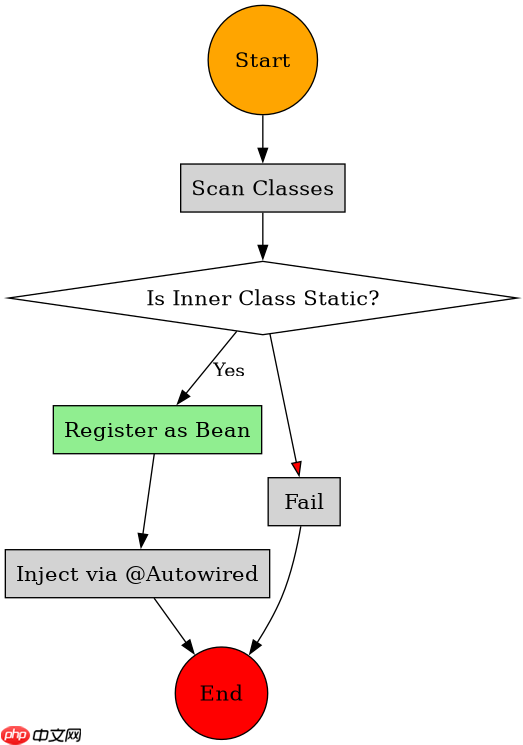
spring boot 注入内部类 bean 的核心在于让 spring 容器能够识别并管理该内部类的实例。最直接且推荐的做法是将内部类声明为 static,这样它就脱离了外部类的实例依赖,可以直接被 @component 或 @service 注解标记,随后通过 @autowired 正常注入。如果必须是非静态内部类,则需要确保外部类本身也是 bean,并通过外部类的方法或构造函数来创建内部类实例,但这通常违背了依赖注入的初衷,因此强烈建议采用静态内部类方案。

静态内部类作为独立 Bean 的定义与注入流程
将内部类设为 static 后,它本质上就是一个顶层类,只是语法上嵌套在外部类中。开发者只需像往常一样添加组件注解,并在需要使用的地方进行自动装配即可。这种模式下,内部类拥有独立的生命周期,不依赖于外部类的实例化过程。
package com.example.demo;

import org.springframework.stereotype.Component;
import org.springframework.beans.factory.annotation.Autowired;

// 外部类,通常不需要是Bean,除非有其他业务逻辑
public class OrderService {

    // 1. 定义静态内部类,并标记为Spring组件
    @Component
    public static class PaymentProcessor {
        public String process() {
            return "Processing payment...";
        }
    }

    // 2. 另一个服务类,用于演示注入
    @Component
    public static class NotificationService {

        // 3. 通过构造器或字段注入静态内部类Bean
        private final PaymentProcessor paymentProcessor;

        @Autowired
        public NotificationService(PaymentProcessor paymentProcessor) {
            this.paymentProcessor = paymentProcessor;
        }

        public void notify() {
            String result = paymentProcessor.process();
            System.out.println("Notification triggered by: " + result);
        }
    }
}
在上述代码中,PaymentProcessor 被定义为 static 且带有 @Component。当 Spring 启动扫描时,它会发现这个类并将其注册为一个单例 Bean。NotificationService 通过构造函数接收这个 Bean。运行结果将是控制台打印出 Notification triggered by: Processing payment...。这种方式完全解耦了内部类与外部类的实例关系,符合 Spring 的设计哲学。
非静态内部类注入的特殊处理与局限性
如果内部类没有声明为 static,它隐式持有外部类的引用。Spring 默认无法直接实例化这样的类,因为缺少外部类实例。此时,不能直接在非静态内部类上使用 @Component 并希望被自动注入到其他地方,除非外部类本身也是 Bean 并且提供了获取内部类实例的方法。更常见的做法是在外部类中手动创建内部类实例,或者使用工厂方法。


package com.example.demo;

import org.springframework.stereotype.Component;
import org.springframework.beans.factory.annotation.Autowired;

@Component
public class ExternalWrapper {

    // 非静态内部类,不能直接加@Component被Spring独立管理
    public class InnerHelper {
        public String help() {
            return "Helping from inner class";
        }
    }

    // 提供方法获取内部类实例,供其他Bean调用
    @Autowired
    private OtherService otherService;

    public void init() {
        // 手动创建内部类实例,绑定到当前ExternalWrapper实例
        InnerHelper helper = new InnerHelper();
        otherService.setHelper(helper);
    }
}

@Component
class OtherService {
    private InnerHelper helper;

    public void setHelper(InnerHelper helper) {
        this.helper = helper;
    }

    public void doWork() {
        if (helper != null) {
            System.out.println(helper.help());
        }
    }
}
这段代码展示了非静态内部类的困境:InnerHelper 不能被 Spring 直接托管。我们必须在 ExternalWrapper(一个 Spring Bean)中手动 new 出 InnerHelper,然后通过 setter 或构造函数传递给其他 Bean。这种做法破坏了依赖注入的透明性,且每次调用都需要确保外部类实例存在。相比之下,静态内部类方案更加简洁和标准。
基于@Qualifier区分同名静态内部类Bean
当同一个外部类中存在多个同类型的静态内部类 Bean 时,Spring 在注入时会因类型冲突而报错。例如,如果有两个 static class StrategyA implements Strategy 和 static class StrategyB implements Strategy,直接注入 Strategy 接口会失败。此时需要使用 @Qualifier 指定具体的 Bean 名称,或者自定义 Bean 名称来解决歧义。
package com.example.demo;

import org.springframework.stereotype.Component;
import org.springframework.beans.factory.annotation.Qualifier;
import org.springframework.beans.factory.annotation.Autowired;

public class MainController {

    @Component
    public static class StrategyA implements Strategy {
        public void run() { System.out.println("Strategy A"); }
    }

    @Component
    public static class StrategyB implements Strategy {
        public void run() { System.out.println("Strategy B"); }
    }

    interface Strategy { void run(); }

    // 注入时指定Bean名称,默认为类名首字母小写:strategyA, strategyB
    @Autowired
    @Qualifier("strategyA")
    private Strategy strategy;

    public void execute() {
        strategy.run(); // 输出: Strategy A
    }
}
在此场景中,StrategyA 和 StrategyB 都是 Strategy 接口的实现。Spring 默认将 Bean 名称设为类名首字母小写。通过在注入点添加 @Qualifier("strategyA"),开发者明确告诉 Spring 容器选择哪一个具体实现。如果不加限定,Spring 会抛出 NoUniqueBeanDefinitionException。这是处理多实现类静态内部 Bean 的标准做法。