在性能敏感场景下,java 中 if-else if 和 switch 的选择主要取决于分支的数量、类型以及 jvm 的优化能力。对于少量(通常少于 4 个)且逻辑简单的条件判断,if-else if 的开销几乎可以忽略不计,甚至可能因为代码更直观而略快;但对于大量离散值(如枚举、整数范围)的判断,switch 语句会被编译器优化为查找表(lookupswitch)或二分查找(tableswitch),其时间复杂度从 o(n) 降低到 o(1) 或 o(log n),从而显著提升性能。
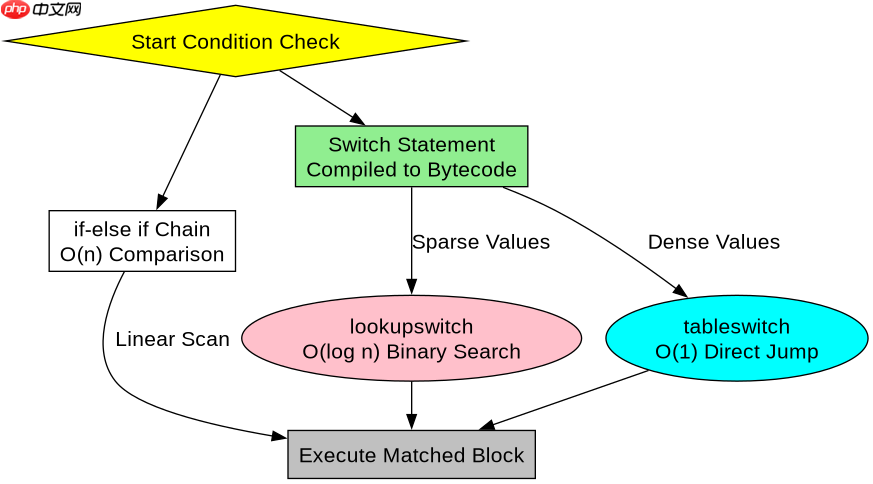
switch 如何转化为字节码以优化性能
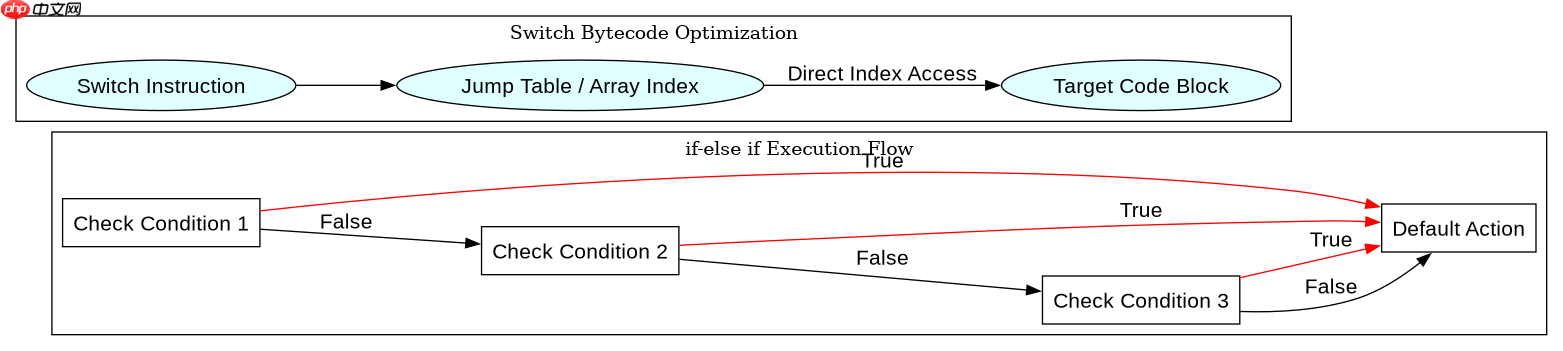
switch 语句在编译成字节码时,会根据 case 值的分布情况选择不同的指令。如果 case 值是密集连续的整数,编译器会生成 tableswitch 指令,它使用一个跳转表直接定位到对应的代码块,实现 O(1) 的访问速度。如果 case 值稀疏但数量较多,则可能生成 lookupswitch 指令,它通过二分查找在键值对列表中定位目标,时间复杂度为 O(log n)。相比之下,if-else if 链在每次执行时都必须从头开始逐个比较布尔表达式,直到找到匹配项或结束,最坏情况下需要比较所有条件,时间复杂度为 O(n)。
public class SwitchPerformance {
    public static void main(String[] args) {
        int value = 50;
        long start = System.nanoTime();
        for (int i = 0; i < 10000000; i++) {
            processWithSwitch(value);
        }
        long end = System.nanoTime();
        System.out.println("Switch time: " + (end - start) + " ns");

        start = System.nanoTime();
        for (int i = 0; i < 10000000; i++) {
            processWithIfElse(value);
        }
        end = System.nanoTime();
        System.out.println("If-else time: " + (end - start) + " ns");
    }

    private static void processWithSwitch(int val) {
        switch (val) {
            case 1: case 2: case 3: case 4: case 5:
                break;
            case 10: case 20: case 30: case 40: case 50:
                break;
            default:
                break;
        }
    }

    private static void processWithIfElse(int val) {
        if (val == 1 || val == 2 || val == 3 || val == 4 || val == 5) {
        } else if (val == 10 || val == 20 || val == 30 || val == 40 || val == 50) {
        } else {
        }
    }
}
if-else if 在复杂逻辑中的适用性
尽管 switch 在处理离散值时具有性能优势,但 if-else if 在处理复杂布尔逻辑、范围判断或非离散类型(如字符串、对象引用)时更为灵活。当条件涉及多个变量的组合、不等式比较或自定义对象的 equals 方法时,switch 无法替代 if-else if。此外,在现代 JVM 中,JIT 编译器会对热点代码进行激进优化,包括将简单的 if-else if 链转换为类似查找表的结构,因此在某些特定场景下,两者的性能差异可能微乎其微。开发者应根据代码的可读性和维护性优先选择,仅在 profiling 确认 switch 成为瓶颈时才考虑重构。

立即学习“Java免费学习笔记(深入)”;
public class ComplexCondition {
    public static void main(String[] args) {
        String status = "active";
        int priority = 5;
        boolean isValid = true;

        // 模拟复杂条件判断
        long start = System.nanoTime();
        for (int i = 0; i < 10000000; i++) {
            evaluateComplex(status, priority, isValid);
        }
        long end = System.nanoTime();
        System.out.println("Complex condition time: " + (end - start) + " ns");
    }

    private static void evaluateComplex(String status, int priority, boolean isValid) {
        if (status.equals("active") && priority > 3 && isValid) {
            // 处理高优先级活跃状态
        } else if (status.equals("inactive") || !isValid) {
            // 处理非活跃或无效状态
        } else {
            // 默认处理
        }
    }
}
基于枚举类型的 switch 性能分析
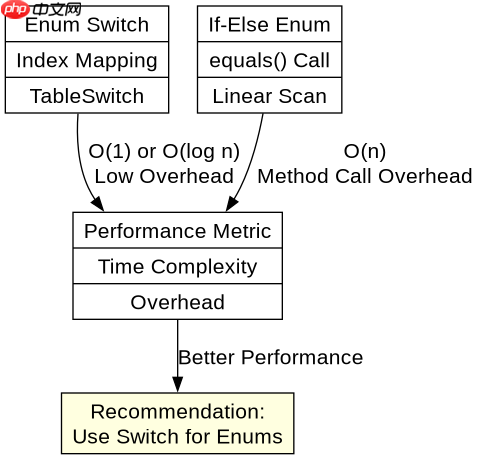
当使用枚举类型作为 switch 的条件时,Java 编译器会将枚举常量映射为整数索引,并同样采用 tableswitch 或 lookupswitch 指令进行优化。由于枚举常量的数量通常是固定的且已知,tableswitch 的使用频率较高,这使得基于枚举的 switch 性能非常稳定且高效。相比之下,如果使用 if-else if 结合枚举的 equals 方法进行比较,不仅引入了方法调用的开销,还失去了底层跳转表的优化优势。因此,在涉及枚举类型的多路分支选择中,switch 是更优的性能选择。