








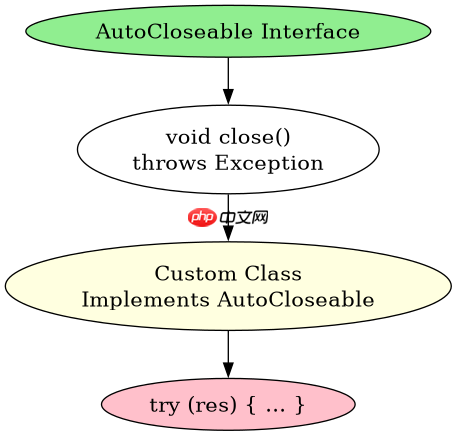
java 中实现自定义资源的自动关闭,只需让该资源类实现 java.lang.autocloseable 接口,并在其中定义具体的关闭逻辑即可。在 try-with-resources 语句中声明该资源实例后,jvm 会在代码块执行完毕(无论是正常结束还是抛出异常)时,自动调用其 close() 方法释放资源。

AutoCloseable 与 Closeable 接口的区别是什么
这两个接口的核心区别在于 close() 方法是否声明抛出受检异常。如果自定义资源在关闭过程中可能抛出非运行时异常(如 IOException),必须实现 AutoCloseable;若仅涉及运行时异常或无需处理受检异常,实现 Closeable 也是可以的,因为它是 AutoCloseable 的子接口。
import java.io.IOException;

public class CustomResource implements AutoCloseable {
    private String name;

    public CustomResource(String name) {
        this.name = name;
        System.out.println("Resource " + name + " opened.");
    }

    @Override
    public void close() throws IOException {
        System.out.println("Closing resource: " + name);
        // 模拟关闭时的清理工作
        if (name == null) {
            throw new IOException("Name is null, cannot close properly.");
        }
    }

    public static void main(String[] args) {
        try (CustomResource res = new CustomResource("DB-Conn")) {
            System.out.println("Using resource...");
        } catch (IOException e) {
            System.out.println("Caught exception: " + e.getMessage());
        }
    }
}
多个资源如何按顺序关闭
当 try-with-resources 中包含多个资源时,它们会按照声明的逆序进行关闭。也就是说,最后声明的资源会最先被调用 close()。这种机制确保了依赖关系的正确性,例如先关闭数据库连接,再关闭事务管理器。

立即学习“Java免费学习笔记(深入)”;

import java.io.IOException;

public class MultiResourceTest {
    public static void main(String[] args) {
        try (ResourceA a = new ResourceA();
             ResourceB b = new ResourceB()) {
            System.out.println("Working with resources...");
        } catch (IOException e) {
            e.printStackTrace();
        }
    }
}

class ResourceA implements AutoCloseable {
    @Override
    public void close() { System.out.println("Closing A"); }
}

class ResourceB implements AutoCloseable {
    @Override
    public void close() { System.out.println("Closing B"); }
}
关闭过程中发生异常会被如何处理
如果在 try-with-resources 的执行体中抛出了异常,而 close() 方法也抛出了异常,后者会被作为“抑制异常”(Suppressed Exception)附加到主异常上。开发者可以通过 Throwable.getSuppressed() 获取这些被抑制的异常,从而确保所有错误都被记录和处理,而不是丢失。



















