java 中 synchronized 加在静态方法上锁的是该类的 class 对象实例。这意味着所有调用该静态方法的线程,无论来自哪个实例,只要它们属于同一个类加载器加载的类,就会竞争同一把锁。
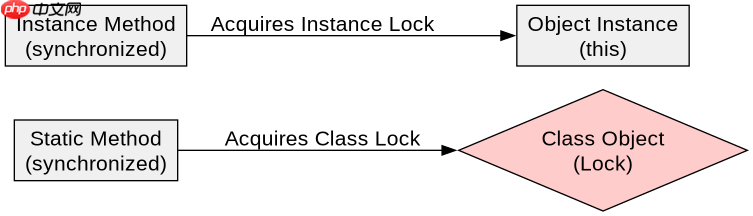
实例方法与静态方法锁的区别是什么
实例方法锁的是当前对象实例(this),而静态方法锁的是类对象(ClassName.class)。这两把锁是完全独立的,互不干扰。

public class LockExample {
    public synchronized void instanceMethod() {
        System.out.println("Instance lock: " + Thread.currentThread().getName());
        try { Thread.sleep(1000); } catch (InterruptedException e) {}
    }

    public static synchronized void staticMethod() {
        System.out.println("Static lock: " + Thread.currentThread().getName());
        try { Thread.sleep(1000); } catch (InterruptedException e) {}
    }

    public static void main(String[] args) throws InterruptedException {
        LockExample obj = new LockExample();

        // 测试静态方法锁:不同实例也能互斥
        Thread t1 = new Thread(() -> obj.staticMethod(), "Thread-1");
        Thread t2 = new Thread(() -> new LockExample().staticMethod(), "Thread-2");
        t1.start(); t1.join();
        t2.start(); t2.join();

        // 测试实例方法锁:不同实例不互斥
        Thread t3 = new Thread(() -> obj.instanceMethod(), "Thread-3");
        Thread t4 = new Thread(() -> new LockExample().instanceMethod(), "Thread-4");
        t3.start(); t4.start();
        t3.join(); t4.join();
    }
}
运行结果会显示 Thread-1 和 Thread-2 串行执行,而 Thread-3 和 Thread-4 并行执行。

立即学习“Java免费学习笔记(深入)”;
为什么静态同步方法能实现全局互斥
因为 JVM 为每个类维护一个唯一的 Class 对象作为监视器。当多个线程访问该类的任何静态同步方法时,它们都在尝试获取这个唯一的 Class 对象的监视器锁。这种机制确保了跨实例的全局互斥性,常用于单例模式的双重检查锁定或全局资源管理。

public class Singleton {
    private static volatile Singleton instance;

    public static synchronized Singleton getInstance() {
        if (instance == null) {
            instance = new Singleton();
        }
        return instance;
    }
}
// 预期输出:多次调用 getInstance() 始终返回同一对象引用
上述代码展示了静态同步方法如何保证单例的唯一性。由于锁的是 Singleton.class,所有线程在创建实例前都必须等待锁释放,从而避免了并发创建多个实例的问题。