


在方法链中传递 optional 以避免层层判空,核心做法是直接使用 map() 和 flatmap() 进行转换。当需要提取对象属性或调用返回非 optional 的方法时,使用 map();当调用的方法本身返回 optional 时,使用 flatmap() 来避免嵌套。这样可以将多个步骤串联成一条流畅的链式调用,最终通过 orelse() 提供默认值。

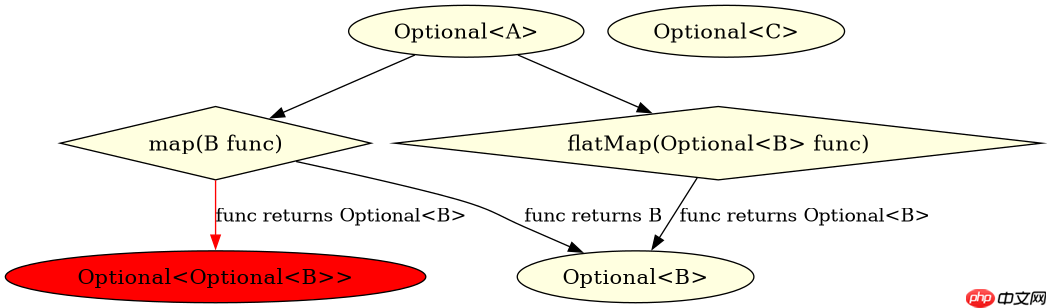
map() 与 flatMap() 的区别是什么
map() 用于将 Optional 中的值转换为另一种类型,而 flatMap() 用于处理返回值本身就是 Optional 的情况,它会自动解包一层。如果错误地在返回 Optional 的方法后使用 map(),会导致出现 Optional<optional>></optional> 这种嵌套结构,增加后续处理的复杂度。
import java.util.Optional;

public class OptionalChain {
    public static void main(String[] args) {
        // 模拟一个可能为空的 User 对象
        Optional<User> userOpt = Optional.of(new User("Alice", new Address("Beijing")));

        // 使用 map 提取城市名(Address 不是 Optional)
        String city = userOpt
                .map(User::getAddress)
                .map(Address::getCity)
                .orElse("Unknown");
        System.out.println("City: " + city);

        // 模拟一个返回 Optional 的方法
        Optional<String> result = userOpt
                .map(User::getAddress)
                .flatMap(Address::getCountryOpt)
                .orElse("No Country");
        System.out.println("Country: " + result);
    }
}

class User {
    private String name;
    private Address address;
    public User(String name, Address address) { this.name = name; this.address = address; }
    public Address getAddress() { return address; }
}

class Address {
    private String city;
    public Address(String city) { this.city = city; }
    public String getCity() { return city; }
    public Optional<String> getCountryOpt() { return Optional.of("China"); }
}
如何处理链中某一步骤返回 null 的情况
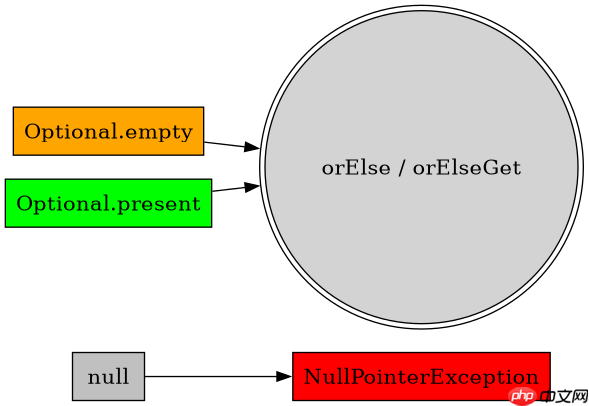
如果在链式调用中,某个中间步骤的方法返回了 null,直接调用 map() 会抛出 NullPointerException。为了避免这种情况,可以在链中插入 filter() 或者确保所有参与链式调用的方法都返回 Optional。更推荐的做法是让所有辅助方法都返回 Optional,从而保持链式的完整性。

立即学习“Java免费学习笔记(深入)”;
import java.util.Optional;

public class NullSafeChain {
    public static void main(String[] args) {
        // 假设 getUser 可能返回 null
        Optional<User> userOpt = Optional.ofNullable(getUser());

        // 安全地提取城市,即使中间步骤为 null
        String city = userOpt
                .map(User::getAddress)
                .map(Address::getCity)
                .orElse("Default City");
        System.out.println("City: " + city);
    }

    private static User getUser() { return new User(); }

    static class User {
        private Address address;
        public Address getAddress() { return address; } // 可能返回 null
    }

    static class Address {
        private String city;
        public String getCity() { return city; } // 可能返回 null
    }
}
如何从 Optional 中提取最终结果并设置默认值
在链式调用的末尾,必须使用 orElse()、orElseGet() 或 orElseThrow() 来提取最终结果。orElse() 适用于提供固定默认值;orElseGet() 适用于默认值计算成本较高的场景,因为它只在值为空时才执行;orElseThrow() 则在值为空时抛出异常,适合强校验场景。选择哪种方式取决于业务对空值的处理策略。