java 中 int 和 integer 的自动拆箱装箱由编译器在编译期根据上下文类型隐式插入代码完成,无需手动调用方法。当 integer 对象参与算术运算或赋值给基本类型时,编译器会自动调用 intvalue() 进行拆箱;反之,当 int 赋值给 integer 引用时,编译器会调用 integer.valueof() 进行装箱。这一机制使得开发者可以像使用基本类型一样操作包装类,但需注意空指针风险和缓存策略。

Integer 对象参与加法运算时具体发生了什么
当两个 Integer 对象相加时,编译器会自动对它们进行拆箱,转换为 int 后执行加法,最后将结果重新装箱为 Integer。例如表达式 a + b(其中 a, b 为 Integer)会被编译为 new Integer(a.intValue() + b.intValue())。如果任一对象为 null,则在运行时抛出 NullPointerException,因为无法对 null 调用 intValue()。
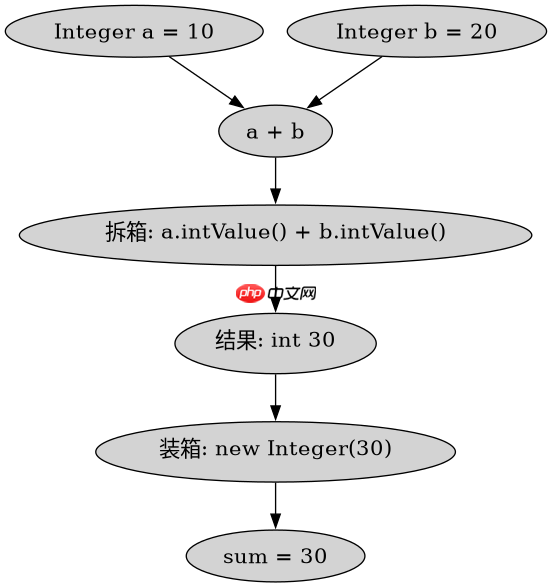
public class AutoBoxingDemo {
    public static void main(String[] args) {
        Integer a = 10;
        Integer b = 20;
        // 自动拆箱:a.intValue() + b.intValue()
        // 自动装箱:new Integer(30)
        Integer sum = a + b;
        System.out.println(sum); // 输出 30
    }
}
Integer 与 int 混合运算时的类型转换规则
当 Integer 对象与 int 基本类型混合运算时,Integer 对象会被自动拆箱为 int,整个表达式按 int 类型计算,最终结果若需赋给 Integer 变量,则再次装箱。例如 Integer c = 5; int d = 10; Integer e = c + d; 中,c 被拆箱,c + d 结果为 int 类型的 15,随后装箱为 Integer。这种单向拆箱确保了运算效率,同时保持了类型安全。

立即学习“Java免费学习笔记(深入)”;

public class MixedOperationDemo {
    public static void main(String[] args) {
        Integer c = 5;
        int d = 10;
        // c 被拆箱为 int,c + d 结果为 int 15
        // 然后装箱为 Integer
        Integer e = c + d;
        System.out.println(e); // 输出 15
    }
}
Integer 缓存机制对自动装箱的影响是什么
Java 对 -128 到 127 之间的整数进行了缓存,通过 Integer.valueOf() 装箱时,若值在此范围内,则返回缓存中的实例,而非新建对象。这意味着对于该范围内的值,多次装箱可能得到相同的对象引用,使用 == 比较时会返回 true。超出此范围的值则会创建新对象,== 比较将基于地址,返回 false。这一优化减少了内存占用,但可能导致逻辑错误,建议始终使用 equals() 比较数值内容。